
 Flash News
VIDEO-scandal in Saranda/ Director of AMP Vlora and officials sexually harass tourists
"The New York Times" about Ye's concert: How Rama justifies the $4.5 million in funding
The suspected perpetrator of the murder in Laç is identified, he shot the 40-year-old 7 times near the palace
7 bullets on the doorstep, who is the 40-year-old with 4 surnames who was killed in Laç
Morning Post/ In 2 lines: What mattered yesterday in Albania
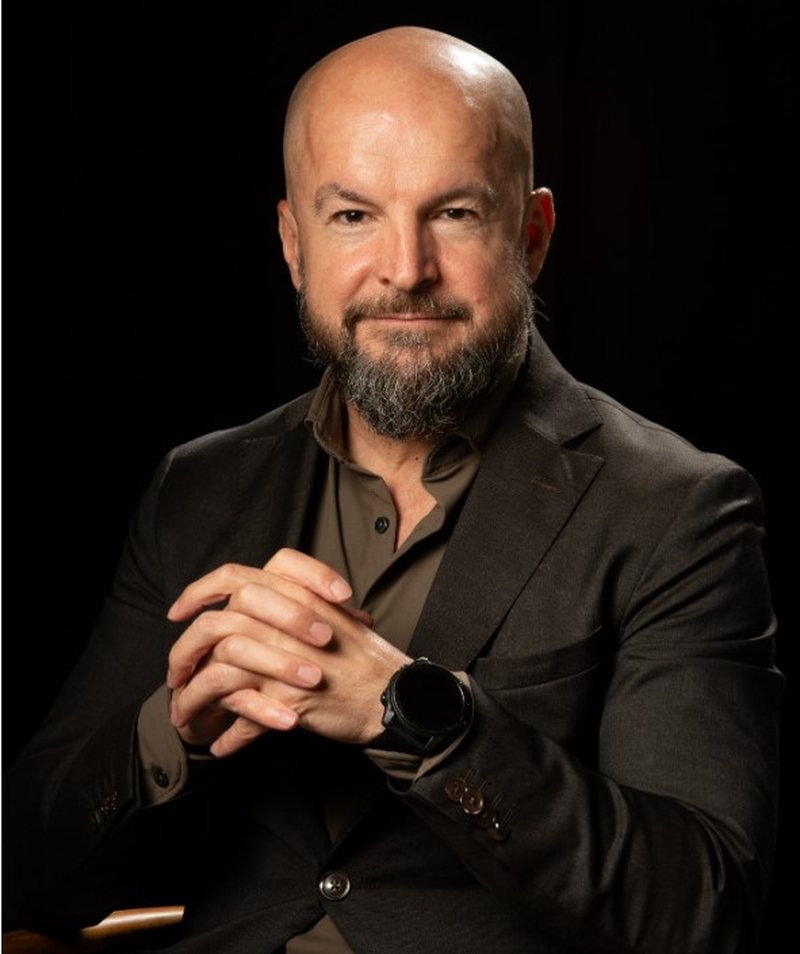
Alfred Lela
Having lived in the United States for nearly a decade, I know the country well enough to recognize that Zohran Mamdani — beneath his charisma and populist rhetoric — embodies hypocrisy.
Mamdani’s central claim, repeated in his victory speech, that he is “the mayor of immigrants,” rests on a false premise. America does not need to be reminded that immigrants built it. No one in the United States — least of all Donald Trump — has spoken against immigration itself. What some Americans oppose is illegal immigration, the entry of those who commit crimes or arrive as part of criminal contingents from abroad.
There is no anti-immigrant prejudice in America because the country was founded on a compassionate Christianity that welcomes the stranger while expecting hard work, ethics, and loyalty to the language and flag of the nation. America is great not because immigrants founded it, but because immigrants embraced the single truth of the Constitution — that all men are created equal, endowed by their Creator with unalienable rights, and that the pursuit of happiness is a distinctively American promise.
No president, party, or political doctrine has ever repudiated those founding principles.
As for Muslims, Mamdani may speak with more authority, but his privileged background, however, undermines his rhetoric of grievance. The son of a Muslim family that found success in academia and film, he is proof that the so-called “exclusive America” has always rewarded merit, regardless of color, creed, or origin.
Yet America, a country founded by Christians who fled persecution — often from other Christians — has every right to preserve its civilizational roots. The principle works both ways: just as Americans are told not to teach democracy to Arabs in the Middle East, Muslims in America might be reminded that they cannot expect to install Sharia law, even within their own communities. Fair is fair.
Mamdani’s third line of defense — multiculturalism — is equally false and aggressive. In his circles, multiculturalism has become a code word for blaming the West, Christianity, and the values that shaped its cathedrals, universities, theaters, books, and graves. It pits instinct against institution, and in that unequal fight, the instinctive response of the majority is inevitable. You cannot condemn it for defending itself.
The other minority Mamdani defends — sexual and gender minorities — is even more ideologically fraught. The modern Left has traveled from Simone de Beauvoir’s “second sex” to a “third sex” of post-Marxist, post-revolutionary, post-sexual thought. It has deconstructed the personae sexuae only to elevate a “sexual character” — not a person — that demands unconditional recognition and moral immunity from scrutiny. What it criticizes in the two sexes, it claims as a privilege for itself.
This “third gender,” shielded and sanctified by the radical Left, has fractured two of America’s most essential institutions: the family and the school. What children are taught in the morning — that it’s perfectly fine to be “different” or “trans” — often collides with what they learn at home from parents who come from the two original sexes and two millennia of civilization.
That fracture, not the traditional family or religion, is what has produced today’s cultural confusion — not the America of the Founding Fathers that Mamdani and his allies denounce.
Mamdani has thus become a kind of monarch of hypocritical minorities — coalitions that demand equality but interpret it as domination. Their union has produced a fragile, artificial majority in New York, nothing more than a short-lived moral apartheid.
This unholy alliance of minorities that sanctify their impulses and act as if they were the majority is the true distortion of their supposed triumph. It does not resolve the dilemma of the American or global Left, which remains unsolvable because it seeks meaning in what is unnatural — and because it insists on playing God.
Marxism failed once as an ideology; it will fail again in this new guise. Mamdani is not the explanation of this failure — only its latest symptom.
Latest news



Heatwave hits Germany, over 5,400 heat-related deaths
2026-07-10 10:45:33

Land in "foreign hands"
2026-07-10 10:26:15

Mbappe the hero of France, the "Roosters" knock out Morocco in the quarterfinals
2026-07-10 09:54:33
Durrës/ 40-year-old man stabs his wife
2026-07-10 09:48:03



How much could the amount of drug money in the Albanian economy be?!
2026-07-10 09:08:34
Government reduces funds for farmers, increases ADF by 75 million euros
2026-07-10 08:55:46
Horoscope, get to know the star forecast
2026-07-10 08:32:54


Morning Post/ In 2 lines: What mattered yesterday in Albania
2026-07-10 07:52:04
A person was shot dead in Kurbin, first details
2026-07-09 22:54:48


Will the Police also stop those who criticize Rama online?
2026-07-09 21:57:02


FIFA decision shocks England, Quansah ruled out for two matches
2026-07-09 20:51:00


Protest/Pedagogue: 4 million euros for Kanye West is "the next concession"
2026-07-09 19:45:53
French MEP joins protests in Albania: Support for the "Pink Flamingo Revolution"
2026-07-09 19:28:07



Has the lek strengthened or overvalued?
2026-07-09 17:58:05



The trial on the merits for Ilir Meta and Monika Kryemadhi is postponed
2026-07-09 16:47:58

The match between England and Norway risks being postponed, this is the reason
2026-07-09 16:12:46
Murder in Shkodra/ Relatives: Peaceful family, no problems
2026-07-09 16:10:02
Kurti invites opposition leaders to a meeting to create new institutions
2026-07-09 15:43:05


This is the 62-year-old man who killed his wife in Shkodra
2026-07-09 15:01:43

Domestic crime/ Wife killed with shotgun, perpetrator and victim identified
2026-07-09 14:05:18
Gunfire in Shkodra, one victim suspected
2026-07-09 13:49:41
Weapons cache discovered in Fier, Prosecution sends 38-year-old to trial
2026-07-09 13:35:48

Bota e muzikës në zi, ndahet nga jeta në moshën 75-vjeçare ikona Bonnie Tyler
2026-07-09 12:56:29
Monika Kryemadhi in the Criminal Court: The cell phone was seized illegally
2026-07-09 12:45:54


VALEN MP reacts after border detention: Albania is no one's property
2026-07-09 12:15:44
Albanian gang in Belgium sentenced for trafficking 7 tons of cocaine
2026-07-09 12:01:14
Justin Bieber, Shakira and Madonna to perform at 2026 World Cup final
2026-07-09 11:52:54
Euro falls, inflation rises and domestic production loses ground
2026-07-09 11:39:36
Trial at the GJKKO, Meta's new lawyer appears in the session
2026-07-09 11:29:47
Nighttime accident in Gramsh, man and woman injured
2026-07-09 11:20:25


Meta seeks 134 witnesses, GJKKO delivers decision today
2026-07-09 10:56:54



At the peak of the production season, vegetable prices 'fly'
2026-07-09 10:21:14
The African heat returns, the thermometer reaches 40 degrees this weekend
2026-07-09 10:08:08
Opinions from 'anonymous' authors target Flamingo protests
2026-07-09 10:07:15
MEP Waitz: The law on protected areas endangers Albania's path to the EU
2026-07-09 09:52:55
"Le Courrier des Balkans": Edi Rama and the megalomania of power
2026-07-09 09:40:26
The economics of concerts, the prime minister's imaginary 100 million euros
2026-07-09 09:28:19
Erdogan's strange gift to NATO leaders
2026-07-09 09:11:15


Foreign exchange, the rate at which foreign currencies are sold and bought
2026-07-09 08:30:41
“Uniteti i jashtëzakonshëm” i NATO-s dhe mesazhet kryesore nga samiti në Turqi
2026-07-09 08:11:17

Horoskopi, njihuni me parashikim e yjeve
2026-07-09 07:46:15
Alternime kthjellimesh e vranësirash, parashikimi i motit
2026-07-09 07:25:59
Posta e mëngjesit/ Me 2 rreshta: Çfarë pati rëndësi dje në Shqipëri
2026-07-09 07:02:12






Rama brings West in Tirana, using Eastern premises
2026-07-08 20:41:42




Fire on Kuzum Baba hill in Vlora, flames endanger homes and Tekke
2026-07-08 18:09:45



Shqipëria po plaket, qeveria pa plan
2026-07-08 15:57:26