 Flash News
VIDEO-scandal in Saranda/ Director of AMP Vlora and officials sexually harass tourists
"The New York Times" about Ye's concert: How Rama justifies the $4.5 million in funding
The suspected perpetrator of the murder in Laç is identified, he shot the 40-year-old 7 times near the palace
7 bullets on the doorstep, who is the 40-year-old with 4 surnames who was killed in Laç
Morning Post/ In 2 lines: What mattered yesterday in Albania
Alfred Lela
Italian journalist Nello Trochia, in a newly published book by Rizzoli, writes, based on intercepted conversations by intelligence services, that there was a meeting in Aruba between high-ranking Albanian officials and leaders of the global drug trade.
To give some context, it should be noted that it was Italian interceptions that led to the fall of Edi Rama’s first Minister of the Interior, Saimir Tahiri.
Going further, it can be said that the Italian angle, along with several national newspaper articles and RAI 3 reports, borrowed from former Prime Minister Berisha the term “narco-state” to describe Albania.
When asked directly in an interview with correspondent Alba Kepi whether Berisha was exaggerating in calling Rama’s Albania a “narco-state,” Trochia replied bluntly: he had asked Nicola Gratteri, the chief prosecutor of Naples, and Gratteri told him: “It is even worse.”
The explanatory context becomes even harsher if we first recall that similar terminology by President Trump regarding the war on drugs focused on cartels and narco-terrorism, against which he declared open war. In line with this, the U.S. Embassy’s chargé d’affaires in Tirana, Ms. van Horn, also sounded the same alarm in meetings with senior justice and government officials.
Without concern or prior information, the U.S. representative would have no reason to repeat her president’s refrain to senior officials in the host country — in this case, Albania. It would be like talking about banana plantations in a Northern European country.
The fact that the refrain of the U.S. ambassador’s meetings has changed compared to, say, a few months or a year ago, speaks volumes about American priorities regarding Albania, but even more about the state of the country itself.
Certainly, Edi Rama’s Albania does not listen with that ear; it always moves in the opposite direction of events related to tomorrow, speaking instead of an illusory future — an avatar of the future.
The core issues, such as depopulation and the pyramid of the narco-economy, have been replaced with lighthearted, entertaining topics, like tourism and “marriage with the EU.” The avoidance is intentional, and the deeper the black hole of demographics and the narco-economy becomes, the higher Rama will raise the antenna of his courtyard TVs toward waves with sunshine, superyachts visiting our shores (pouring in dirty waters), revived “Rilindja shotas” turned into tanks of partisan imagination, satellites that have so far not even detected Nasreddin’s donkey, luxury marinas that contrast with the rest of the city, where Albanians jostle with one another without parks, parking, greenery, or water — like sardines in a net.
Occasionally, corruption of a former opposition figure surfaces. As always, the rotation of leading teams at central and local levels follows Rama’s single governance theory: little work with great fanfare, raising the flags of propaganda higher and higher, let the dogs bark and the caravan move along. The remaining work — the very intellectual narco-trafficking and patronage-administration — is done by the “the chosen people” of Rilindja; for ordinary tasks, we bring in Bangladeshis, and leave the keys of Albania to Diella — if she fails, we still have God (now even with a new strong mediator, Baba Mondi, at the head of the Bektashi state).
In short, the government becomes the custodian of the pact reached at the Aruba narco-summit. At the same time, Albania remains where it has been most of its history, a “menstrual pad” of a creature that produces stories instead of history, like these with drones, Diella, and other psychological wounds.
A Bermuda triangle with cyclones, but no cycles.
Some helpful info for Diella AI: cyclones destroy, cycles move forward.
Latest news

Heatwave hits Germany, over 5,400 heat-related deaths
2026-07-10 10:45:33
Land in "foreign hands"
2026-07-10 10:26:15

Mbappe the hero of France, the "Roosters" knock out Morocco in the quarterfinals
2026-07-10 09:54:33
Durrës/ 40-year-old man stabs his wife
2026-07-10 09:48:03



How much could the amount of drug money in the Albanian economy be?!
2026-07-10 09:08:34
Government reduces funds for farmers, increases ADF by 75 million euros
2026-07-10 08:55:46
Horoscope, get to know the star forecast
2026-07-10 08:32:54

Morning Post/ In 2 lines: What mattered yesterday in Albania
2026-07-10 07:52:04
A person was shot dead in Kurbin, first details
2026-07-09 22:54:48


Will the Police also stop those who criticize Rama online?
2026-07-09 21:57:02


FIFA decision shocks England, Quansah ruled out for two matches
2026-07-09 20:51:00
Protest/Pedagogue: 4 million euros for Kanye West is "the next concession"
2026-07-09 19:45:53
French MEP joins protests in Albania: Support for the "Pink Flamingo Revolution"
2026-07-09 19:28:07


Has the lek strengthened or overvalued?
2026-07-09 17:58:05

The trial on the merits for Ilir Meta and Monika Kryemadhi is postponed
2026-07-09 16:47:58

The match between England and Norway risks being postponed, this is the reason
2026-07-09 16:12:46
Murder in Shkodra/ Relatives: Peaceful family, no problems
2026-07-09 16:10:02
Kurti invites opposition leaders to a meeting to create new institutions
2026-07-09 15:43:05

This is the 62-year-old man who killed his wife in Shkodra
2026-07-09 15:01:43

Domestic crime/ Wife killed with shotgun, perpetrator and victim identified
2026-07-09 14:05:18
Gunfire in Shkodra, one victim suspected
2026-07-09 13:49:41
Weapons cache discovered in Fier, Prosecution sends 38-year-old to trial
2026-07-09 13:35:48

Bota e muzikës në zi, ndahet nga jeta në moshën 75-vjeçare ikona Bonnie Tyler
2026-07-09 12:56:29
Monika Kryemadhi in the Criminal Court: The cell phone was seized illegally
2026-07-09 12:45:54

VALEN MP reacts after border detention: Albania is no one's property
2026-07-09 12:15:44
Albanian gang in Belgium sentenced for trafficking 7 tons of cocaine
2026-07-09 12:01:14
Justin Bieber, Shakira and Madonna to perform at 2026 World Cup final
2026-07-09 11:52:54
Euro falls, inflation rises and domestic production loses ground
2026-07-09 11:39:36
Trial at the GJKKO, Meta's new lawyer appears in the session
2026-07-09 11:29:47
Nighttime accident in Gramsh, man and woman injured
2026-07-09 11:20:25
Meta seeks 134 witnesses, GJKKO delivers decision today
2026-07-09 10:56:54


At the peak of the production season, vegetable prices 'fly'
2026-07-09 10:21:14
The African heat returns, the thermometer reaches 40 degrees this weekend
2026-07-09 10:08:08
Opinions from 'anonymous' authors target Flamingo protests
2026-07-09 10:07:15
MEP Waitz: The law on protected areas endangers Albania's path to the EU
2026-07-09 09:52:55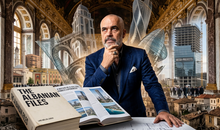
"Le Courrier des Balkans": Edi Rama and the megalomania of power
2026-07-09 09:40:26
The economics of concerts, the prime minister's imaginary 100 million euros
2026-07-09 09:28:19
Erdogan's strange gift to NATO leaders
2026-07-09 09:11:15


Foreign exchange, the rate at which foreign currencies are sold and bought
2026-07-09 08:30:41
“Uniteti i jashtëzakonshëm” i NATO-s dhe mesazhet kryesore nga samiti në Turqi
2026-07-09 08:11:17

Horoskopi, njihuni me parashikim e yjeve
2026-07-09 07:46:15
Alternime kthjellimesh e vranësirash, parashikimi i motit
2026-07-09 07:25:59
Posta e mëngjesit/ Me 2 rreshta: Çfarë pati rëndësi dje në Shqipëri
2026-07-09 07:02:12



Rama brings West in Tirana, using Eastern premises
2026-07-08 20:41:42


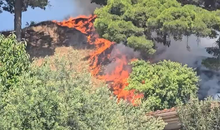
Fire on Kuzum Baba hill in Vlora, flames endanger homes and Tekke
2026-07-08 18:09:45

Shqipëria po plaket, qeveria pa plan
2026-07-08 15:57:26