
 Flash News
VIDEO-scandal in Saranda/ Director of AMP Vlora and officials sexually harass tourists
"The New York Times" about Ye's concert: How Rama justifies the $4.5 million in funding
The suspected perpetrator of the murder in Laç is identified, he shot the 40-year-old 7 times near the palace
7 bullets on the doorstep, who is the 40-year-old with 4 surnames who was killed in Laç
Morning Post/ In 2 lines: What mattered yesterday in Albania
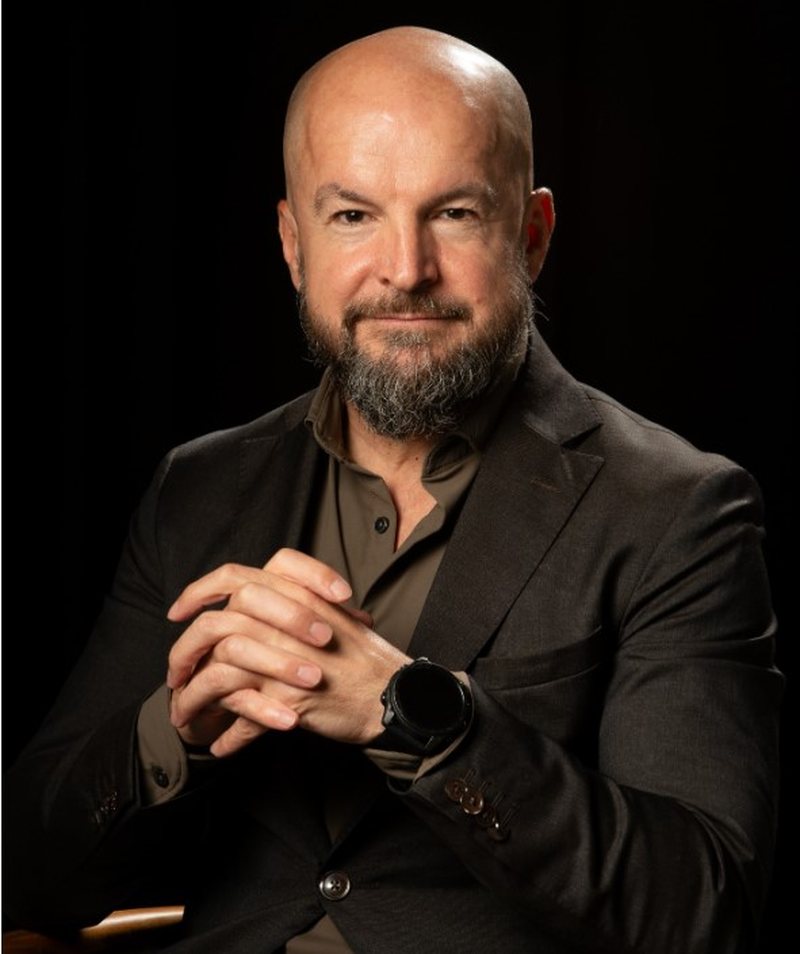
Alfred Lela
Erion Veliaj appeared today — subdued, dressed as if for his final ordeal or redemption — at the doors of a state that, for many long months, has treated him like a criminal without ever convicting him through a fair judicial process.
Ironically, this happened only hours before his sister-enemy-turned-rival, Belinda Balluku, crossed the threshold of another institution —the Special Prosecutor’s Office (SPAK) —to be questioned and formally charged over one or more allegedly corrupt affairs of her own.
The fact that both stood today at the entrances of these institutions does not mean that justice has treated them equally. That very fact — among others — is enough to see and understand what is happening, and to conclude that there is no need to choose between the socialists Balluku and Veliaj, to side with one or the other. What must be underlined, however, is that two different standards applied to two officials become the same double standard for every citizen who may one day have to pass through those same doors.
To banish Erion Veliaj physically, politically, and even humanly, an entire para-political and para-state labyrinth was set in motion, involving elements of the judiciary, the police, undercover agents, and figures within the Socialist Party. This behavior has revealed that the “executive” arm of justice — and the penitentiary machinery of government — can be used as instruments of torture, a hallmark of authoritarian or pre-totalitarian states.
It matters little whether the target is Sali Berisha, Ilir Meta, Arben Ahmetaj, or Erion Veliaj. The crossing of legal, political, and human boundaries should alarm anyone watching from the seats of the arena or from the sofas of lazy judgment — whether in luxury living rooms or the humblest homes, from the villas of Rolling Hills to the mountain huts of Rodogosh.
Erion Veliaj does not seem defeated, even if he has suffered from this treatment. Excess, as with all excesses, has turned him from a poster boy of (presumed) corruption into a political-judicial martyr.
It does not matter whether Veliaj wins or loses his legal battle for what in English is called due process. Either outcome — victory or defeat — will speak volumes about the kind of state we have built thirty-three years after the fall of the regime we believed to be the last chapter in the cycle of repression against Albanians.
Since the episode of the National Theatre, I have regarded Erion Veliaj not only as a political adversary but also as harmful to Tirana. Yet that does not mean he should be pre-emptively lynched to serve the political ends of any faction. Still less should he escape investigation (or punishment) for the Theatre, the incinerator, or the “5D” affair, only to be disgraced instead for his wife’s dresses or concert appearances.
Today, at the doors of the Constitutional Court and SPAK, two people appeared — and two pairs of eyes. One pair has, for months on end, witnessed how collaborators and friends became worse than political opponents; how the detention cell in Durrës turned into a miniature Guantánamo.
Another eye, carefully concealing its bruise, will now fight for the opposite — for the right not to knock on doors that no longer open.
And so it goes. A power whose state cannot see through the lenses of law possesses instruments of violence that make you shut your eyes or turn your head away from what happens before them.
Those who stare wide-eyed, or whose eyes moisten at what they see, must still have sight for justice — even when the image reflected in their pupils is that of the enemy.
A system like today’s, which seeks only to astonish and to gratify the most primitive human instincts, is anti-human and anti-legal.
Latest news



Heatwave hits Germany, over 5,400 heat-related deaths
2026-07-10 10:45:33

Land in "foreign hands"
2026-07-10 10:26:15

Mbappe the hero of France, the "Roosters" knock out Morocco in the quarterfinals
2026-07-10 09:54:33
Durrës/ 40-year-old man stabs his wife
2026-07-10 09:48:03



How much could the amount of drug money in the Albanian economy be?!
2026-07-10 09:08:34
Government reduces funds for farmers, increases ADF by 75 million euros
2026-07-10 08:55:46
Horoscope, get to know the star forecast
2026-07-10 08:32:54

Morning Post/ In 2 lines: What mattered yesterday in Albania
2026-07-10 07:52:04
A person was shot dead in Kurbin, first details
2026-07-09 22:54:48


Will the Police also stop those who criticize Rama online?
2026-07-09 21:57:02


FIFA decision shocks England, Quansah ruled out for two matches
2026-07-09 20:51:00
Protest/Pedagogue: 4 million euros for Kanye West is "the next concession"
2026-07-09 19:45:53
French MEP joins protests in Albania: Support for the "Pink Flamingo Revolution"
2026-07-09 19:28:07



Has the lek strengthened or overvalued?
2026-07-09 17:58:05


The trial on the merits for Ilir Meta and Monika Kryemadhi is postponed
2026-07-09 16:47:58

The match between England and Norway risks being postponed, this is the reason
2026-07-09 16:12:46
Murder in Shkodra/ Relatives: Peaceful family, no problems
2026-07-09 16:10:02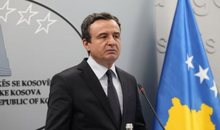
Kurti invites opposition leaders to a meeting to create new institutions
2026-07-09 15:43:05

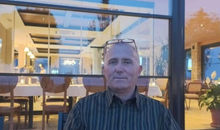
This is the 62-year-old man who killed his wife in Shkodra
2026-07-09 15:01:43

Domestic crime/ Wife killed with shotgun, perpetrator and victim identified
2026-07-09 14:05:18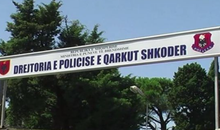
Gunfire in Shkodra, one victim suspected
2026-07-09 13:49:41
Weapons cache discovered in Fier, Prosecution sends 38-year-old to trial
2026-07-09 13:35:48

Bota e muzikës në zi, ndahet nga jeta në moshën 75-vjeçare ikona Bonnie Tyler
2026-07-09 12:56:29
Monika Kryemadhi in the Criminal Court: The cell phone was seized illegally
2026-07-09 12:45:54


VALEN MP reacts after border detention: Albania is no one's property
2026-07-09 12:15:44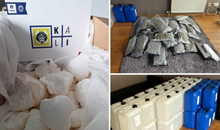
Albanian gang in Belgium sentenced for trafficking 7 tons of cocaine
2026-07-09 12:01:14
Justin Bieber, Shakira and Madonna to perform at 2026 World Cup final
2026-07-09 11:52:54
Euro falls, inflation rises and domestic production loses ground
2026-07-09 11:39:36
Trial at the GJKKO, Meta's new lawyer appears in the session
2026-07-09 11:29:47
Nighttime accident in Gramsh, man and woman injured
2026-07-09 11:20:25
Meta seeks 134 witnesses, GJKKO delivers decision today
2026-07-09 10:56:54


At the peak of the production season, vegetable prices 'fly'
2026-07-09 10:21:14
The African heat returns, the thermometer reaches 40 degrees this weekend
2026-07-09 10:08:08
Opinions from 'anonymous' authors target Flamingo protests
2026-07-09 10:07:15
MEP Waitz: The law on protected areas endangers Albania's path to the EU
2026-07-09 09:52:55
"Le Courrier des Balkans": Edi Rama and the megalomania of power
2026-07-09 09:40:26
The economics of concerts, the prime minister's imaginary 100 million euros
2026-07-09 09:28:19
Erdogan's strange gift to NATO leaders
2026-07-09 09:11:15

Foreign exchange, the rate at which foreign currencies are sold and bought
2026-07-09 08:30:41
“Uniteti i jashtëzakonshëm” i NATO-s dhe mesazhet kryesore nga samiti në Turqi
2026-07-09 08:11:17

Horoskopi, njihuni me parashikim e yjeve
2026-07-09 07:46:15
Alternime kthjellimesh e vranësirash, parashikimi i motit
2026-07-09 07:25:59
Posta e mëngjesit/ Me 2 rreshta: Çfarë pati rëndësi dje në Shqipëri
2026-07-09 07:02:12





Rama brings West in Tirana, using Eastern premises
2026-07-08 20:41:42



Fire on Kuzum Baba hill in Vlora, flames endanger homes and Tekke
2026-07-08 18:09:45



Shqipëria po plaket, qeveria pa plan
2026-07-08 15:57:26