
 Flash News
VIDEO-scandal in Saranda/ Director of AMP Vlora and officials sexually harass tourists
"The New York Times" about Ye's concert: How Rama justifies the $4.5 million in funding
The suspected perpetrator of the murder in Laç is identified, he shot the 40-year-old 7 times near the palace
7 bullets on the doorstep, who is the 40-year-old with 4 surnames who was killed in Laç
Morning Post/ In 2 lines: What mattered yesterday in Albania
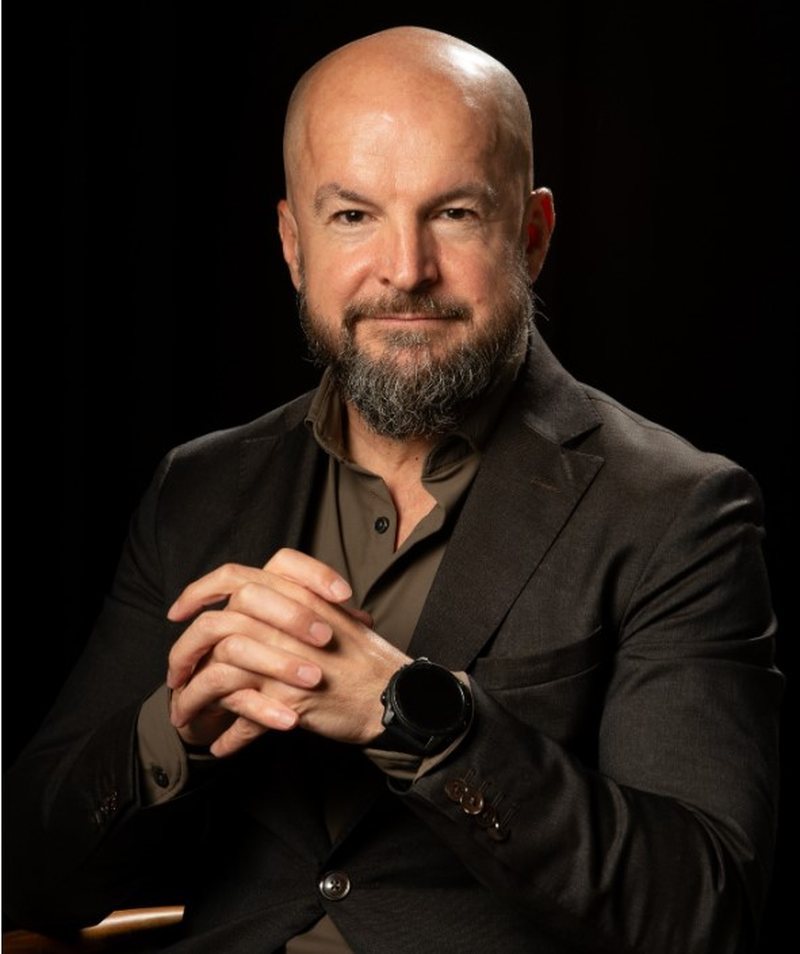
Alfred Lela
Fatos Nano may have lived an Epicurean life, but he died a Shakespearean death.
A tragicomic mist fell over the three days of mourning for Albania’s three-time Prime Minister, saying, of course, much more about the living than about the dead.
It was both amusing and painful to watch how the media, more absorbed in the gossip of the funeral than in the death of a former head of government, made a mess of the women around him. At one point, they reported that Rexhina (the ex-wife) was present, then denied it; at another, they confused V. Nushi for Rexhina, or even Sh. Ngjela.
Naturally, for everything that has to do with the old Socialist-Communist Bloc, one must open the “Window of Xhunga and Hila”: since the days of Nexhmije, every story about the widows of the Left is found there — precise and merciless, like an execution decree signed by Enver himself.
Once that was settled, the grotesque reached its brilliance. Left-leaning portals, instead of showing piety for the departed, rummaged through his life in search of the shadow of their archenemy, Sali Berisha.
It was as if Nano had not died in a hospital bed, but had been carried there lifeless on the shoulders of Flamur Noka, having collapsed in Berisha’s arms — struck by the heartache of their prison years and a dinner of wine and memories where, once again, “the Doctor’s trick” had triumphed.
The socialist Caesar and the democratic Brutus stood once more face-to-face in the Forum of the PissMilet, while every internet citizen with a social-media account played Mark Antony.
Berisha, surely, is unbothered. He must long ago have made Andreotti’s famous quip his own: “In this country they blame me for everything — since the Punic Wars onward.”
But every tragicomedy needs a mourner to close the play and lead the chorus before the curtain falls.
For some time now, that role has belonged to Edi Rama — the Prime Minister de vérité.
In the North, at deaths that carry some weight — a young man in his prime, a clan elder — a group of mourners gives meaning to a meaningless end, replacing the absent song of the highlander laid on the wooden bier. In his quest for a role that includes all roles — poet, singer, minstrel, standard-bearer, tax collector, and treasurer — Edi Rama has begun to appear at great funerals as chief mourner and chief lamenter.
He took on the part with Kadare, to whom he read the eulogy, but never found the grave.
He did not delay with Nano either, though theirs was an uneasy history — as uneasy as any state funeral can be. Still, he appeared: head bowed, dressed in black, grief like an hourglass that can be turned whichever way he pleases — smothering another man’s death under the shadow of his own performance.
For Kadare, they said it was Helena who had asked him. Others, more spiteful, whispered that Rama seized the eulogy himself — in exchange for the grafting rights to a grave on the “Capitol.”
As for Nano’s farewell, perhaps Xhoana knows more… or the window of the widows of the Socialist-Communist Bloc.
And finally, a word for the Democrats. They, too, add their touch of frenzy to the tragicomedy — when they fail to understand that the dead are no longer to be fought, and that the time for peace has come.
Let’s be clear: the time for peace with oneself, above all. For on the edge of any grave — your own or another’s — the greatest blessing is to find peace.
If not there, you will find it even less after death, neither in battle, nor in bitterness with your opponent.
Latest news


Heatwave hits Germany, over 5,400 heat-related deaths
2026-07-10 10:45:33

Land in "foreign hands"
2026-07-10 10:26:15

Mbappe the hero of France, the "Roosters" knock out Morocco in the quarterfinals
2026-07-10 09:54:33
Durrës/ 40-year-old man stabs his wife
2026-07-10 09:48:03



How much could the amount of drug money in the Albanian economy be?!
2026-07-10 09:08:34
Government reduces funds for farmers, increases ADF by 75 million euros
2026-07-10 08:55:46
Horoscope, get to know the star forecast
2026-07-10 08:32:54

Morning Post/ In 2 lines: What mattered yesterday in Albania
2026-07-10 07:52:04
A person was shot dead in Kurbin, first details
2026-07-09 22:54:48


Will the Police also stop those who criticize Rama online?
2026-07-09 21:57:02


FIFA decision shocks England, Quansah ruled out for two matches
2026-07-09 20:51:00

Protest/Pedagogue: 4 million euros for Kanye West is "the next concession"
2026-07-09 19:45:53
French MEP joins protests in Albania: Support for the "Pink Flamingo Revolution"
2026-07-09 19:28:07


Has the lek strengthened or overvalued?
2026-07-09 17:58:05

The trial on the merits for Ilir Meta and Monika Kryemadhi is postponed
2026-07-09 16:47:58

The match between England and Norway risks being postponed, this is the reason
2026-07-09 16:12:46
Murder in Shkodra/ Relatives: Peaceful family, no problems
2026-07-09 16:10:02
Kurti invites opposition leaders to a meeting to create new institutions
2026-07-09 15:43:05


This is the 62-year-old man who killed his wife in Shkodra
2026-07-09 15:01:43

Domestic crime/ Wife killed with shotgun, perpetrator and victim identified
2026-07-09 14:05:18
Gunfire in Shkodra, one victim suspected
2026-07-09 13:49:41
Weapons cache discovered in Fier, Prosecution sends 38-year-old to trial
2026-07-09 13:35:48

Bota e muzikës në zi, ndahet nga jeta në moshën 75-vjeçare ikona Bonnie Tyler
2026-07-09 12:56:29
Monika Kryemadhi in the Criminal Court: The cell phone was seized illegally
2026-07-09 12:45:54


VALEN MP reacts after border detention: Albania is no one's property
2026-07-09 12:15:44
Albanian gang in Belgium sentenced for trafficking 7 tons of cocaine
2026-07-09 12:01:14
Justin Bieber, Shakira and Madonna to perform at 2026 World Cup final
2026-07-09 11:52:54
Euro falls, inflation rises and domestic production loses ground
2026-07-09 11:39:36
Trial at the GJKKO, Meta's new lawyer appears in the session
2026-07-09 11:29:47
Nighttime accident in Gramsh, man and woman injured
2026-07-09 11:20:25
Meta seeks 134 witnesses, GJKKO delivers decision today
2026-07-09 10:56:54


At the peak of the production season, vegetable prices 'fly'
2026-07-09 10:21:14
The African heat returns, the thermometer reaches 40 degrees this weekend
2026-07-09 10:08:08
Opinions from 'anonymous' authors target Flamingo protests
2026-07-09 10:07:15
MEP Waitz: The law on protected areas endangers Albania's path to the EU
2026-07-09 09:52:55
"Le Courrier des Balkans": Edi Rama and the megalomania of power
2026-07-09 09:40:26
The economics of concerts, the prime minister's imaginary 100 million euros
2026-07-09 09:28:19
Erdogan's strange gift to NATO leaders
2026-07-09 09:11:15


Foreign exchange, the rate at which foreign currencies are sold and bought
2026-07-09 08:30:41
“Uniteti i jashtëzakonshëm” i NATO-s dhe mesazhet kryesore nga samiti në Turqi
2026-07-09 08:11:17

Horoskopi, njihuni me parashikim e yjeve
2026-07-09 07:46:15
Alternime kthjellimesh e vranësirash, parashikimi i motit
2026-07-09 07:25:59
Posta e mëngjesit/ Me 2 rreshta: Çfarë pati rëndësi dje në Shqipëri
2026-07-09 07:02:12




Rama brings West in Tirana, using Eastern premises
2026-07-08 20:41:42


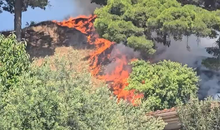
Fire on Kuzum Baba hill in Vlora, flames endanger homes and Tekke
2026-07-08 18:09:45


Shqipëria po plaket, qeveria pa plan
2026-07-08 15:57:26