 Flash News
VIDEO-scandal in Saranda/ Director of AMP Vlora and officials sexually harass tourists
"The New York Times" about Ye's concert: How Rama justifies the $4.5 million in funding
The suspected perpetrator of the murder in Laç is identified, he shot the 40-year-old 7 times near the palace
7 bullets on the doorstep, who is the 40-year-old with 4 surnames who was killed in Laç
Morning Post/ In 2 lines: What mattered yesterday in Albania
Alfred Lela
Albania and Kosovo failed to fulfill their dream of qualifying for the World Cup finals in America this summer — an achievement that would have been historic for both, their first appearance on football’s biggest stage.
Kosovo, despite being younger both as a state and as a federation, went a step further by reaching the second round of the playoff path, where it was defeated in Pristina by Turkey, a regular participant in World Cups.
Albania, on the other hand, lost in the first match to Poland.
If, as far as the World Cup is concerned, everything is over, in many other senses, for both teams, everything has just begun. For Albania, there have already been two European Championship appearances, with respectable performances, and a continued knocking on the door of World Cup qualification. Kosovo, for its part, has so far reached the second round of the playoff stage — its highest achievement to date — and this appears to be only the beginning of its journey.
Optimists hold on to this “promise” of the future for both teams, while pessimists list the failures, particularly in Albania’s case.
What is often avoided in these assessments, however, is a fundamental fact — one that is not, in itself, a problem of the national team: the absence of a system whose components are connected and functioning.
Albania draws its pool of talent from outside the country, and in this sense, it is like hoping to win the lottery — relying on the first (and later the second) generation of Albanian emigrants to continue investing in football as a profession for their children, while also maintaining a connection to Albania.
When that connection fades — and it will — what is the strategy to supply the national team with talent?
In this sense, Albania’s national team is, to a degree, “foreign.” Including the coach, it becomes a team shaped by different football schools and mentalities. The red-and-black national side is, at this point, more a national team of the Albanian diaspora than of Albania itself — more of those who have left than of those who have stayed.
This also highlights another problem: the growing disconnect between two parts of the nation. Those who have left have found more opportunities and better conditions to develop their talent in their host countries, creating an Albania of two speeds.
This, more than anything, speaks to the political governance of the country — one that seems able to build only with the hands of others.
Kosovo is a different story, for entirely different reasons that do not belong within the scope of this article. But one thing is certain: the great dream of these two small countries can only become reality if all three national components come together — Albania, Kosovo, and the diaspora — at least in terms of symbolic strength and numbers.
Until that happens, supporters on both sides of the border, along with those scattered across the world, will continue to swing between optimism and pessimism.
But football is not a battle of emotions alone. It is not just the eagle gesture with the hands, online nationalism, borrowed pride, or the marketing of the national team.
The proof is simple: football is work that takes time.
And a strategy that must begin.
Latest news
Heatwave hits Germany, over 5,400 heat-related deaths
2026-07-10 10:45:33
Land in "foreign hands"
2026-07-10 10:26:15
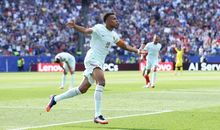
Mbappe the hero of France, the "Roosters" knock out Morocco in the quarterfinals
2026-07-10 09:54:33
Durrës/ 40-year-old man stabs his wife
2026-07-10 09:48:03
How much could the amount of drug money in the Albanian economy be?!
2026-07-10 09:08:34
Government reduces funds for farmers, increases ADF by 75 million euros
2026-07-10 08:55:46
Horoscope, get to know the star forecast
2026-07-10 08:32:54

Morning Post/ In 2 lines: What mattered yesterday in Albania
2026-07-10 07:52:04
A person was shot dead in Kurbin, first details
2026-07-09 22:54:48
Will the Police also stop those who criticize Rama online?
2026-07-09 21:57:02
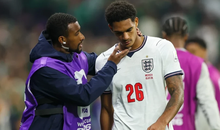
FIFA decision shocks England, Quansah ruled out for two matches
2026-07-09 20:51:00
Protest/Pedagogue: 4 million euros for Kanye West is "the next concession"
2026-07-09 19:45:53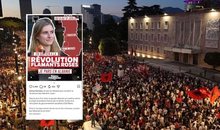
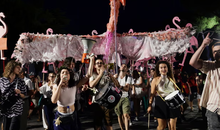
French MEP joins protests in Albania: Support for the "Pink Flamingo Revolution"
2026-07-09 19:28:07
Has the lek strengthened or overvalued?
2026-07-09 17:58:05
The trial on the merits for Ilir Meta and Monika Kryemadhi is postponed
2026-07-09 16:47:58
The match between England and Norway risks being postponed, this is the reason
2026-07-09 16:12:46
Murder in Shkodra/ Relatives: Peaceful family, no problems
2026-07-09 16:10:02
Kurti invites opposition leaders to a meeting to create new institutions
2026-07-09 15:43:05
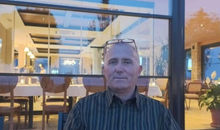
This is the 62-year-old man who killed his wife in Shkodra
2026-07-09 15:01:43
Domestic crime/ Wife killed with shotgun, perpetrator and victim identified
2026-07-09 14:05:18
Gunfire in Shkodra, one victim suspected
2026-07-09 13:49:41
Weapons cache discovered in Fier, Prosecution sends 38-year-old to trial
2026-07-09 13:35:48
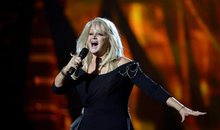
Bota e muzikës në zi, ndahet nga jeta në moshën 75-vjeçare ikona Bonnie Tyler
2026-07-09 12:56:29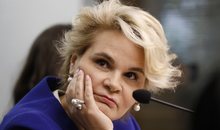
Monika Kryemadhi in the Criminal Court: The cell phone was seized illegally
2026-07-09 12:45:54
VALEN MP reacts after border detention: Albania is no one's property
2026-07-09 12:15:44
Albanian gang in Belgium sentenced for trafficking 7 tons of cocaine
2026-07-09 12:01:14
Justin Bieber, Shakira and Madonna to perform at 2026 World Cup final
2026-07-09 11:52:54
Euro falls, inflation rises and domestic production loses ground
2026-07-09 11:39:36
Trial at the GJKKO, Meta's new lawyer appears in the session
2026-07-09 11:29:47
Nighttime accident in Gramsh, man and woman injured
2026-07-09 11:20:25
Meta seeks 134 witnesses, GJKKO delivers decision today
2026-07-09 10:56:54

At the peak of the production season, vegetable prices 'fly'
2026-07-09 10:21:14
The African heat returns, the thermometer reaches 40 degrees this weekend
2026-07-09 10:08:08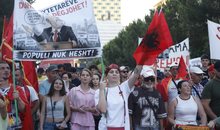
Opinions from 'anonymous' authors target Flamingo protests
2026-07-09 10:07:15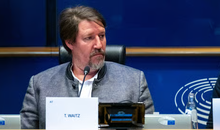
MEP Waitz: The law on protected areas endangers Albania's path to the EU
2026-07-09 09:52:55
"Le Courrier des Balkans": Edi Rama and the megalomania of power
2026-07-09 09:40:26
The economics of concerts, the prime minister's imaginary 100 million euros
2026-07-09 09:28:19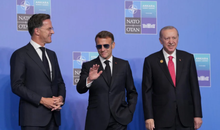
Erdogan's strange gift to NATO leaders
2026-07-09 09:11:15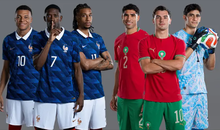
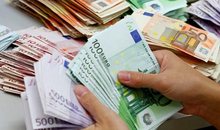
Foreign exchange, the rate at which foreign currencies are sold and bought
2026-07-09 08:30:41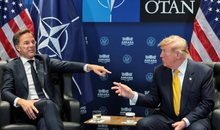
“Uniteti i jashtëzakonshëm” i NATO-s dhe mesazhet kryesore nga samiti në Turqi
2026-07-09 08:11:17
Horoskopi, njihuni me parashikim e yjeve
2026-07-09 07:46:15
Alternime kthjellimesh e vranësirash, parashikimi i motit
2026-07-09 07:25:59
Posta e mëngjesit/ Me 2 rreshta: Çfarë pati rëndësi dje në Shqipëri
2026-07-09 07:02:12
Rama brings West in Tirana, using Eastern premises
2026-07-08 20:41:42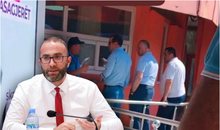
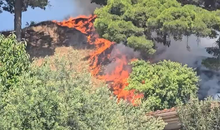
Fire on Kuzum Baba hill in Vlora, flames endanger homes and Tekke
2026-07-08 18:09:45
Shqipëria po plaket, qeveria pa plan
2026-07-08 15:57:26