 Flash News
VIDEO-scandal in Saranda/ Director of AMP Vlora and officials sexually harass tourists
"The New York Times" about Ye's concert: How Rama justifies the $4.5 million in funding
The suspected perpetrator of the murder in Laç is identified, he shot the 40-year-old 7 times near the palace
7 bullets on the doorstep, who is the 40-year-old with 4 surnames who was killed in Laç
Morning Post/ In 2 lines: What mattered yesterday in Albania
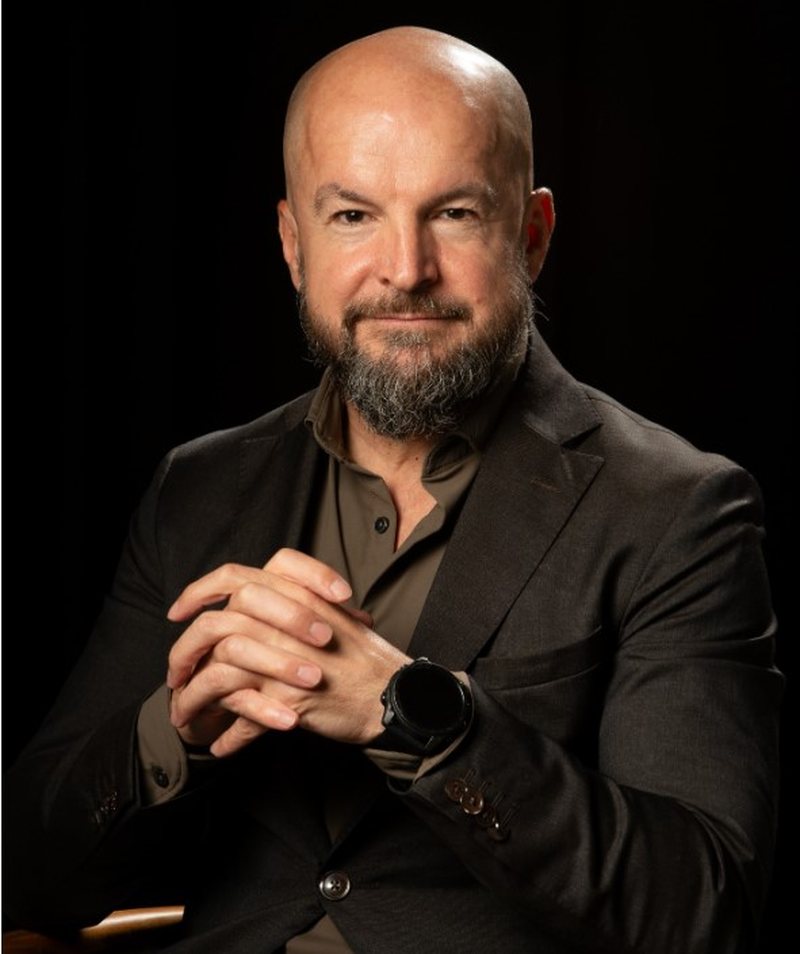
Alfred Lela
Edi Rama Appears to Have Entered the Final Phase of Power: Rage Before the Fall
In a post on X, a forum he chooses for his most ceremonial proclamations, imitating Western leaders who use this network – somewhat more political than the entertainment-driven Facebook and Instagram – the Prime Minister signaled defiance in the face of a SPAK move against the parliamentary mandate of his deputy, B. Balluku.
With today’s stance, Edi Rama marks a third type of behavior in relation to the Special Prosecution (SPAK) on parliamentary immunity: first, obstructive (but negotiated) in the Tahiri case; second, unconditionally supportive in the Berisha/Ahmetaj cases; and now, outright obstruction in the Balluku case.
He secured a tense agreement in exchange for the silence of his Interior Minister; as for Ahmetaj, he let go quickly – most likely as a “sacrificial lamb,” a trophy for SPAK to enhance its authority, and in exchange for not being personally touched.
In the Balluku case, we are dealing with a Rama whose face has changed completely in relation to the “new justice.” The first suspicion raised by this sharp turn of the Prime Minister is the alarm of a possible personal implication. This can arise for two reasons: Either Balluku “talks” to save herself, or in exchange for immunity (a repentant collaborator); or, through the unfolding of the tracks and the contextual and factual links in the file, his role in the corrupt affairs for which Balluku is indicted begins to emerge.
Against the second hypothesis, Rama himself seems to argue with his own past statements. Remember that, at the Socialist Party Assembly two years ago, he declared with a peculiar pride and vanity that he was not troubled by the imprisonment of his subordinates because “the Socialist Party has 800,000 members.” Edi Rama was reusing, in not-so-symbolic fashion, the old communist postulate: “one falls, thousands rise.”
This is to say that with Balluku’s fall, he does not worry about the name or the political legacy of the government and the SP. He sees and experiences the idea of power as a personal fate and a personal will. In this sense, he is right when he says that he is not a politician.
The political end is usually the beginning of agony in the relationship between the leader and his creations, whether human or institutional. Rama opened the tap of this agony with Arben Ahmetaj, the first deputy who left Albania seeking political asylum. As with every first blow, he managed to contain it, and, carried away by arrogance, thought he could do the same with Erion Veliaj, his “political son.”
Despite the mastery he attributes to himself – and that many others echo – the propaganda management of the “Veliaj affair” was scandalous. Unfocused, with overlapping and non-strategic messaging, this was the moment when Rama, in his attempt to create events and get ahead of them, ended up trailing behind. Veliaj, even though crushed and betrayed, had kept outside the noose a few media voices, nurtured in the lap of favors and friendships, which offered him just enough public protection to remain politically alive.
Rama is once again being placed at the tail end of events when it comes to his relationship with the justice system. With the arrogance of someone who, before being a politician or statesman, seeks History through vanity, Rama has often declared that SPAK was not made by the Americans, but by him and the Socialist Party. Today, rumors and gossip say quite the opposite. Whatever the truth – whether he built it himself and the creature is now turning against him, or whether it was built by “his Americans” (of the Biden–Blinken–Kim era) – Edi Rama seems destined to speak a different language, in a different tone and rhythm, about “his justice.” The Americans are no longer the same, but karma remains unchanged.
He now has to negotiate the limits of his power. If he hands over Belinda without a fight, in return, she may show him the guillotine. If he does the opposite, everyone will read it as a fit of rage. Faced with a new kind of war, where the enemy is not political, and the method is not “capturing the king,” but rather “scorched earth” around him, a confused Edi Rama will drift about, trying to make sense of the new political reality into which a Zeus-like greed has plunged him to create everything and swallow everything.
Like a monarch with a fallen court, he must now choose between a comic fate and a tragic one.
Latest news
Heatwave hits Germany, over 5,400 heat-related deaths
2026-07-10 10:45:33

Land in "foreign hands"
2026-07-10 10:26:15
Mbappe the hero of France, the "Roosters" knock out Morocco in the quarterfinals
2026-07-10 09:54:33
Durrës/ 40-year-old man stabs his wife
2026-07-10 09:48:03



How much could the amount of drug money in the Albanian economy be?!
2026-07-10 09:08:34
Government reduces funds for farmers, increases ADF by 75 million euros
2026-07-10 08:55:46
Horoscope, get to know the star forecast
2026-07-10 08:32:54

Morning Post/ In 2 lines: What mattered yesterday in Albania
2026-07-10 07:52:04
A person was shot dead in Kurbin, first details
2026-07-09 22:54:48
Will the Police also stop those who criticize Rama online?
2026-07-09 21:57:02


FIFA decision shocks England, Quansah ruled out for two matches
2026-07-09 20:51:00

Protest/Pedagogue: 4 million euros for Kanye West is "the next concession"
2026-07-09 19:45:53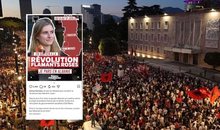
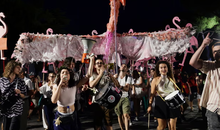
French MEP joins protests in Albania: Support for the "Pink Flamingo Revolution"
2026-07-09 19:28:07


Has the lek strengthened or overvalued?
2026-07-09 17:58:05

The trial on the merits for Ilir Meta and Monika Kryemadhi is postponed
2026-07-09 16:47:58

The match between England and Norway risks being postponed, this is the reason
2026-07-09 16:12:46
Murder in Shkodra/ Relatives: Peaceful family, no problems
2026-07-09 16:10:02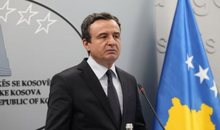
Kurti invites opposition leaders to a meeting to create new institutions
2026-07-09 15:43:05
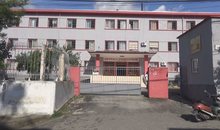

This is the 62-year-old man who killed his wife in Shkodra
2026-07-09 15:01:43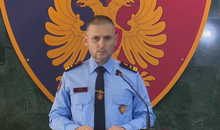

Domestic crime/ Wife killed with shotgun, perpetrator and victim identified
2026-07-09 14:05:18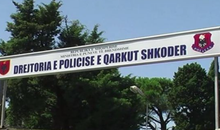
Gunfire in Shkodra, one victim suspected
2026-07-09 13:49:41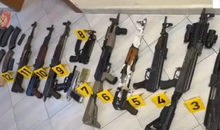
Weapons cache discovered in Fier, Prosecution sends 38-year-old to trial
2026-07-09 13:35:48

Bota e muzikës në zi, ndahet nga jeta në moshën 75-vjeçare ikona Bonnie Tyler
2026-07-09 12:56:29
Monika Kryemadhi in the Criminal Court: The cell phone was seized illegally
2026-07-09 12:45:54
VALEN MP reacts after border detention: Albania is no one's property
2026-07-09 12:15:44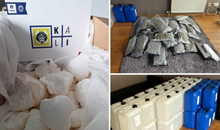
Albanian gang in Belgium sentenced for trafficking 7 tons of cocaine
2026-07-09 12:01:14
Justin Bieber, Shakira and Madonna to perform at 2026 World Cup final
2026-07-09 11:52:54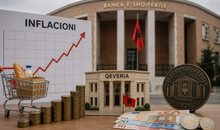
Euro falls, inflation rises and domestic production loses ground
2026-07-09 11:39:36
Trial at the GJKKO, Meta's new lawyer appears in the session
2026-07-09 11:29:47
Nighttime accident in Gramsh, man and woman injured
2026-07-09 11:20:25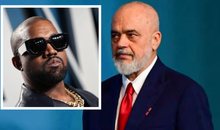
Meta seeks 134 witnesses, GJKKO delivers decision today
2026-07-09 10:56:54

At the peak of the production season, vegetable prices 'fly'
2026-07-09 10:21:14
The African heat returns, the thermometer reaches 40 degrees this weekend
2026-07-09 10:08:08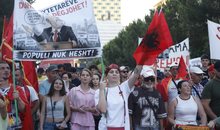
Opinions from 'anonymous' authors target Flamingo protests
2026-07-09 10:07:15
MEP Waitz: The law on protected areas endangers Albania's path to the EU
2026-07-09 09:52:55
"Le Courrier des Balkans": Edi Rama and the megalomania of power
2026-07-09 09:40:26
The economics of concerts, the prime minister's imaginary 100 million euros
2026-07-09 09:28:19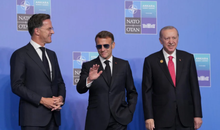
Erdogan's strange gift to NATO leaders
2026-07-09 09:11:15
Foreign exchange, the rate at which foreign currencies are sold and bought
2026-07-09 08:30:41
“Uniteti i jashtëzakonshëm” i NATO-s dhe mesazhet kryesore nga samiti në Turqi
2026-07-09 08:11:17
Horoskopi, njihuni me parashikim e yjeve
2026-07-09 07:46:15
Alternime kthjellimesh e vranësirash, parashikimi i motit
2026-07-09 07:25:59
Posta e mëngjesit/ Me 2 rreshta: Çfarë pati rëndësi dje në Shqipëri
2026-07-09 07:02:12




Rama brings West in Tirana, using Eastern premises
2026-07-08 20:41:42
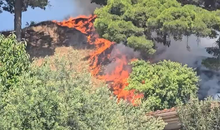
Fire on Kuzum Baba hill in Vlora, flames endanger homes and Tekke
2026-07-08 18:09:45

Shqipëria po plaket, qeveria pa plan
2026-07-08 15:57:26