 Flash News
VIDEO-scandal in Saranda/ Director of AMP Vlora and officials sexually harass tourists
"The New York Times" about Ye's concert: How Rama justifies the $4.5 million in funding
The suspected perpetrator of the murder in Laç is identified, he shot the 40-year-old 7 times near the palace
7 bullets on the doorstep, who is the 40-year-old with 4 surnames who was killed in Laç
Morning Post/ In 2 lines: What mattered yesterday in Albania
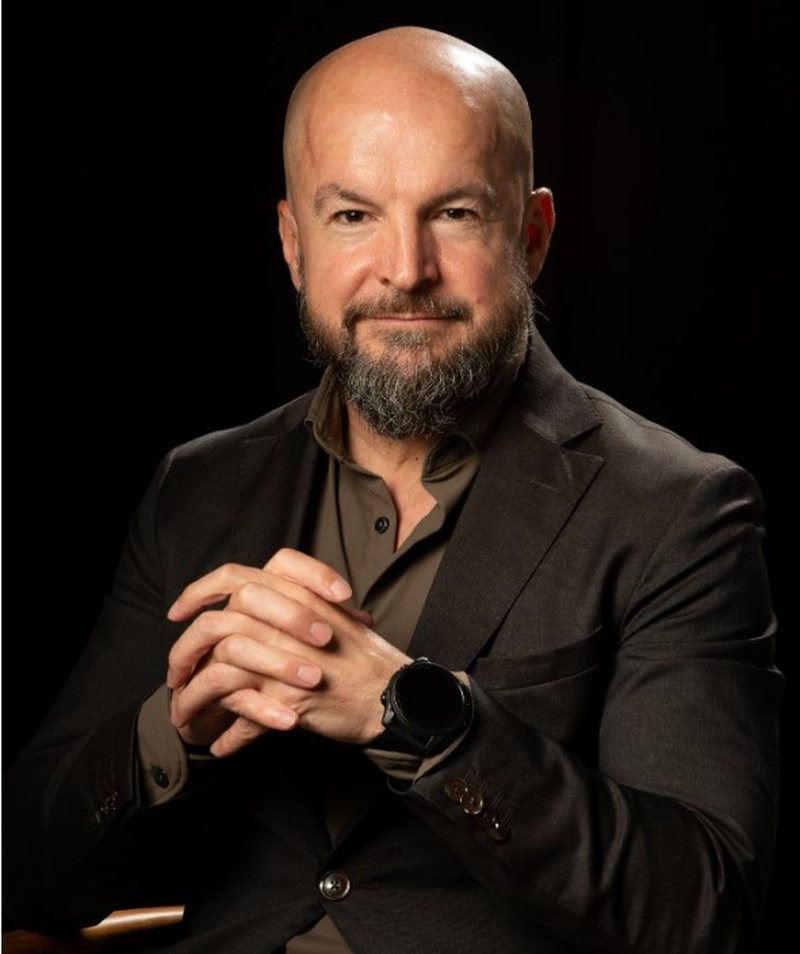
Alfred Lela
By using tear gas—reportedly expired- Rama may have managed to clear opposition protesters from the square in front of his office earlier than expected. But in doing so, he also tempted them into another demonstration, sooner than even they themselves had anticipated.
The cynicism of deploying toxic substances unnecessarily, which makes police violence disproportionate, should not be read as a sign of strength, but of weakness. The gas and the arbitrary arrests carried out by the police on Saturday night appeared to be nothing more than a continuation of Edi Rama’s speech in Parliament on Thursday—another exercise in hatred.
The third phase of this cycle followed on Sunday, with a social media post in which the Prime Minister branded the citizens he governs as “mercenaries” and “thugs.”
Rama has lost his nerve—the very composure normally expected of those who hold high public office and are supposed to preserve a minimum standard of public courtesy. A calm prime minister would not have reacted in this manner in any of these instances.
In all likelihood, this outburst—performed as if Rama were a Chechen commander somewhere deep in the Caucasus—has more to do with Rama himself than with the opposition. He senses that the system he built, and believed to be permanent, is no longer so. Two pillars he considered until recently to be his personal safeguards—structures from which he alone benefited—have now withdrawn, creating new balances.
These are the U.S. administration, which has shifted, let us say, into neutrality, and SPAK, which has demonstrated a new inclination to investigate corruption even within the Prime Minister’s own courtyard.
The opposition protest—significant both in numbers and in quality—now threatens to remove the third pillar on which Rama relied: controlled elections. A threatening opposition, combined with an at least neutral international community and a prosecutorial body willing to pursue corruption even when it reaches or incarnates itself in the Prime Minister, is more than Rama can tolerate.
He is accustomed to presiding over a system without competition, further guaranteed by those who publicly preach and supposedly safeguard open political contestation—the internationals and the courts. Now that these factors no longer stand on his side, Rama retreats into his Hobbesian (primordial) state, where he must become the Leviathan—the raging monster that fights “with its own.”
He is now realizing that the opposition was not weak for reasons intrinsic to the opposition itself.
Rama’s fury is tied to the reappearance of competition, a defining feature of democracy that he simply cannot endure. Politically, he has lived like the bullied who returns as the bully. His insistence that he is not a politician but an artist; that he is a master strategist in a chess game; that he is a hunter laying traps in the forest and delighting in watching animals fall into them—all this is nothing more than an attempt to mask the complex of the bullied transformed into the bully.
The opposition, for its part, must now add gas masks to its inventory of protest tools.
Latest news
Heatwave hits Germany, over 5,400 heat-related deaths
2026-07-10 10:45:33
Land in "foreign hands"
2026-07-10 10:26:15
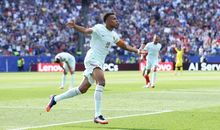
Mbappe the hero of France, the "Roosters" knock out Morocco in the quarterfinals
2026-07-10 09:54:33
Durrës/ 40-year-old man stabs his wife
2026-07-10 09:48:03

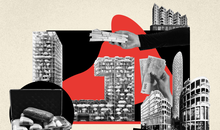
How much could the amount of drug money in the Albanian economy be?!
2026-07-10 09:08:34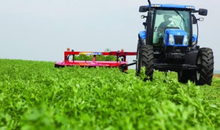
Government reduces funds for farmers, increases ADF by 75 million euros
2026-07-10 08:55:46
Horoscope, get to know the star forecast
2026-07-10 08:32:54

Morning Post/ In 2 lines: What mattered yesterday in Albania
2026-07-10 07:52:04
A person was shot dead in Kurbin, first details
2026-07-09 22:54:48

Will the Police also stop those who criticize Rama online?
2026-07-09 21:57:02


FIFA decision shocks England, Quansah ruled out for two matches
2026-07-09 20:51:00
Protest/Pedagogue: 4 million euros for Kanye West is "the next concession"
2026-07-09 19:45:53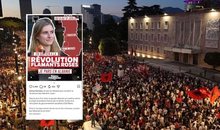
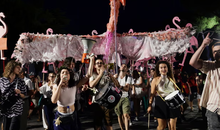
French MEP joins protests in Albania: Support for the "Pink Flamingo Revolution"
2026-07-09 19:28:07

Has the lek strengthened or overvalued?
2026-07-09 17:58:05
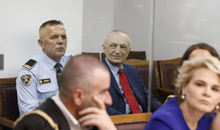
The trial on the merits for Ilir Meta and Monika Kryemadhi is postponed
2026-07-09 16:47:58
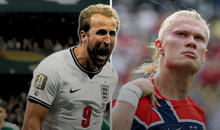
The match between England and Norway risks being postponed, this is the reason
2026-07-09 16:12:46
Murder in Shkodra/ Relatives: Peaceful family, no problems
2026-07-09 16:10:02
Kurti invites opposition leaders to a meeting to create new institutions
2026-07-09 15:43:05
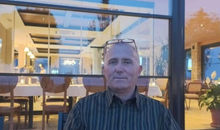
This is the 62-year-old man who killed his wife in Shkodra
2026-07-09 15:01:43

Domestic crime/ Wife killed with shotgun, perpetrator and victim identified
2026-07-09 14:05:18
Gunfire in Shkodra, one victim suspected
2026-07-09 13:49:41
Weapons cache discovered in Fier, Prosecution sends 38-year-old to trial
2026-07-09 13:35:48

Bota e muzikës në zi, ndahet nga jeta në moshën 75-vjeçare ikona Bonnie Tyler
2026-07-09 12:56:29
Monika Kryemadhi in the Criminal Court: The cell phone was seized illegally
2026-07-09 12:45:54

VALEN MP reacts after border detention: Albania is no one's property
2026-07-09 12:15:44
Albanian gang in Belgium sentenced for trafficking 7 tons of cocaine
2026-07-09 12:01:14
Justin Bieber, Shakira and Madonna to perform at 2026 World Cup final
2026-07-09 11:52:54
Euro falls, inflation rises and domestic production loses ground
2026-07-09 11:39:36
Trial at the GJKKO, Meta's new lawyer appears in the session
2026-07-09 11:29:47
Nighttime accident in Gramsh, man and woman injured
2026-07-09 11:20:25
Meta seeks 134 witnesses, GJKKO delivers decision today
2026-07-09 10:56:54

At the peak of the production season, vegetable prices 'fly'
2026-07-09 10:21:14
The African heat returns, the thermometer reaches 40 degrees this weekend
2026-07-09 10:08:08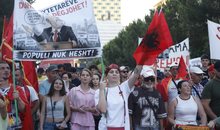
Opinions from 'anonymous' authors target Flamingo protests
2026-07-09 10:07:15
MEP Waitz: The law on protected areas endangers Albania's path to the EU
2026-07-09 09:52:55
"Le Courrier des Balkans": Edi Rama and the megalomania of power
2026-07-09 09:40:26
The economics of concerts, the prime minister's imaginary 100 million euros
2026-07-09 09:28:19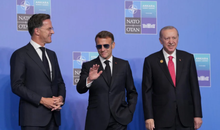
Erdogan's strange gift to NATO leaders
2026-07-09 09:11:15
Foreign exchange, the rate at which foreign currencies are sold and bought
2026-07-09 08:30:41
“Uniteti i jashtëzakonshëm” i NATO-s dhe mesazhet kryesore nga samiti në Turqi
2026-07-09 08:11:17
Horoskopi, njihuni me parashikim e yjeve
2026-07-09 07:46:15
Alternime kthjellimesh e vranësirash, parashikimi i motit
2026-07-09 07:25:59
Posta e mëngjesit/ Me 2 rreshta: Çfarë pati rëndësi dje në Shqipëri
2026-07-09 07:02:12



Rama brings West in Tirana, using Eastern premises
2026-07-08 20:41:42


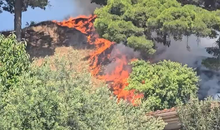
Fire on Kuzum Baba hill in Vlora, flames endanger homes and Tekke
2026-07-08 18:09:45

Shqipëria po plaket, qeveria pa plan
2026-07-08 15:57:26