
 Flash News
VIDEO-scandal in Saranda/ Director of AMP Vlora and officials sexually harass tourists
"The New York Times" about Ye's concert: How Rama justifies the $4.5 million in funding
The suspected perpetrator of the murder in Laç is identified, he shot the 40-year-old 7 times near the palace
7 bullets on the doorstep, who is the 40-year-old with 4 surnames who was killed in Laç
Morning Post/ In 2 lines: What mattered yesterday in Albania
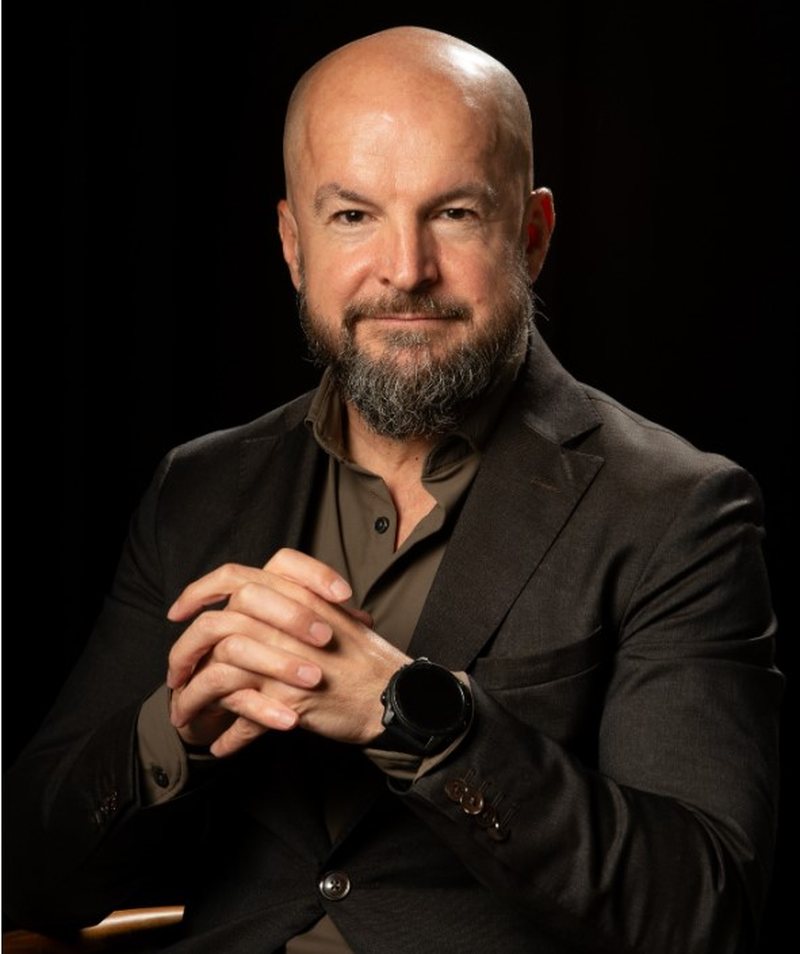
Alfred Lela
The landslide victory of conservative Peter Magyar in Hungary, which ended the 16-year 'reign' of ultraconservative Viktor Orban, has also resonated in our Tirana where, as Mr. Rama says, 'anything can happen'.
This is exactly what happened with Tirana's interpretation of the 'Budapest Velvet Revolution': an all-or-nothing affair. The victory of Magyar, an Orbanist who emerged from Orban's orbit in 2024, instead of being interpreted as a battle within and for power, was sharpened as a war between the opposition and the government, where the former wins, no matter how autocratic and strong the government is.
This is a mistake in genre, it's like saying 'I went to the theater and saw a dramatic play and laughed the whole time.' Chances are, you either confused the genre of the play and don't know the difference between drama and comedy, or you've gone for a loop, and as such you're in psychiatry not political commentary or in the running to become the Magyar of Albania.
In our case, when Tirana commentators paint the political event in Budapest as an 'opposition development', we are not dealing with a mistake, not at all, but with a deliberate confusion of genre. Notice how, these are the same people who 'confuse' the government with the opposition every hour and day, the account they should demand from the government, they avenge on the opposition, the guilt they should recognize as the strong, they impose as an unforgivable mistake on the weaker, and so on until the end of their shame, which is endless like human stupidity.
This perspective on the event is particularly impressive for the opposition, who want to grow their own wealth on top of a pile of manure that the government has poured into parliament, at the expense of the opposition.
Starting with Anastas Lulja of the left and Eleonor of the right, and all the other tails, who are looking for a popular comet that will make them stars, ignore what has happened like devils and fools. To some extent they are forgiven, because they have taken over their dreams with Peter Magyar. They want, if not to be, at least to be perceived for a moment as the 'Magyars' of Albanian politics; even if on the wrong premises built with the government AI, let them be him: blonde, handsome, articulate, Davids who defeat Goliath with the slingshots of biblical fate.
I don't know, when they stand in front of the mirror, whether they retain this vision, or whether the cold truth, the resemblance to, the word that comes out, Abu Mohammad al-Jolan, is lost on them.
Both sides, commentators and opponents, forget four fundamental things that led to the Hungarian overthrow.
First, the right cause. Magyar became the denouncer of a power from which he himself had emerged, the ruling party, and he did so by 'blowing up' one of the main pillars on which Fidesz was built: the family. Orbán and his followers tried to bury a scandal involving an official who had been convicted of child sexual abuse and was running a childcare institution. With the knowledge of a government that shouted 'children, family, nation, Hungary'.
Magyar's denunciation thus exposed the government's hypocrisy and made him the political knight of the day. In a country where family and Christian tradition still play a major role, this is not something that passes by: punishing who needs to be punished and honoring who needs to be honored.
Second, in countries like Hungary, which rose up in a bloody rebellion against the Soviets in 1956, 12 years after the establishment of the 'new world order,' 16 years is a long time. Orban's four terms in office, despite some very positive developments for the country, created a governing impasse that Hungarians felt and were not ready for more.
Third, and most importantly, Orban's Hungary is not Edi Rama's Albania. In a completely episodic, but still explanatory, case in point, in this Albania, the speakers of the Diaspora Summit, which is being held in Tirana, have been forcibly given the speech points that they will use in the activity. Rama has set the perfect example of what is called spin dictatorship: externally he creates the illusion of democracy, activities, tourism, song and dance, TV debates and, internally, a punitive and seductive apparatus, both with public resources, at such levels of arrogance, that he forces even the Albanians who have fled to escape control, to become part of the control they left behind. Or if you want a more 'local' case, do you remember the farmer from Lushnja, who made a criticism in the eyes of the Prime Minister, was publicly lynched by him and then came out and apologized publicly, for having expected the calm of the 'great one'.
Without forgetting the fourth, which is by far the most important: in Albania, there are no free elections, in Hungary nothing but free elections!
This Albania, the commentators and the opposition, do not care about, and no longer accept it. Why? Because they are part of it, they have a place in it, which would be gone if Rama were to be overthrown. Rama is not only the one who treats them with this or that; more than that, he is the creator of an illusion within which they live with the self-esteem of a janissary. They are the first to throw themselves on the walls of truth, which drip hot tar, not only because they make loot, but also because they are considered a 'special unit' of the vanguard of the spin-dictatorship.
Some see themselves as the Magyars of Albania, in the studio where the government sets the soundtrack, and others are promoted to 'independent analysts', who weave ropes of lies like this one with the 'Hungarian fairy tale' in which the Albanian opposition is the negative character (which never corrects itself), even though the events take place in the citadel of power.
Latest news


Heatwave hits Germany, over 5,400 heat-related deaths
2026-07-10 10:45:33
Land in "foreign hands"
2026-07-10 10:26:15

Mbappe the hero of France, the "Roosters" knock out Morocco in the quarterfinals
2026-07-10 09:54:33
Durrës/ 40-year-old man stabs his wife
2026-07-10 09:48:03



How much could the amount of drug money in the Albanian economy be?!
2026-07-10 09:08:34
Government reduces funds for farmers, increases ADF by 75 million euros
2026-07-10 08:55:46
Horoscope, get to know the star forecast
2026-07-10 08:32:54

Morning Post/ In 2 lines: What mattered yesterday in Albania
2026-07-10 07:52:04
A person was shot dead in Kurbin, first details
2026-07-09 22:54:48


Will the Police also stop those who criticize Rama online?
2026-07-09 21:57:02


FIFA decision shocks England, Quansah ruled out for two matches
2026-07-09 20:51:00

Protest/Pedagogue: 4 million euros for Kanye West is "the next concession"
2026-07-09 19:45:53
French MEP joins protests in Albania: Support for the "Pink Flamingo Revolution"
2026-07-09 19:28:07


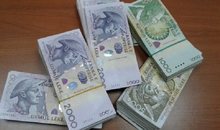
Has the lek strengthened or overvalued?
2026-07-09 17:58:05

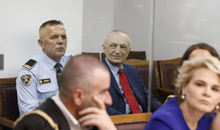
The trial on the merits for Ilir Meta and Monika Kryemadhi is postponed
2026-07-09 16:47:58

The match between England and Norway risks being postponed, this is the reason
2026-07-09 16:12:46
Murder in Shkodra/ Relatives: Peaceful family, no problems
2026-07-09 16:10:02
Kurti invites opposition leaders to a meeting to create new institutions
2026-07-09 15:43:05


This is the 62-year-old man who killed his wife in Shkodra
2026-07-09 15:01:43

Domestic crime/ Wife killed with shotgun, perpetrator and victim identified
2026-07-09 14:05:18
Gunfire in Shkodra, one victim suspected
2026-07-09 13:49:41
Weapons cache discovered in Fier, Prosecution sends 38-year-old to trial
2026-07-09 13:35:48

Bota e muzikës në zi, ndahet nga jeta në moshën 75-vjeçare ikona Bonnie Tyler
2026-07-09 12:56:29
Monika Kryemadhi in the Criminal Court: The cell phone was seized illegally
2026-07-09 12:45:54


VALEN MP reacts after border detention: Albania is no one's property
2026-07-09 12:15:44
Albanian gang in Belgium sentenced for trafficking 7 tons of cocaine
2026-07-09 12:01:14
Justin Bieber, Shakira and Madonna to perform at 2026 World Cup final
2026-07-09 11:52:54
Euro falls, inflation rises and domestic production loses ground
2026-07-09 11:39:36
Trial at the GJKKO, Meta's new lawyer appears in the session
2026-07-09 11:29:47
Nighttime accident in Gramsh, man and woman injured
2026-07-09 11:20:25
Meta seeks 134 witnesses, GJKKO delivers decision today
2026-07-09 10:56:54

At the peak of the production season, vegetable prices 'fly'
2026-07-09 10:21:14
The African heat returns, the thermometer reaches 40 degrees this weekend
2026-07-09 10:08:08
Opinions from 'anonymous' authors target Flamingo protests
2026-07-09 10:07:15
MEP Waitz: The law on protected areas endangers Albania's path to the EU
2026-07-09 09:52:55
"Le Courrier des Balkans": Edi Rama and the megalomania of power
2026-07-09 09:40:26
The economics of concerts, the prime minister's imaginary 100 million euros
2026-07-09 09:28:19
Erdogan's strange gift to NATO leaders
2026-07-09 09:11:15

Foreign exchange, the rate at which foreign currencies are sold and bought
2026-07-09 08:30:41
“Uniteti i jashtëzakonshëm” i NATO-s dhe mesazhet kryesore nga samiti në Turqi
2026-07-09 08:11:17

Horoskopi, njihuni me parashikim e yjeve
2026-07-09 07:46:15
Alternime kthjellimesh e vranësirash, parashikimi i motit
2026-07-09 07:25:59
Posta e mëngjesit/ Me 2 rreshta: Çfarë pati rëndësi dje në Shqipëri
2026-07-09 07:02:12




Rama brings West in Tirana, using Eastern premises
2026-07-08 20:41:42


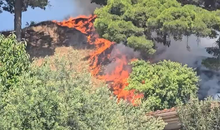
Fire on Kuzum Baba hill in Vlora, flames endanger homes and Tekke
2026-07-08 18:09:45

Shqipëria po plaket, qeveria pa plan
2026-07-08 15:57:26