 Flash News
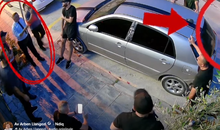
VIDEO-scandal in Saranda/ Director of AMP Vlora and officials sexually harass tourists
"The New York Times" about Ye's concert: How Rama justifies the $4.5 million in funding
The suspected perpetrator of the murder in Laç is identified, he shot the 40-year-old 7 times near the palace
7 bullets on the doorstep, who is the 40-year-old with 4 surnames who was killed in Laç
Morning Post/ In 2 lines: What mattered yesterday in Albania
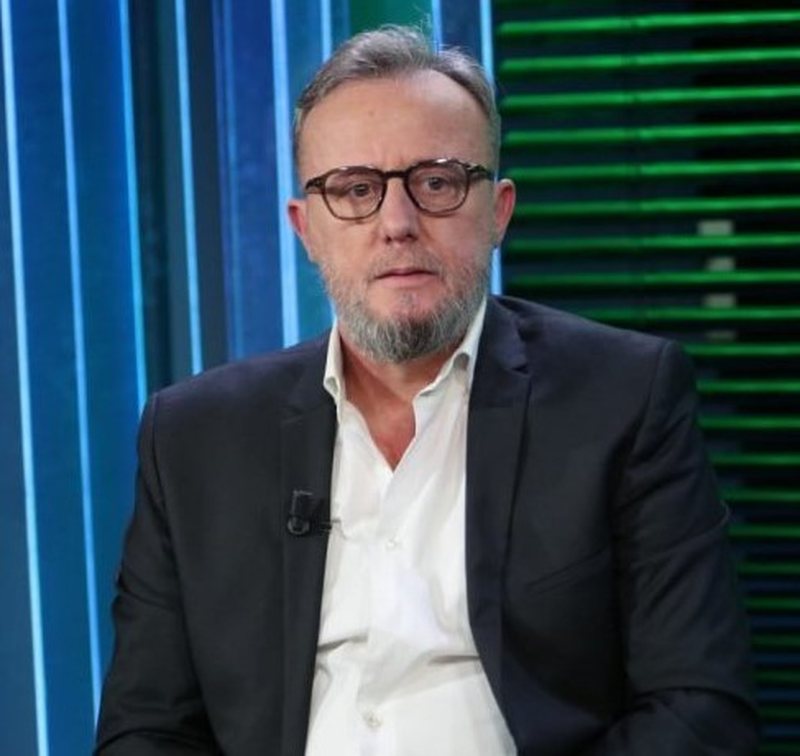
Armand Maho
Edi Rama once again rushed to appear aligned with the United States by approving a resolution declaring the state of Iran a sponsor of terrorism. At first glance, this seems like a wise decision by a NATO member country which, although the smallest player in the alliance, stands alongside its most powerful ally, the United States, in a conflict where, most likely, it has little real stake — except seeing it as a good opportunity to raise prices and extract taxes.
But what is the Iranian regime that Rama calls a terrorist, and why does the way he exercises power in Albania resemble so closely the model of the ayatollahs?
In the Islamic Republic of Iran, the Ayatollah is the highest authority in the country. Despite the existence of a president and a parliament, it is he who controls everything. He commands the Revolutionary Guard and the army, foreign policy, government appointments, and the judiciary. He is not subject to elections and is chosen only by the Assembly of Experts, which is renewed every eight years. His mandate ends only with death or removal.
If one looks closely, in Rama’s psycho-political profile, this is the ideal state he is gradually trying to build in Albania. The only difference is that, given his limitations, he cannot openly oppose allied countries, which he hypocritically calls partners. He uses that term only as long as those states tolerate his corruption and his ties to trafficking and organized crime; the moment they show signs of opposing this model, he does not hesitate to label them corrupt — or even, to some extent, hostile.
In terms of state-building, Rama in these years of power does not differ much from an Iranian ayatollah. In fact, in terms of reach and control, he may wield even more power than they do. Through networks of corruption and the system he has built, he controls everything in the country: parliament, which he has reduced to a puppet; the judiciary (the so-called vetting process had precisely this aim), the police, the army, organized crime, elections, the media, and beyond. The only difference is that he has not done this through the constitution, but through systemic corruption. In Iran, the leader of the opposition has been under house arrest since 2014; here, Rama kept one under house arrest for a year and lobbied to have him declared non grata. Meanwhile, the head of another opposition party has been held in prison for over a year without evidence. His delusions of grandeur have gone so far as to erect, in the center of Tirana, a building bearing his own image, as a provocation to the statue of Skanderbeg.
Yet Rama is right when he instructs Taulant Balla — beyond the expensive watches he receives as gifts — to draft a resolution pointing the finger at Iran as a sponsor of international terrorism. Only, this stance reflects the behavior of a political trickster. Or perhaps he is seeking credit at a difficult moment for his power. With this move, he seeks to cover up the cancerous state of money laundering he has built in the heart of Tirana. Recently, an investigation by the Belgian prosecution revealed that a single ordinary trafficker owned 40 apartments in Tirana, Durrës, and Fier.
The resolution may have been passed, but anyone who believes Rama did this for the good of Albania is, at best, naive — or, at worst, compromised. At this difficult moment, as allied states begin to turn against him, the prime minister is desperately searching for his next protective patron. For this, he relies on assemblies of the wealthy and the palatial elites — offspring of crime and corruption — and does not need the opposition’s presence.
If Rama were sincere in his fight against terrorism, he would first stop the madness of construction in this country, hand Belinda Balluku over to justice, fight organized crime, and allow free elections. Because resolutions initiated with Taulant Balla — whose name appears in countless wiretaps and criminal files in Albania — are nothing more than “empty noise dressed up as substance.”
Latest news
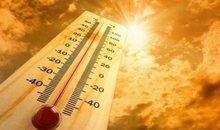
Heatwave hits Germany, over 5,400 heat-related deaths
2026-07-10 10:45:33
Land in "foreign hands"
2026-07-10 10:26:15
Mbappe the hero of France, the "Roosters" knock out Morocco in the quarterfinals
2026-07-10 09:54:33
Durrës/ 40-year-old man stabs his wife
2026-07-10 09:48:03

How much could the amount of drug money in the Albanian economy be?!
2026-07-10 09:08:34
Government reduces funds for farmers, increases ADF by 75 million euros
2026-07-10 08:55:46
Horoscope, get to know the star forecast
2026-07-10 08:32:54

Morning Post/ In 2 lines: What mattered yesterday in Albania
2026-07-10 07:52:04
A person was shot dead in Kurbin, first details
2026-07-09 22:54:48

Will the Police also stop those who criticize Rama online?
2026-07-09 21:57:02

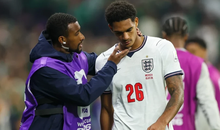
FIFA decision shocks England, Quansah ruled out for two matches
2026-07-09 20:51:00
Protest/Pedagogue: 4 million euros for Kanye West is "the next concession"
2026-07-09 19:45:53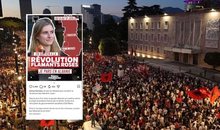
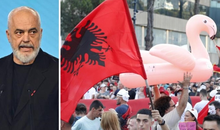
French MEP joins protests in Albania: Support for the "Pink Flamingo Revolution"
2026-07-09 19:28:07


Has the lek strengthened or overvalued?
2026-07-09 17:58:05
The trial on the merits for Ilir Meta and Monika Kryemadhi is postponed
2026-07-09 16:47:58

The match between England and Norway risks being postponed, this is the reason
2026-07-09 16:12:46
Murder in Shkodra/ Relatives: Peaceful family, no problems
2026-07-09 16:10:02
Kurti invites opposition leaders to a meeting to create new institutions
2026-07-09 15:43:05
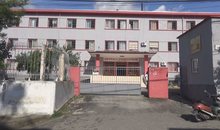
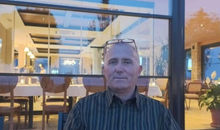
This is the 62-year-old man who killed his wife in Shkodra
2026-07-09 15:01:43

Domestic crime/ Wife killed with shotgun, perpetrator and victim identified
2026-07-09 14:05:18
Gunfire in Shkodra, one victim suspected
2026-07-09 13:49:41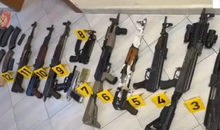
Weapons cache discovered in Fier, Prosecution sends 38-year-old to trial
2026-07-09 13:35:48

Bota e muzikës në zi, ndahet nga jeta në moshën 75-vjeçare ikona Bonnie Tyler
2026-07-09 12:56:29
Monika Kryemadhi in the Criminal Court: The cell phone was seized illegally
2026-07-09 12:45:54
VALEN MP reacts after border detention: Albania is no one's property
2026-07-09 12:15:44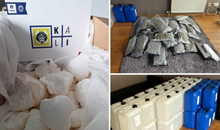
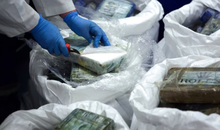
Albanian gang in Belgium sentenced for trafficking 7 tons of cocaine
2026-07-09 12:01:14
Justin Bieber, Shakira and Madonna to perform at 2026 World Cup final
2026-07-09 11:52:54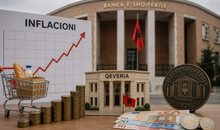
Euro falls, inflation rises and domestic production loses ground
2026-07-09 11:39:36
Trial at the GJKKO, Meta's new lawyer appears in the session
2026-07-09 11:29:47
Nighttime accident in Gramsh, man and woman injured
2026-07-09 11:20:25
Meta seeks 134 witnesses, GJKKO delivers decision today
2026-07-09 10:56:54

At the peak of the production season, vegetable prices 'fly'
2026-07-09 10:21:14
The African heat returns, the thermometer reaches 40 degrees this weekend
2026-07-09 10:08:08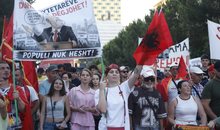
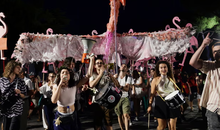
Opinions from 'anonymous' authors target Flamingo protests
2026-07-09 10:07:15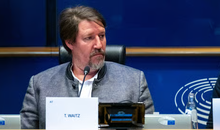
MEP Waitz: The law on protected areas endangers Albania's path to the EU
2026-07-09 09:52:55
"Le Courrier des Balkans": Edi Rama and the megalomania of power
2026-07-09 09:40:26
The economics of concerts, the prime minister's imaginary 100 million euros
2026-07-09 09:28:19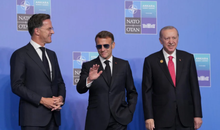
Erdogan's strange gift to NATO leaders
2026-07-09 09:11:15
Foreign exchange, the rate at which foreign currencies are sold and bought
2026-07-09 08:30:41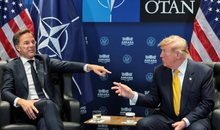
“Uniteti i jashtëzakonshëm” i NATO-s dhe mesazhet kryesore nga samiti në Turqi
2026-07-09 08:11:17
Horoskopi, njihuni me parashikim e yjeve
2026-07-09 07:46:15
Alternime kthjellimesh e vranësirash, parashikimi i motit
2026-07-09 07:25:59
Posta e mëngjesit/ Me 2 rreshta: Çfarë pati rëndësi dje në Shqipëri
2026-07-09 07:02:12


Rama brings West in Tirana, using Eastern premises
2026-07-08 20:41:42

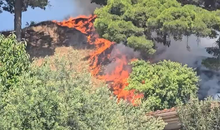
Fire on Kuzum Baba hill in Vlora, flames endanger homes and Tekke
2026-07-08 18:09:45

Shqipëria po plaket, qeveria pa plan
2026-07-08 15:57:26