 Flash News
VIDEO-scandal in Saranda/ Director of AMP Vlora and officials sexually harass tourists
"The New York Times" about Ye's concert: How Rama justifies the $4.5 million in funding
The suspected perpetrator of the murder in Laç is identified, he shot the 40-year-old 7 times near the palace
7 bullets on the doorstep, who is the 40-year-old with 4 surnames who was killed in Laç
Morning Post/ In 2 lines: What mattered yesterday in Albania
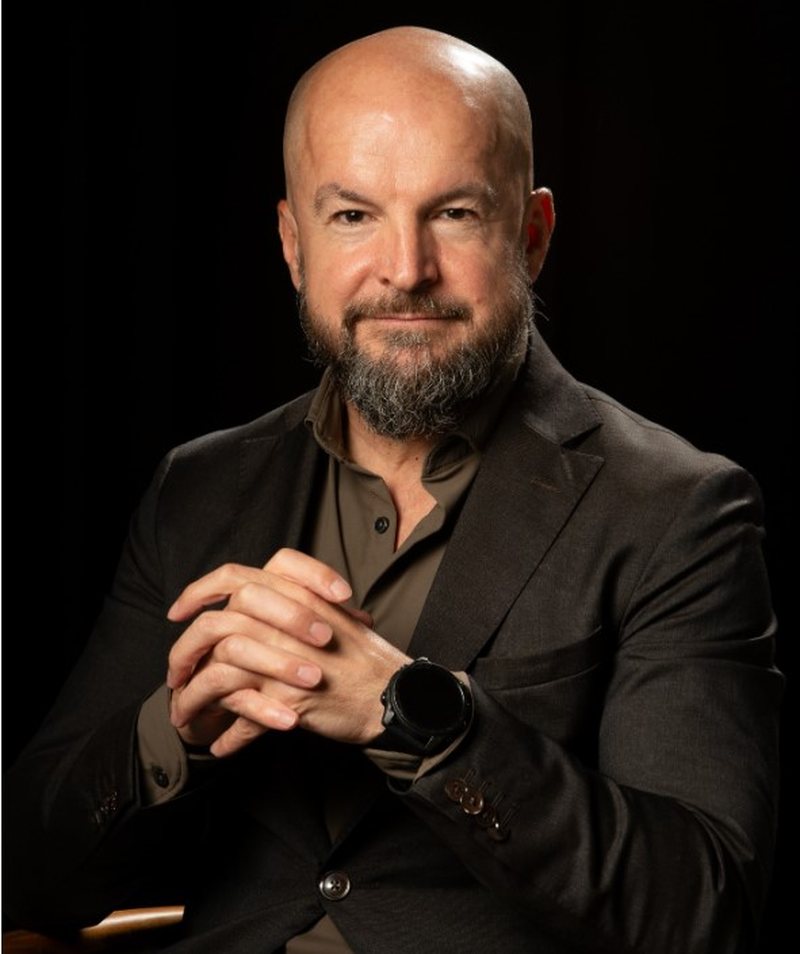
Alfred Lela
Opposition supporters are rightly infuriated by the election of Endrit Shabani as Ombudsman—carried triumphantly on the white horse of signatures gathered from Democratic MPs. Because procedure and parliamentary jurisprudence are difficult to understand, people are more easily persuaded by whatever is repeated in the pro-government media, which—by sheer volume—dominates the landscape.
Out of a natural human instinct to assign blame, this time the designated culprit is Flamur Noka, who “takes the beating” even though he neither heads the parliamentary group nor sits on the Committee of Legal Affairs.
The reasons behind his personal signature have nothing to do with conspiracy, but with two rather mediocre facts: first, an opposition MP, wanting to “do a favor,” asked colleagues for another favor; and second, Noka’s signature—and those of other opposition MPs—was not given to certify Shabani as the opposition’s candidate for Ombudsman, but merely to allow him to be heard before the parliamentary committee. In other words, to enable him to present his candidacy.
Opposition MPs may be guilty of short-sightedness, but not of moral or political corruption—nor of some “deal” with the Socialists.
Yes, there was short-sightedness in failing to see, from afar, what was obvious: that Shabani did not enter this dance covertly, but with guarantees from Edi Rama.
There are at least two post-fact indicators that explain this. The leaders of the main parliamentary groups had agreed, in a gentleman’s arrangement, to set aside the existing candidates and restart the process for the Ombudsman. One day later, Taulant Balla withdrew, declaring that Rama had vetoed the agreement in favor of Shabani.
This relates directly to Rama’s unusual appearance in Parliament—rare in recent months—and his presence at the Socialist parliamentary group meeting to ensure there would be no vote leakage and that Shabani would receive unanimous backing, as indeed he did.
Returning to the signatures: an MP has the legal right to withdraw a signature even during the plenary session, but after Rama’s decision, this option was not permitted.
Legally, opposition MPs were “run over” twice: first, their signatures were used for a purpose other than intended (to certify a candidacy, not to allow a hearing), and second, they were denied the right to withdraw those signatures—something permitted by Parliament’s rules.
But this is hardly new in a state run by Rama, who moves his finger toward Peleshi, Balla, or whoever else, and institutions bend accordingly.
The question that must be asked is: why did Rama mobilize his entire apparatus in the service of Endrit Shabani? The same old reason—which certainly has nothing to do with admiration for Shabani, whom he likely cannot stomach—namely diversion. He performs a diversion for the opposition’s grassroots, telling them: You are counterfeit; offer you a position, and you’ll take it; your venomous language toward me is easily forgotten.
But also for a second reason, a spin strategy aimed outward. He wants to show foreigners that the official opposition’s narrative about his autocracy cannot be true if he is willing to appoint opposition figures to positions where “the people are defended.”
At its core, it is both his necessity and his entertainment.
This is where the opposition MPs’ short-sightedness lies: they still do not understand either the nature of their opponent or the nature of power.
Flamur Noka, or any other name, becomes nothing more than collateral damage—created and magnified because the mind struggles to explain events and seeks comfort in finding someone to blame.
At the bottom of the sieve lies the bran of hypocrisy. In this case, that of Endrit Shabani, who until yesterday brandished two diplomas before us on every TV screen: one from Oxford, and the other from the self-appointed “opposition” he claimed the country needed—of course, in contrast to Sali Berisha or Flamur Noka.
Today, he is the People’s Advocate, but he has ceased to advocate for his own principles. Today he has an office, a salary, a car, and a driver—but also a new identity: a convenient ornament in the socialist-Sorosian lap of Edi Rama.
He is not the first, nor will he be the last. But I will say this: Oxford does not teach you character. And what a tragic waste—to collapse a decade of public activism for the sake of a single chair.
Latest news

Heatwave hits Germany, over 5,400 heat-related deaths
2026-07-10 10:45:33
Land in "foreign hands"
2026-07-10 10:26:15
Mbappe the hero of France, the "Roosters" knock out Morocco in the quarterfinals
2026-07-10 09:54:33
Durrës/ 40-year-old man stabs his wife
2026-07-10 09:48:03


How much could the amount of drug money in the Albanian economy be?!
2026-07-10 09:08:34
Government reduces funds for farmers, increases ADF by 75 million euros
2026-07-10 08:55:46
Horoscope, get to know the star forecast
2026-07-10 08:32:54

Morning Post/ In 2 lines: What mattered yesterday in Albania
2026-07-10 07:52:04
A person was shot dead in Kurbin, first details
2026-07-09 22:54:48

Will the Police also stop those who criticize Rama online?
2026-07-09 21:57:02

FIFA decision shocks England, Quansah ruled out for two matches
2026-07-09 20:51:00
Protest/Pedagogue: 4 million euros for Kanye West is "the next concession"
2026-07-09 19:45:53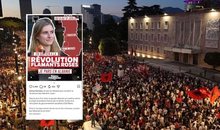
French MEP joins protests in Albania: Support for the "Pink Flamingo Revolution"
2026-07-09 19:28:07


Has the lek strengthened or overvalued?
2026-07-09 17:58:05
The trial on the merits for Ilir Meta and Monika Kryemadhi is postponed
2026-07-09 16:47:58

The match between England and Norway risks being postponed, this is the reason
2026-07-09 16:12:46
Murder in Shkodra/ Relatives: Peaceful family, no problems
2026-07-09 16:10:02
Kurti invites opposition leaders to a meeting to create new institutions
2026-07-09 15:43:05
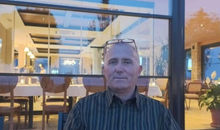
This is the 62-year-old man who killed his wife in Shkodra
2026-07-09 15:01:43

Domestic crime/ Wife killed with shotgun, perpetrator and victim identified
2026-07-09 14:05:18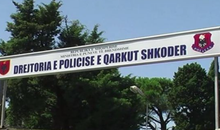
Gunfire in Shkodra, one victim suspected
2026-07-09 13:49:41
Weapons cache discovered in Fier, Prosecution sends 38-year-old to trial
2026-07-09 13:35:48

Bota e muzikës në zi, ndahet nga jeta në moshën 75-vjeçare ikona Bonnie Tyler
2026-07-09 12:56:29
Monika Kryemadhi in the Criminal Court: The cell phone was seized illegally
2026-07-09 12:45:54
VALEN MP reacts after border detention: Albania is no one's property
2026-07-09 12:15:44
Albanian gang in Belgium sentenced for trafficking 7 tons of cocaine
2026-07-09 12:01:14
Justin Bieber, Shakira and Madonna to perform at 2026 World Cup final
2026-07-09 11:52:54
Euro falls, inflation rises and domestic production loses ground
2026-07-09 11:39:36
Trial at the GJKKO, Meta's new lawyer appears in the session
2026-07-09 11:29:47
Nighttime accident in Gramsh, man and woman injured
2026-07-09 11:20:25
Meta seeks 134 witnesses, GJKKO delivers decision today
2026-07-09 10:56:54

At the peak of the production season, vegetable prices 'fly'
2026-07-09 10:21:14
The African heat returns, the thermometer reaches 40 degrees this weekend
2026-07-09 10:08:08
Opinions from 'anonymous' authors target Flamingo protests
2026-07-09 10:07:15
MEP Waitz: The law on protected areas endangers Albania's path to the EU
2026-07-09 09:52:55
"Le Courrier des Balkans": Edi Rama and the megalomania of power
2026-07-09 09:40:26
The economics of concerts, the prime minister's imaginary 100 million euros
2026-07-09 09:28:19
Erdogan's strange gift to NATO leaders
2026-07-09 09:11:15
Foreign exchange, the rate at which foreign currencies are sold and bought
2026-07-09 08:30:41
“Uniteti i jashtëzakonshëm” i NATO-s dhe mesazhet kryesore nga samiti në Turqi
2026-07-09 08:11:17
Horoskopi, njihuni me parashikim e yjeve
2026-07-09 07:46:15
Alternime kthjellimesh e vranësirash, parashikimi i motit
2026-07-09 07:25:59
Posta e mëngjesit/ Me 2 rreshta: Çfarë pati rëndësi dje në Shqipëri
2026-07-09 07:02:12



Rama brings West in Tirana, using Eastern premises
2026-07-08 20:41:42

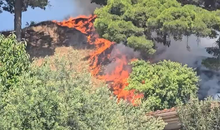
Fire on Kuzum Baba hill in Vlora, flames endanger homes and Tekke
2026-07-08 18:09:45

Shqipëria po plaket, qeveria pa plan
2026-07-08 15:57:26