 Flash News
VIDEO-scandal in Saranda/ Director of AMP Vlora and officials sexually harass tourists
"The New York Times" about Ye's concert: How Rama justifies the $4.5 million in funding
The suspected perpetrator of the murder in Laç is identified, he shot the 40-year-old 7 times near the palace
7 bullets on the doorstep, who is the 40-year-old with 4 surnames who was killed in Laç
Morning Post/ In 2 lines: What mattered yesterday in Albania
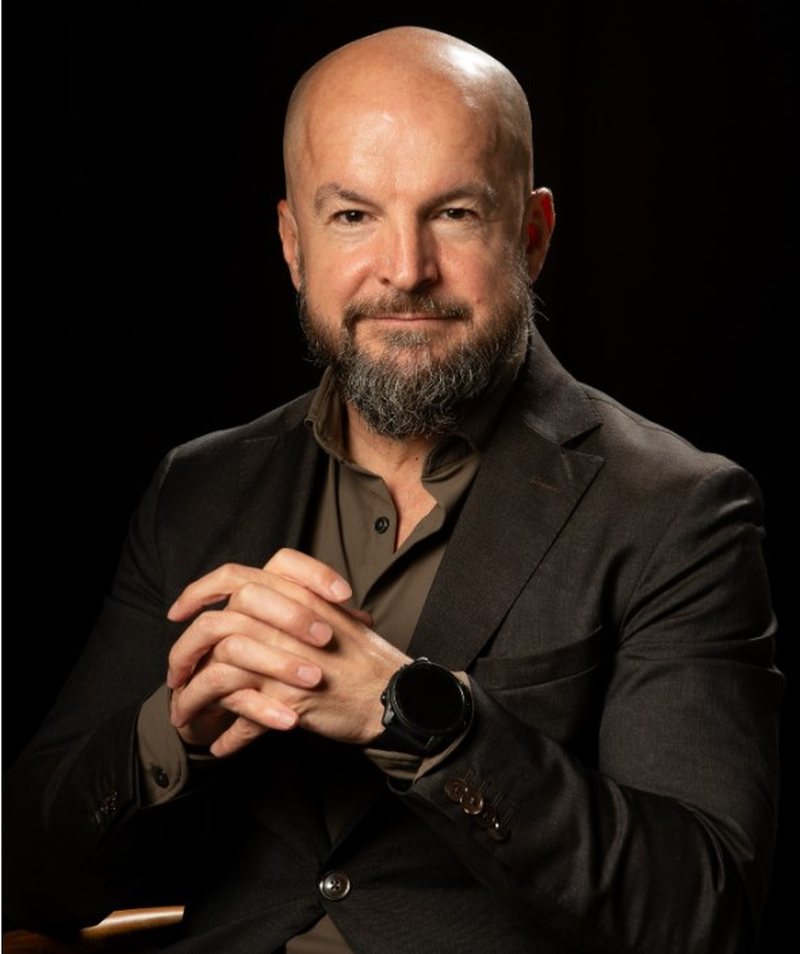
Alfred Lela
At the execution of Gilmando Dani, a previously convicted criminal figure, it is not the murder itself that surprises anyone. In that world where people live by the bullet, chances are you will also fall by the bullet.
Three elements stand out in this sophisticated execution — in fact, they scream.
First, let us consider the time of the attack.
Even for Paul Castellano, the boss of the Gambino family in New York, the assassins chose an evening hour — a time when they could be less visible and hide more easily, but also because mobsters (at least those in America) do not allow themselves an open challenge to the forces of law.
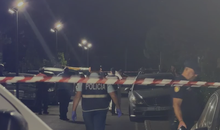
Today, in one of the most heavily watched segments of Albania, several men fired at a luxury, armored car carrying their enemy. It was a lucky day for the random bystanders nearby, but not for the target.
The Rinas Police Station is barely 200 meters away. Cameras and radars of every kind, in every corner.
Security, at least in theory, is the keyword in this area.
The assassins did not care.
This kind of security means nothing to them because they are ready to make this challenge — a provocation — to the state.
In their language, they “don’t give a damn.”
Regardless of wealth, the saying “we’ve made up our minds” applies.
And no matter how powerful a criminal group might be, the state, if it had the will, could neutralize it anytime, anywhere.
That is where we have stalled.
All this connects to the second element, found in the car of the executed man — where, miracle of our times, sat a police officer.
Moreover, one of those charged with internal oversight — the kind who is supposed to guard the police from corruption, in a word.
This is not the main reason, nor the only link between crime and the state — it is just a thread.
As the wiretaps show, crime bosses have direct connections with police chiefs and directors who are on their payrolls.
Within that hierarchy, an officer from the Internal Affairs Directorate cannot serve for more than what he was in this case: the driver.
In this space, where the borders of the law have been erased, move the people of the criminal world.
They are neither afraid nor cautious, because they see what they do as “a business like any other.”
The fatal thing here is that those who should be facing them — those who should see their job as a public-safety profession — have also turned it into a business.
Crime has no fear of the police, because the police have no fear of the law, because they, in turn, see that same lack of fear from their chiefs and from the chiefs of those chiefs at the very top of the state pyramid.
As for fear of God — don’t ask. It hasn’t even been a hundred years since the churches and mosques were torn down.
There is also a third element, one that relates to what we hear being said and goes completely against what we see happening.
Today, the Minister of the Interior, less than an hour after the attack, was boasting in the Parliamentary Security Committee, with a self-confidence born either of naivety or of indifference.
Her figures and statements were more an exercise in propaganda than the expression of a high state official truly concerned with public safety and order.
We cannot entirely blame her.
Ms. Koçiu is nothing more than an imitator of her boss, who has long lived in the era of “post-truth” and “alternative facts.”
In plain terms, he does not consider facts but overturns them for the sake of propaganda.
He is not interested in the state, but in power.
And that power he has built so completely that it would collapse overnight without its reliance on crime and gangs.
And that is the ultimate reason why the bandits appeared today in broad daylight, right next to the international airport, killed their rivals, and burned the getaway car a few kilometers away.
For a long time now, they and others like them have been in a business relationship with the state — the very state that should protect citizens from them.
Sometimes the state hires them as subcontractors, and at other times, the opposite happens.
That is why in the cars of these “tough guys” you find every kind of state uniform — from police blue to the dark cloaks of justice officials.
Latest news

Heatwave hits Germany, over 5,400 heat-related deaths
2026-07-10 10:45:33
Land in "foreign hands"
2026-07-10 10:26:15
Mbappe the hero of France, the "Roosters" knock out Morocco in the quarterfinals
2026-07-10 09:54:33
Durrës/ 40-year-old man stabs his wife
2026-07-10 09:48:03

How much could the amount of drug money in the Albanian economy be?!
2026-07-10 09:08:34
Government reduces funds for farmers, increases ADF by 75 million euros
2026-07-10 08:55:46
Horoscope, get to know the star forecast
2026-07-10 08:32:54

Morning Post/ In 2 lines: What mattered yesterday in Albania
2026-07-10 07:52:04
A person was shot dead in Kurbin, first details
2026-07-09 22:54:48


Will the Police also stop those who criticize Rama online?
2026-07-09 21:57:02


FIFA decision shocks England, Quansah ruled out for two matches
2026-07-09 20:51:00

Protest/Pedagogue: 4 million euros for Kanye West is "the next concession"
2026-07-09 19:45:53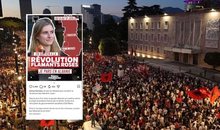
French MEP joins protests in Albania: Support for the "Pink Flamingo Revolution"
2026-07-09 19:28:07



Has the lek strengthened or overvalued?
2026-07-09 17:58:05

The trial on the merits for Ilir Meta and Monika Kryemadhi is postponed
2026-07-09 16:47:58

The match between England and Norway risks being postponed, this is the reason
2026-07-09 16:12:46
Murder in Shkodra/ Relatives: Peaceful family, no problems
2026-07-09 16:10:02
Kurti invites opposition leaders to a meeting to create new institutions
2026-07-09 15:43:05
This is the 62-year-old man who killed his wife in Shkodra
2026-07-09 15:01:43

Domestic crime/ Wife killed with shotgun, perpetrator and victim identified
2026-07-09 14:05:18
Gunfire in Shkodra, one victim suspected
2026-07-09 13:49:41
Weapons cache discovered in Fier, Prosecution sends 38-year-old to trial
2026-07-09 13:35:48

Bota e muzikës në zi, ndahet nga jeta në moshën 75-vjeçare ikona Bonnie Tyler
2026-07-09 12:56:29
Monika Kryemadhi in the Criminal Court: The cell phone was seized illegally
2026-07-09 12:45:54
VALEN MP reacts after border detention: Albania is no one's property
2026-07-09 12:15:44
Albanian gang in Belgium sentenced for trafficking 7 tons of cocaine
2026-07-09 12:01:14
Justin Bieber, Shakira and Madonna to perform at 2026 World Cup final
2026-07-09 11:52:54
Euro falls, inflation rises and domestic production loses ground
2026-07-09 11:39:36
Trial at the GJKKO, Meta's new lawyer appears in the session
2026-07-09 11:29:47
Nighttime accident in Gramsh, man and woman injured
2026-07-09 11:20:25
Meta seeks 134 witnesses, GJKKO delivers decision today
2026-07-09 10:56:54

At the peak of the production season, vegetable prices 'fly'
2026-07-09 10:21:14
The African heat returns, the thermometer reaches 40 degrees this weekend
2026-07-09 10:08:08
Opinions from 'anonymous' authors target Flamingo protests
2026-07-09 10:07:15
MEP Waitz: The law on protected areas endangers Albania's path to the EU
2026-07-09 09:52:55
"Le Courrier des Balkans": Edi Rama and the megalomania of power
2026-07-09 09:40:26
The economics of concerts, the prime minister's imaginary 100 million euros
2026-07-09 09:28:19
Erdogan's strange gift to NATO leaders
2026-07-09 09:11:15

Foreign exchange, the rate at which foreign currencies are sold and bought
2026-07-09 08:30:41
“Uniteti i jashtëzakonshëm” i NATO-s dhe mesazhet kryesore nga samiti në Turqi
2026-07-09 08:11:17

Horoskopi, njihuni me parashikim e yjeve
2026-07-09 07:46:15
Alternime kthjellimesh e vranësirash, parashikimi i motit
2026-07-09 07:25:59
Posta e mëngjesit/ Me 2 rreshta: Çfarë pati rëndësi dje në Shqipëri
2026-07-09 07:02:12





Rama brings West in Tirana, using Eastern premises
2026-07-08 20:41:42

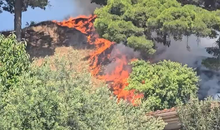
Fire on Kuzum Baba hill in Vlora, flames endanger homes and Tekke
2026-07-08 18:09:45


Shqipëria po plaket, qeveria pa plan
2026-07-08 15:57:26