 Flash News
VIDEO-scandal in Saranda/ Director of AMP Vlora and officials sexually harass tourists
"The New York Times" about Ye's concert: How Rama justifies the $4.5 million in funding
The suspected perpetrator of the murder in Laç is identified, he shot the 40-year-old 7 times near the palace
7 bullets on the doorstep, who is the 40-year-old with 4 surnames who was killed in Laç
Morning Post/ In 2 lines: What mattered yesterday in Albania
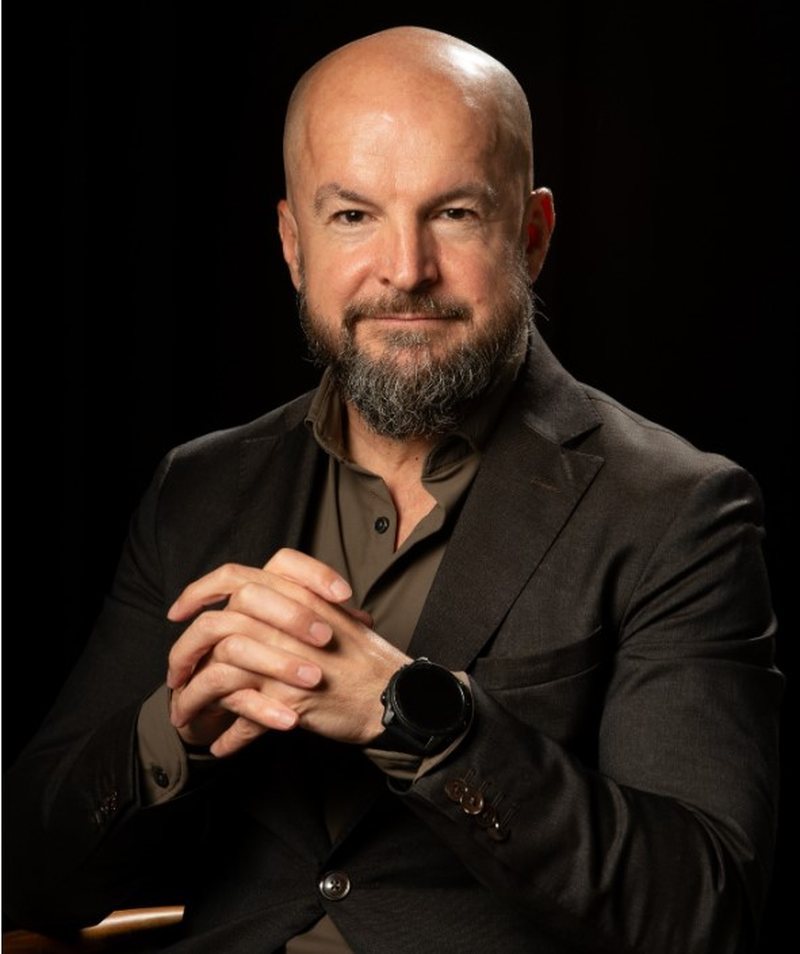
Alfred Lela
That Albania is full of “intellectuals” who continue to be regarded as such even though the last book they read was in university—and even then it was a textbook—is well known. It is also well known that here an “intellectual” is anyone with a university diploma, even though diplomas have become like Botox injections, now offered even by dentists.
What is neither well known nor clearly understood is that a (public) intellectual rests on three premises: first, they are connected to creative activity and actually practice it—through writing, the arts, or academia; second, they have a public voice and are not ivory-tower thinkers; and third, they align the ideal of the word with the ideal of action.
From theory, let us descend into practice—specifically to the dialogue table convened by opposition leader Sali Berisha, and to the reaction of the “intellectuals” toward it. I will use the word intellectual in quotation marks because all of the commentators—Lubonja excepted—I classify (forgive my prejudice) as proletarians of the word: a species cultivated by the internet with its universality, neutrality, and web-ness. Put plainly: they have mouths and tongues, social-media pages, podcasts recorded in bedrooms, they teach in Tirana’s semi-universities or in the provinces—but they are not intellectuals. They do not create. They repeat the same clichés, the same images, the same theatrical props of thought and action. When they fail to break into the mainstream, they jump into the conspiracy markets. The goal is one: to enter the center through extremes—not through creation, but through shock.
Why did these “intellectuals” latch onto the opposition’s roundtable, each from their own angle of eccentricity? Because they await crises as saviors of their relevance. They hope that amid turbulence, they might move from the margins to the center. Their instinct is correct: only crises rescue extremists. In times of calm, they are nothing more than psychological knots seeking somewhere to unravel. Perceiving the opposition as being in crisis, they grow confused when they are not publicly summoned by name to grace the table—not as equals, not as contributors, but as saviors. In their tangled minds, they envision an aula magna where, even if they are not at the head, the roundness of the table creates the illusion that they are. It is the dream of donkeys who imagine themselves knights—hence seated at a primus inter pares table with King Arthur.
If one pays attention to their reactions—illogical as all extremes are—they articulate a grievance according to which it was Sali Berisha who invited them, and this, supposedly, invalidates the invitation. Oh? Then who should have invited them? Pëllumbi, the Democratic Party’s receptionist? The Holy Spirit? Donald Trump, God forbid?
It is not the invitation, nor its form, that troubles them. It is the need to invent and fight an imaginary battle—to have windmills turning so their balloons of illusion might stay aloft. In their agitation, they fantasize about the horizons toward which the great opposition body should march, and the vertical leaps it must perform to get there.
One says: I was invited, but I didn’t go. Another: I was invited, I went, but I didn’t like it because the table was rectangular, not like King Arthur’s, where, no matter where I sat, I would be at the center. And here we arrive at the difference between people who are public accidents and intellectuals: their relationship to the center. The former, unable to withstand solitude or incoherence, understand the center as themselves and their hallucinations. The latter seek to place ideas at the center, but are comfortable even when that center revolves around other ideas. They do not see their visions as universal truths, but as part of an internal creative process. If they are not accepted, they move on to something else.
I do not expect my personal distaste for these “intellectuals” to mean anything to them. But their contrast with others at the table should explain something. Amid the absence of a hundred and one whims, the bought of a thousand and one accounts, the freeloaders of a million and one “we’ll see when the time comes,” the anti-opposition media brought to the foreground the unhinged in search of the center. Yet at the table sat dozens of people engaged in genuine creative processes, each in their own field—artists, authors, journalists, entrepreneurs, activists, clerics, and others.
None were highlighted, because government-aligned media, as always, held up to their mirrors only the grinning faces, the Olios' and Stelios. That these “intellectuals of stick and rope” also helped reinforce this perception only proves that the alliance of banality triumphs more easily in the age of the internet.
We may not be able to stop it—but at the very least, we can explain it. And ridicule it.
Latest news

Heatwave hits Germany, over 5,400 heat-related deaths
2026-07-10 10:45:33

Land in "foreign hands"
2026-07-10 10:26:15
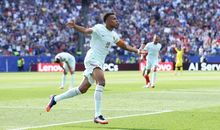
Mbappe the hero of France, the "Roosters" knock out Morocco in the quarterfinals
2026-07-10 09:54:33
Durrës/ 40-year-old man stabs his wife
2026-07-10 09:48:03


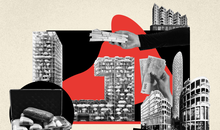
How much could the amount of drug money in the Albanian economy be?!
2026-07-10 09:08:34
Government reduces funds for farmers, increases ADF by 75 million euros
2026-07-10 08:55:46
Horoscope, get to know the star forecast
2026-07-10 08:32:54

Morning Post/ In 2 lines: What mattered yesterday in Albania
2026-07-10 07:52:04
A person was shot dead in Kurbin, first details
2026-07-09 22:54:48
Will the Police also stop those who criticize Rama online?
2026-07-09 21:57:02

FIFA decision shocks England, Quansah ruled out for two matches
2026-07-09 20:51:00
Protest/Pedagogue: 4 million euros for Kanye West is "the next concession"
2026-07-09 19:45:53
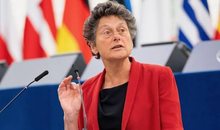
French MEP joins protests in Albania: Support for the "Pink Flamingo Revolution"
2026-07-09 19:28:07

Has the lek strengthened or overvalued?
2026-07-09 17:58:05
The trial on the merits for Ilir Meta and Monika Kryemadhi is postponed
2026-07-09 16:47:58
The match between England and Norway risks being postponed, this is the reason
2026-07-09 16:12:46
Murder in Shkodra/ Relatives: Peaceful family, no problems
2026-07-09 16:10:02
Kurti invites opposition leaders to a meeting to create new institutions
2026-07-09 15:43:05

This is the 62-year-old man who killed his wife in Shkodra
2026-07-09 15:01:43

Domestic crime/ Wife killed with shotgun, perpetrator and victim identified
2026-07-09 14:05:18
Gunfire in Shkodra, one victim suspected
2026-07-09 13:49:41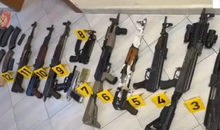
Weapons cache discovered in Fier, Prosecution sends 38-year-old to trial
2026-07-09 13:35:48
Bota e muzikës në zi, ndahet nga jeta në moshën 75-vjeçare ikona Bonnie Tyler
2026-07-09 12:56:29
Monika Kryemadhi in the Criminal Court: The cell phone was seized illegally
2026-07-09 12:45:54
VALEN MP reacts after border detention: Albania is no one's property
2026-07-09 12:15:44
Albanian gang in Belgium sentenced for trafficking 7 tons of cocaine
2026-07-09 12:01:14
Justin Bieber, Shakira and Madonna to perform at 2026 World Cup final
2026-07-09 11:52:54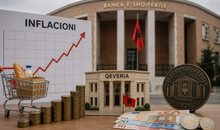
Euro falls, inflation rises and domestic production loses ground
2026-07-09 11:39:36
Trial at the GJKKO, Meta's new lawyer appears in the session
2026-07-09 11:29:47
Nighttime accident in Gramsh, man and woman injured
2026-07-09 11:20:25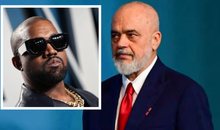
Meta seeks 134 witnesses, GJKKO delivers decision today
2026-07-09 10:56:54

At the peak of the production season, vegetable prices 'fly'
2026-07-09 10:21:14
The African heat returns, the thermometer reaches 40 degrees this weekend
2026-07-09 10:08:08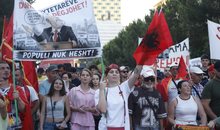
Opinions from 'anonymous' authors target Flamingo protests
2026-07-09 10:07:15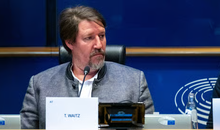
MEP Waitz: The law on protected areas endangers Albania's path to the EU
2026-07-09 09:52:55
"Le Courrier des Balkans": Edi Rama and the megalomania of power
2026-07-09 09:40:26
The economics of concerts, the prime minister's imaginary 100 million euros
2026-07-09 09:28:19
Erdogan's strange gift to NATO leaders
2026-07-09 09:11:15
Foreign exchange, the rate at which foreign currencies are sold and bought
2026-07-09 08:30:41
“Uniteti i jashtëzakonshëm” i NATO-s dhe mesazhet kryesore nga samiti në Turqi
2026-07-09 08:11:17
Horoskopi, njihuni me parashikim e yjeve
2026-07-09 07:46:15
Alternime kthjellimesh e vranësirash, parashikimi i motit
2026-07-09 07:25:59
Posta e mëngjesit/ Me 2 rreshta: Çfarë pati rëndësi dje në Shqipëri
2026-07-09 07:02:12


Rama brings West in Tirana, using Eastern premises
2026-07-08 20:41:42

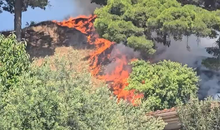
Fire on Kuzum Baba hill in Vlora, flames endanger homes and Tekke
2026-07-08 18:09:45

Shqipëria po plaket, qeveria pa plan
2026-07-08 15:57:26