 Flash News
VIDEO-scandal in Saranda/ Director of AMP Vlora and officials sexually harass tourists
"The New York Times" about Ye's concert: How Rama justifies the $4.5 million in funding
The suspected perpetrator of the murder in Laç is identified, he shot the 40-year-old 7 times near the palace
7 bullets on the doorstep, who is the 40-year-old with 4 surnames who was killed in Laç
Morning Post/ In 2 lines: What mattered yesterday in Albania
The year when Rama asked for 'the steering wheel all to himself', and the time when he erased the chassis number

Politiko
2026-01-01 18:37:53
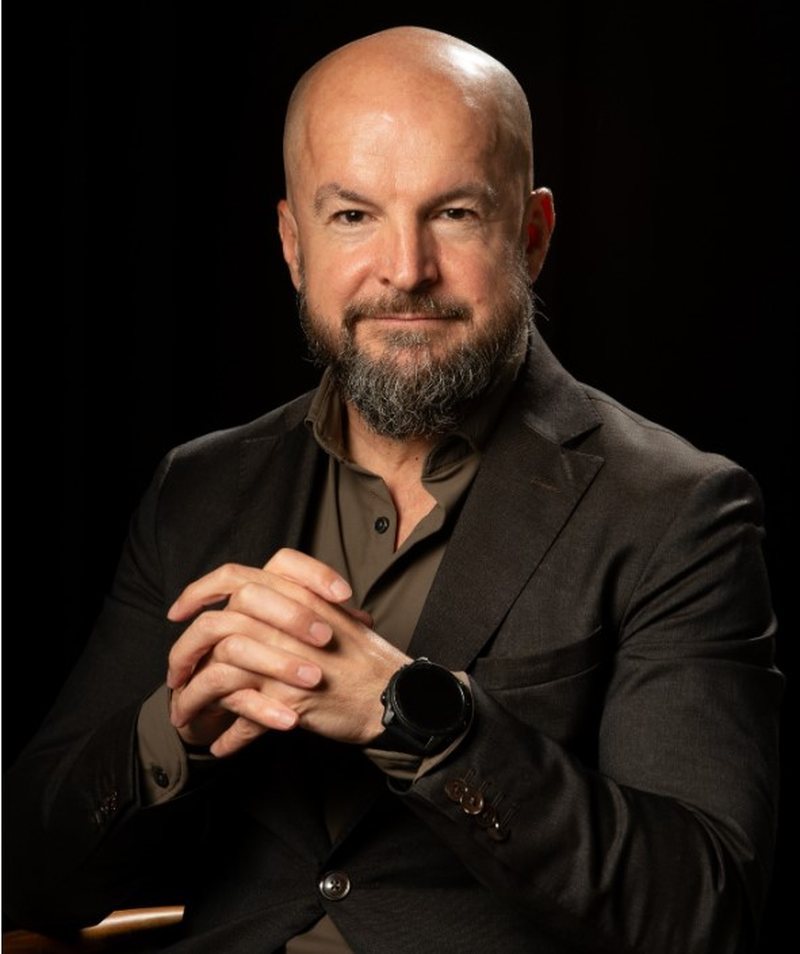
Alfred Lela
In the 2017 elections, Edi Rama demanded the steering wheel of government for himself and himself alone. Four years earlier, he had exhausted himself trying to build a broad coalition, even begging Ilir Meta to join—against whom he had deployed strength and fire on January 21, 2011, and even the “scum” that a left-leaning analyst had urged him to bring in. Long story short: Rama summoned, kept, and added more “scum,” but with the phrase “the steering wheel for myself,” he meant a style of governance that would become ever more apolitical, increasingly atypical.
The ends—or beginnings—of years are traditionally moments for balance sheets, and one can draw such a balance for Edi Rama as well. Quantity matters little here, even though balance sheets are by definition numerical rankings; what matters is quality.
If one operates with numbers, it can be said that Edi Rama has lost most—if not the core—of the team with which he came to power in 2013. Despite this, his insistence remains purely numerical, expressed in the madness of declaring that it does not concern him who goes to prison, because the Socialists are “800,000 strong.”
He dismisses the tally of arrests and investigations of ministers, MPs, and his closest collaborators, because he believes that in Albania—and therefore in government—only he matters. Yet he falls into a paradox by insisting that only he matters and only he makes the choices, while refusing to bear the costs of the same choices. He charges ahead at the helm of a caravan that is thinning and shrinking, not because of opponents, but because of vice and greed.
Rama’s expression, “let the dogs bark, the caravan moves on,” can no longer be used. The number of dogs is growing, but the caravan is shrinking. We are almost at the breaking point, where, at the head of the caravan, he may remain alone, holding the steering wheel of twelve years, with little to show for it except a government that has collapsed. But what has collapsed for Edi Rama is not merely his government in numerical terms; what has collapsed is political meaning itself—the reason elections are contested, won, and coalitions or governments are built in a democracy.
The will of the sovereign, expressed in 83 parliamentary mandates, with which he tried to console himself in his year-end message, is an illusion. In a real democracy, the will of the sovereign is transferred to MPs, who form a government, which then operates according to a set of predetermined standards—some written, some unwritten.
The Rama government has long ceased to function as such, which makes the fairy tale of the 83 mandates granted by the sovereign nothing more than a fireside fable told before a surreal year-end hearth.
Two deputy prime ministers, several key ministers—including an interior minister—the mayor of the metropolitan capital, several MPs, and a number of his closest collaborators, formal and informal, make Rama the most failed prime minister of the Albanian state since 1912. He may hold on to power even after losing its meaning, and the very fact that he does so proves that this government does not stem from the sovereignty of the vote, but precisely from its absence.
Put in mechanical terms, Edi Rama’s VIN has been erased. He may still have the steering wheel he took in 2013, but he no longer has a vehicle identifiable as “the government of the Socialist Party.” The pact forged in Shkodër in 2013—with Meta’s Socialists and Europe's—for a left-wing “people’s government,” he quickly turned into an oath to an “alliance of scum.”
Throughout this period, under that license plate, he has gained much financially, consolidated himself numerically, but lost far more of everything else. What Sali Berisha in 2017 paraphrased as a “narco-state” has now become the central theme and headline of many foreign media outlets, from southern Europe to North America.
Chances are, Rama will do what he does best: build patchwork, publicity-driven, meaningless governments, believing that by draining them of meaning he can continue to confuse the public and partners alike. A trap, no matter how elaborate, cannot function indefinitely. And Rama has reached that end. Which means that even a new, “spectacular” government can no longer hide either the head of the problem or the fact that the problem stinks—and that it is resolved from the head.
The government of the Socialist Party no longer has a chassis number. It is a car you can drive around the neighborhood, but one that cannot cross borders or pass customs. It can no longer be identified as a government, nor as one of the Socialist Party, nor even as Albania’s, but as a small sect clinging to power through apolitical means and methods. As such, every additional day in power is bad news for governance, for the Socialist Party, and above all for Albania.
To those who ask, “What is the alternative?”, the answer must be the same one history gives to all wreckers who care not for the country but for the threads that would be cut if Rama falls: the alternative always emerges through an honest electoral process—without interference, without force, and without 'scum'.
Latest news
Heatwave hits Germany, over 5,400 heat-related deaths
2026-07-10 10:45:33
Land in "foreign hands"
2026-07-10 10:26:15
Mbappe the hero of France, the "Roosters" knock out Morocco in the quarterfinals
2026-07-10 09:54:33
Durrës/ 40-year-old man stabs his wife
2026-07-10 09:48:03
How much could the amount of drug money in the Albanian economy be?!
2026-07-10 09:08:34
Government reduces funds for farmers, increases ADF by 75 million euros
2026-07-10 08:55:46
Horoscope, get to know the star forecast
2026-07-10 08:32:54
Morning Post/ In 2 lines: What mattered yesterday in Albania
2026-07-10 07:52:04
A person was shot dead in Kurbin, first details
2026-07-09 22:54:48
Will the Police also stop those who criticize Rama online?
2026-07-09 21:57:02
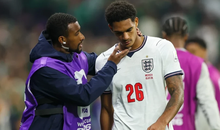
FIFA decision shocks England, Quansah ruled out for two matches
2026-07-09 20:51:00
Protest/Pedagogue: 4 million euros for Kanye West is "the next concession"
2026-07-09 19:45:53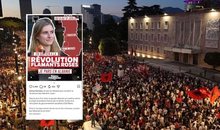
French MEP joins protests in Albania: Support for the "Pink Flamingo Revolution"
2026-07-09 19:28:07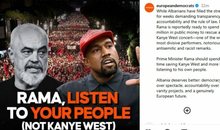
Has the lek strengthened or overvalued?
2026-07-09 17:58:05
The trial on the merits for Ilir Meta and Monika Kryemadhi is postponed
2026-07-09 16:47:58
The match between England and Norway risks being postponed, this is the reason
2026-07-09 16:12:46
Murder in Shkodra/ Relatives: Peaceful family, no problems
2026-07-09 16:10:02
Kurti invites opposition leaders to a meeting to create new institutions
2026-07-09 15:43:05
This is the 62-year-old man who killed his wife in Shkodra
2026-07-09 15:01:43
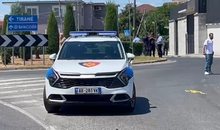
Domestic crime/ Wife killed with shotgun, perpetrator and victim identified
2026-07-09 14:05:18
Gunfire in Shkodra, one victim suspected
2026-07-09 13:49:41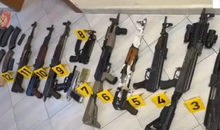
Weapons cache discovered in Fier, Prosecution sends 38-year-old to trial
2026-07-09 13:35:48
Bota e muzikës në zi, ndahet nga jeta në moshën 75-vjeçare ikona Bonnie Tyler
2026-07-09 12:56:29
Monika Kryemadhi in the Criminal Court: The cell phone was seized illegally
2026-07-09 12:45:54
VALEN MP reacts after border detention: Albania is no one's property
2026-07-09 12:15:44
Albanian gang in Belgium sentenced for trafficking 7 tons of cocaine
2026-07-09 12:01:14
Justin Bieber, Shakira and Madonna to perform at 2026 World Cup final
2026-07-09 11:52:54
Euro falls, inflation rises and domestic production loses ground
2026-07-09 11:39:36
Trial at the GJKKO, Meta's new lawyer appears in the session
2026-07-09 11:29:47
Nighttime accident in Gramsh, man and woman injured
2026-07-09 11:20:25
Meta seeks 134 witnesses, GJKKO delivers decision today
2026-07-09 10:56:54
At the peak of the production season, vegetable prices 'fly'
2026-07-09 10:21:14
The African heat returns, the thermometer reaches 40 degrees this weekend
2026-07-09 10:08:08
Opinions from 'anonymous' authors target Flamingo protests
2026-07-09 10:07:15
MEP Waitz: The law on protected areas endangers Albania's path to the EU
2026-07-09 09:52:55
"Le Courrier des Balkans": Edi Rama and the megalomania of power
2026-07-09 09:40:26
The economics of concerts, the prime minister's imaginary 100 million euros
2026-07-09 09:28:19
Erdogan's strange gift to NATO leaders
2026-07-09 09:11:15
Foreign exchange, the rate at which foreign currencies are sold and bought
2026-07-09 08:30:41
“Uniteti i jashtëzakonshëm” i NATO-s dhe mesazhet kryesore nga samiti në Turqi
2026-07-09 08:11:17
Horoskopi, njihuni me parashikim e yjeve
2026-07-09 07:46:15
Alternime kthjellimesh e vranësirash, parashikimi i motit
2026-07-09 07:25:59
Posta e mëngjesit/ Me 2 rreshta: Çfarë pati rëndësi dje në Shqipëri
2026-07-09 07:02:12
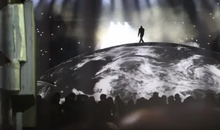
Rama brings West in Tirana, using Eastern premises
2026-07-08 20:41:42
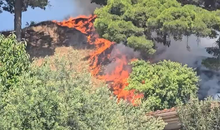
Fire on Kuzum Baba hill in Vlora, flames endanger homes and Tekke
2026-07-08 18:09:45
Shqipëria po plaket, qeveria pa plan
2026-07-08 15:57:26