 Flash News
The government sees an Albania that is developing day by day. Protests are misunderstandings by those who do not understand development. Discontents are exaggerations. Businesses, perhaps, are not reading the successes correctly. Maybe corruption is just perception. Maybe bureaucracy is a modern form of efficiency. Maybe unfair competition is innovation. And maybe, in the end, all the problems that citizens and businesses report are simply noise that prevents us from hearing the good news.
Oh my, listen and understand!
Albania's economic growth has reached 8%. Per capita income has surpassed all countries in the region and has caught up with the European Union average. The average salary has reached 1,500 euros per month. Pensions are 700 euros.
The trade balance has moved into surplus, as exports, for the first time in history, have exceeded imports. We are ranked in the top 10 countries in the world for low corruption and according to the happiness index, so much so that we soon expect the country to have an influx of requests for immigrants and Albanian citizenship .
These are undoubtedly the news we would like to hear in foreign media such as the "Financial Times", "Reuters", or many others that have recently turned their attention to Albania as rarely before.
But, unfortunately, these are not news. They are wishes... long-term ones, even.
In reality, Albania is attracting the attention of the international media for entirely different reasons: for the ongoing protests, for the political tension, for the growing dissatisfaction.
The US Chamber of Commerce's Business Index this year marked the largest historical decline since measurements began in 2012, with 6.4 points. The domestic political climate, infrastructure, economic performance, government bureaucracy and corruption were the factors that hit business perceptions the hardest.
AmCham itself described the situation as an "alarm signal" for the country's investment climate and competitiveness.
Even more worrying is the fact that businesses perceive corruption at its highest level since the index began in 2012. When entrepreneurship, or more precisely the group of non-clientelist entrepreneurs who invest, employ, and bear a significant burden on the economy, reaches this conclusion, the problem can no longer be hidden behind macro statistics or optimistic statements.
Meanwhile, even the official economic growth of almost 4% paints a different reality. According to the latest data, about 72% of the contribution to economic growth came from public administration and net taxes, while real economic activities expanded by only 1.08%.
In other words, business is moving at its slowest pace in more than a decade, while the state is increasingly taking up space in producing economic growth.
These figures do not indicate that private business is powerless and the Government is showing itself to be a master at maintaining economic growth. On the contrary, this shows that the legal structure in the country and the government's orientations have resulted in an economy that is moving away from the features of a private free market economy and is increasingly transforming into a state economy towards centralization.
But perhaps the problem is in the perspective. The government sees an Albania that is developing day by day. The protests are misunderstandings by those who do not understand development. The dissatisfactions are exaggerations. Businesses, perhaps, are not reading the successes correctly.
Maybe corruption is just perception. Maybe bureaucracy is a modern form of efficiency.
Maybe unfair competition is innovation. And maybe, after all, all the problems that citizens and businesses report are just noise that gets in the way of hearing the good news.
But the economy doesn't work with slogans.
The economy runs on trust. And trust is not built by treating complaints as obstacles. It is not built by ignoring market signals. It is not built by insulting or labeling those who raise concerns.
The state and its representatives are elected by the sovereign. Precisely for this reason, they have an obligation to listen. To respond. To be transparent. To correct. To provide solutions, and even to consider other governance alternatives. Not to ignore, distort or ironize the concerns of citizens and businesses, or even to offend them.
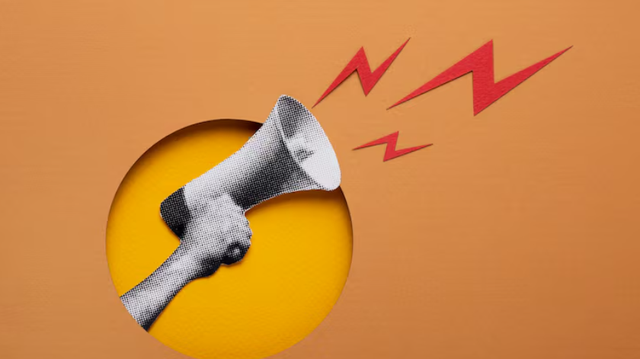
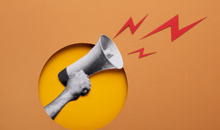
In today's time, official propaganda and communication with one's own people cannot be in the format of a bullhorn. But today's times require something more than a bullhorn. They require institutions that listen as much as they speak.
The essence is meaningful and open dialogue. This dialogue has long since turned into a monologue that is heard and believed only by the monologuer. The part excluded from the dialogue protests or has reduced the level of trust, or has chosen to leave the country altogether./ Monitor
Latest news
Coast 2026: Amidst price chaos and security alarm
2026-06-27 17:07:55
Malta seizes food shipment from Albania: No documents and no temperature control
2026-06-27 16:51:59
The teller and the monologuer
2026-06-27 16:17:23

July ends with temperatures up to 40°C, what does July bring?
2026-06-27 15:38:37
Berisha: I am against towers, I did not sign any when I was prime minister
2026-06-27 14:31:10


When will he go to the US? How did Berisha respond?
2026-06-27 13:26:59

Berisha: Rama met with Ahmadinejad several times in Iran! He should resign!
2026-06-27 12:43:33
Who paid Chris Precht for the Prime Minister's private garden?
2026-06-27 12:29:02

Italian MEP comes to Tirana, joins the “Flamingo Revolution”
2026-06-27 11:04:24
Tirana's city center wakes up without electricity, no explanation from OSSHE
2026-06-27 09:15:52
Protesters seek ambassadors' support, letter with five demands revealed
2026-06-27 08:47:48
Temperatures reach 38 degrees, as the weather forecast predicts today
2026-06-27 08:20:34
Morning Post/ In 2 lines: What mattered yesterday in Albania
2026-06-27 08:02:38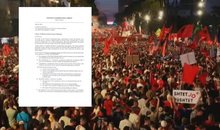
Protesters write to Western embassies: 5 non-negotiable demands
2026-06-26 23:01:49

Osman Mula on Elevate: Art has become a market, talents are leaving Albania
2026-06-26 21:13:57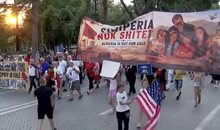
Student from the protest: Rama has turned Albania into a narco-state!
2026-06-26 20:50:33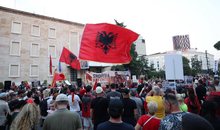
French immigrant: I'll stay here until we overthrow the last dictator in Europe
2026-06-26 20:38:15

The USA does not stop, it also aims for the 2038 World Cup edition
2026-06-26 19:41:25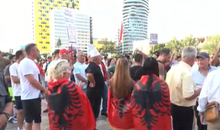
The 27th protest against Rama begins, citizens gather at "Skënderbej" Square
2026-06-26 19:21:34
CEC announces final election results in Kosovo tomorrow
2026-06-26 19:03:41


Elliot Anderson set for £130m move to Manchester City
2026-06-26 17:29:57
Extreme heat wave in France, 55 people die
2026-06-26 17:10:39

Tasteful Autocrat or Mad?
2026-06-26 16:23:46
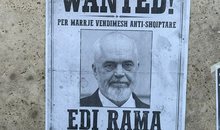
Architects must pay for this crime they are committing against Albania
2026-06-26 15:58:38
DP to convene National Council on July 1, agenda items revealed
2026-06-26 15:37:41
"The second Enver" defeated us worse than the first one!
2026-06-26 14:56:35
Bardhi on attacks on protesters: The demand is Edi Rama's resignation
2026-06-26 14:37:28
Scorching weekend, June ends with high temperatures of up to 39 degrees
2026-06-26 14:22:48
Agriculture and industry are declining, who is contributing to economic growth?
2026-06-26 14:02:38
'Karavasta Park corruption affair'/ DP: The company "Voltalia" was favored!
2026-06-26 13:45:15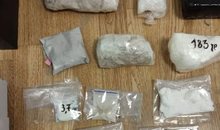
Drug gang in Mykonos destroyed, led by an Albanian
2026-06-26 13:27:21
Mathematics exam grades released
2026-06-26 13:09:10
Poisoning of 64 Security Academy students, "Sori-Al" administrator questioned
2026-06-26 12:36:15

File 5D/ GJKKO releases Taulant Tushen from house arrest
2026-06-26 11:10:30
Be careful with the algorithm, but not with the causes that concern Rama
2026-06-26 10:53:16

Gunfight in Shkodra, two arrested, one wanted
2026-06-26 10:18:10

Albania is 'scorching', temperatures up to 40 degrees are predicted
2026-06-26 09:36:54
Rama's alibi falls / The phenomenon of protest tourism is born in Albania
2026-06-26 09:18:30

"The situation as a couple will not..." what the stars predict for you
2026-06-26 08:40:20
Weather forecast, how temperatures will vary throughout the day
2026-06-26 08:33:33

Morning Post/ In 2 lines: What mattered yesterday in Albania
2026-06-26 07:56:32

Why will Paraguay be one of the host cities for the 2030 World Cup?
2026-06-25 22:36:05
"Rama ik" invades the boulevard, drone footage shows the scale of the protest
2026-06-25 22:17:00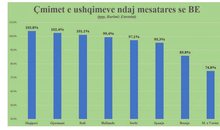
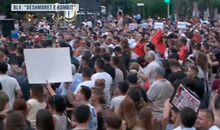
Protester: I came from London, let's give Rama the final blow!
2026-06-25 20:35:52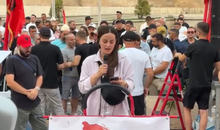
Citizens repeat 5 demands to the Prime Minister: We want a technical government
2026-06-25 20:14:30

Erotic messages during official hours, ILD demands dismissal of KLP member
2026-06-25 18:48:58
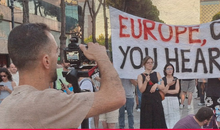
RSF: Journalists in Albania under pressure, government not keeping promises
2026-06-25 17:58:24

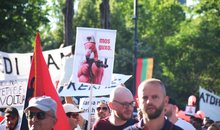
International academics support mass protests in Albania
2026-06-25 16:48:29

Kosovo not invited to NATO Summit, Ministry of Defense explains reasons
2026-06-25 16:10:01
Rama announced it
2026-06-25 15:56:19
Tiranë/ Grabitën banesën nën kërcënimin e armës, dy të arrestuar,
2026-06-25 15:47:50
Vala e të nxehtit dhe alkooli , një kombinim i keq për shëndetin
2026-06-25 15:36:35
What's happening with the Bënja baths, from curative to ponds
2026-06-25 15:22:25