 Flash News
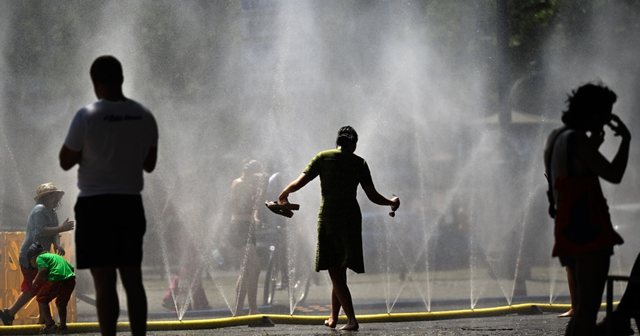
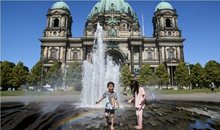
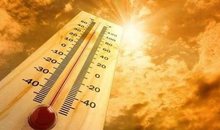
Germans are bracing for scorching weather on Saturday as a heatwave linked to dozens of deaths in Western Europe is expected to move eastwards, with temperatures breaking records and soaring above 40 degrees Celsius.
Britain, France, Switzerland and Germany have all experienced record temperatures during June, while the weather system could set other records as it moves from Germany towards Poland.
A new national record of 41.3 degrees Celsius was recorded on Friday near the city of Saarbrucken, close to the border with France, a spokesman for Germany's National Meteorological Service said, stressing that the measurement was preliminary.
The weather service issued extreme heat warnings for almost all of Germany on Saturday, while authorities urged citizens to save water.
In France, dozens of people, young and old, have lost their lives during the heat wave.
Temperatures above 40 degrees Celsius have caused disruptions to rail transport and electricity production, led to a ban on alcohol consumption in some areas, the suspension of school classes and the postponement of outdoor activities.
"The heat wave will peak over the weekend, with temperatures well above 40 degrees in some parts of Germany," said Karsten Brandt, meteorologist at the weather forecast website Donnerwetter.de.
Organizers of the Ironman European Championships in Frankfurt announced that the cycling and running races, taking place on Sunday, will be shortened due to high temperatures.
Faced with the risk of infrastructure damage, such as the deformation of roads and the widening of train tracks, several major public service providers have taken measures to limit traffic.
Andre Berghegger, executive director of the German Association of Cities and Municipalities, called on citizens to use water sparingly due to the heat wave.
"We should rely as long as possible on voluntary cooperation; local authorities should only impose bans if that doesn't work," he told the Neue Osnabrücker Zeitung newspaper.
The most extreme temperatures are expected to begin to drop over the weekend, while severe storms are expected on Sunday.
Across Europe, cultural monuments have been forced to close, agriculture has suffered damage, and some hospitals have struggled to cope with the influx of patients.
According to Reuters Climate Monitor, the heat wave has raised temperatures up to 18 degrees above the seasonal average and is being driven by an atmospheric phenomenon known as the "Omega block."
This atmospheric pattern traps a large mass of hot air over a region for long periods, while cooler air remains at its edges.
Demand for electric coolers has increased significantly and Asian manufacturers of air conditioning equipment have reported a large increase in sales in Europe.
Most homes in Northern Europe are built to retain heat during the winter, not to keep the premises cool during the summer.
The World Meteorological Organization announced that this heat wave will begin to move towards the end of the month, affecting Central Europe and the Balkans.
Scientists say this heat wave would have been virtually impossible without human-caused climate change./ REL
Latest news

Government repression of protests continues, minister threatens more 'non-grata'
2026-06-27 18:55:00

Video/ Scorching heat in France, citizen fries eggs and bacon on window
2026-06-27 18:18:29
Germany hit by record temperatures
2026-06-27 18:01:04

Foods to avoid in the heat and healthier alternatives
2026-06-27 17:28:52
Coast 2026: Amidst price chaos and security alarm
2026-06-27 17:07:55
Malta seizes food shipment from Albania: No documents and no temperature control
2026-06-27 16:51:59

The teller and the monologuer
2026-06-27 16:17:23
July ends with temperatures up to 40°C, what does July bring?
2026-06-27 15:38:37



Berisha: I am against towers, I did not sign any when I was prime minister
2026-06-27 14:31:10


When will he go to the US? How did Berisha respond?
2026-06-27 13:26:59

Berisha: Rama met with Ahmadinejad several times in Iran! He should resign!
2026-06-27 12:43:33
Who paid Chris Precht for the Prime Minister's private garden?
2026-06-27 12:29:02



Italian MEP comes to Tirana, joins the “Flamingo Revolution”
2026-06-27 11:04:24

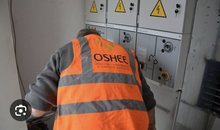
Tirana's city center wakes up without electricity, no explanation from OSSHE
2026-06-27 09:15:52
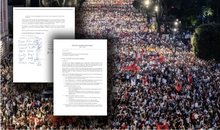
Protesters seek ambassadors' support, letter with five demands revealed
2026-06-27 08:47:48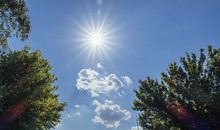
Temperatures reach 38 degrees, as the weather forecast predicts today
2026-06-27 08:20:34
Morning Post/ In 2 lines: What mattered yesterday in Albania
2026-06-27 08:02:38
Protesters write to Western embassies: 5 non-negotiable demands
2026-06-26 23:01:49


Osman Mula on Elevate: Art has become a market, talents are leaving Albania
2026-06-26 21:13:57
Student from the protest: Rama has turned Albania into a narco-state!
2026-06-26 20:50:33
French immigrant: I'll stay here until we overthrow the last dictator in Europe
2026-06-26 20:38:15

The USA does not stop, it also aims for the 2038 World Cup edition
2026-06-26 19:41:25
The 27th protest against Rama begins, citizens gather at "Skënderbej" Square
2026-06-26 19:21:34
CEC announces final election results in Kosovo tomorrow
2026-06-26 19:03:41


Elliot Anderson set for £130m move to Manchester City
2026-06-26 17:29:57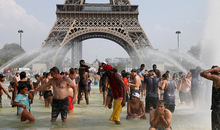
Extreme heat wave in France, 55 people die
2026-06-26 17:10:39

Tasteful Autocrat or Mad?
2026-06-26 16:23:46
Architects must pay for this crime they are committing against Albania
2026-06-26 15:58:38
DP to convene National Council on July 1, agenda items revealed
2026-06-26 15:37:41

"The second Enver" defeated us worse than the first one!
2026-06-26 14:56:35
Bardhi on attacks on protesters: The demand is Edi Rama's resignation
2026-06-26 14:37:28
Scorching weekend, June ends with high temperatures of up to 39 degrees
2026-06-26 14:22:48
Agriculture and industry are declining, who is contributing to economic growth?
2026-06-26 14:02:38
'Karavasta Park corruption affair'/ DP: The company "Voltalia" was favored!
2026-06-26 13:45:15
Drug gang in Mykonos destroyed, led by an Albanian
2026-06-26 13:27:21
Mathematics exam grades released
2026-06-26 13:09:10
Poisoning of 64 Security Academy students, "Sori-Al" administrator questioned
2026-06-26 12:36:15




File 5D/ GJKKO releases Taulant Tushen from house arrest
2026-06-26 11:10:30
Be careful with the algorithm, but not with the causes that concern Rama
2026-06-26 10:53:16

Gunfight in Shkodra, two arrested, one wanted
2026-06-26 10:18:10
Albania is 'scorching', temperatures up to 40 degrees are predicted
2026-06-26 09:36:54
Rama's alibi falls / The phenomenon of protest tourism is born in Albania
2026-06-26 09:18:30

"The situation as a couple will not..." what the stars predict for you
2026-06-26 08:40:20
Weather forecast, how temperatures will vary throughout the day
2026-06-26 08:33:33

Morning Post/ In 2 lines: What mattered yesterday in Albania
2026-06-26 07:56:32

Why will Paraguay be one of the host cities for the 2030 World Cup?
2026-06-25 22:36:05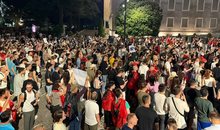
"Rama ik" invades the boulevard, drone footage shows the scale of the protest
2026-06-25 22:17:00


Protester: I came from London, let's give Rama the final blow!
2026-06-25 20:35:52
Citizens repeat 5 demands to the Prime Minister: We want a technical government
2026-06-25 20:14:30


Erotic messages during official hours, ILD demands dismissal of KLP member
2026-06-25 18:48:58

RSF: Journalists in Albania under pressure, government not keeping promises
2026-06-25 17:58:24


International academics support mass protests in Albania
2026-06-25 16:48:29