 Flash News
Here are the years of imprisonment requested for Monika's mother
"Blackened eyes and pulled out hair"/ Father of the raped 17-year-old: Police took no action
Property alienation in Durrës/ Court confirms security measures for suspects
Details/ Murder of Eglant Koç, the perpetrator hid for 10 days in the Elbasan region
Erkin Lika's lifeless body found after falling into Mat River sinkhole
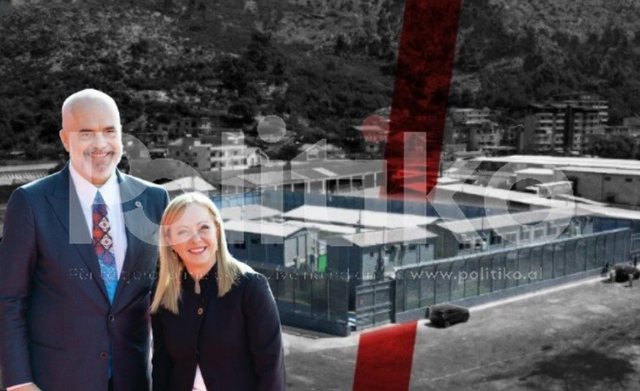
Gjadri at the center of the storm: 'reception camp' or prison? What is hidden behind the Rama-Meloni agreement?

Politiko
2026-04-22 10:56:53
The situation today
The agreement signed between Prime Minister Edi Rama and his Italian counterpart Giorgia Meloni for the establishment of immigrant reception centers in Gjadra continues to cause strong public debate.
Invited to the show "Kafe Shqeto", activist Sidorela Vatnikaj declared that migrants rescued at sea while attempting to reach Italy will be transferred to Albania and placed in closed camps.
According to her, these people will have limited contact with the outside world, no communication with family members and only partial access to lawyers.
She described this model as problematic and similar to a form of detention, raising serious concerns about human rights violations and a lack of transparency in the agreement.
According to her, this agreement has been described as extremely problematic, raising serious concerns about human rights.
Vatnikaj emphasizes that these migrants never had Albania as a destination and their transfer to a third country, against their will, constitutes a violation of fundamental principles.
In conclusion, Vatnikaj emphasizes that Albania is granting Italy autonomy over part of its territory without a clear legal basis.
context
The debate has also been deepened by subsequent reports and denunciations of the situation on the ground. According to an article published by La Repubblica, Italian deputies who inspected the camp in Gjadra described it as a facility with “inhumane” conditions.
They reported that out of a capacity of 830 places, there were only 25 migrants in the camp, many of whom were drowsy due to the use of medications such as Rivotril.
Also, in just three months, around 30 cases of self-harm have been recorded, while some migrants are alleged to have been transferred without clear legal procedures.
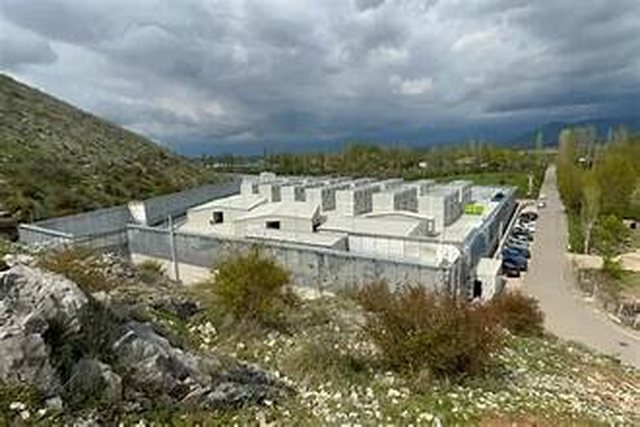
According to the deputies, most of them have no criminal record and some have subsequently returned to Italy, raising questions about the effectiveness of the entire scheme.
The agreement has also been criticized by international organizations such as Amnesty International, which has described the model as dangerous and potentially contrary to human rights standards.
Where did the 16 migrants from the Gjadri camp "escape"?
The Italian media outlet "La Stampa" has raised the alarm with a published article, reporting that 16 migrants had escaped from the Gjadri camp and their whereabouts are unknown.
According to Italian media, only 25 migrants remain in Gjadra, Lezha, out of 41 who recently arrived by boat.
According to information collected, the first person transferred to Albania on April 11 returned to Italy the next day, without even entering the Repatriation Reception Center (CPR).
As for the other 15, it is believed that: 6 have been returned to Italy due to lack of confirmation of residence; 5 have been assessed as unsuitable for living in a closed community due to self-harm episodes or health problems; while 4 migrants may have been repatriated to their countries of origin.
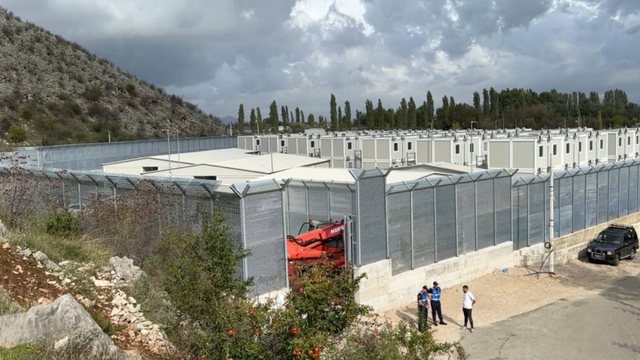
This situation raises questions not only about the management of migrants, but also about the effectiveness of reception and repatriation policies.
According to the MPs, transfer and detention in Albania have become not only an unnecessary burden for migrants, but also a cost for the public budget.
An uncertain future for migrants
The issue of migrants in Albania highlights the difficulties and complexity of the European reception system. With increasing migratory pressure, it is essential that institutions provide clear and transparent responses.
The lack of information not only fuels the mystery, but also undermines trust in the international protection system.
In a context where human rights must always be a priority, it is imperative that competent authorities clarify the situation of migrants and guarantee that every individual is treated with dignity and justice.
GENESIS
The agreement between Albania and Italy was reached in August 2023 during the visit of the Italian Prime Minister to our country. It foresees the construction of centers for the reception and processing of asylum applications of migrants who intend to enter Italy, but who will be temporarily sheltered on Albanian territory.
According to the protocol, the Italian side undertakes to cover 100% of the costs, including expenses for personnel, health services, equipment and logistics. The agreement has a 5-year term and is automatically renewed unless denounced by the parties.
It was also reviewed by the Constitutional Court, which in a split decision (5 in favor and 4 against) considered the agreement in accordance with the Constitution, emphasizing that it does not change Albania's territorial jurisdiction and that the responsibility for respecting human rights remains shared between the two states.
However, critics continue to consider this agreement a dangerous precedent, which could violate the sovereignty and fundamental rights of the individuals involved./POLITIKO.AL
Latest news

Here are the years of imprisonment requested for Monika's mother
2026-07-13 14:09:46
EU appoints German diplomat as new special envoy for Kosovo
2026-07-13 13:55:29

Property alienation in Durrës/ Court confirms security measures for suspects
2026-07-13 13:25:00
70 people with poisoning symptoms in Pristina, 22 hospitalized
2026-07-13 13:16:00


Erkin Lika's lifeless body found after falling into Mat River sinkhole
2026-07-13 12:32:00
Over 500 babies named after Haaland after World Cup matches
2026-07-13 12:28:00
18 arrested in Spain, who is the Albanian known as 'Daci'?
2026-07-13 12:22:00

4.2 million euros for Kanye West, DP reports Rama and Gonxha to SPAK
2026-07-13 11:27:03



Heatwave hits Germany, over 5,400 heat-related deaths
2026-07-10 10:45:33

Land in "foreign hands"
2026-07-10 10:26:15

Mbappe the hero of France, the "Roosters" knock out Morocco in the quarterfinals
2026-07-10 09:54:33
Durrës/ 40-year-old man stabs his wife
2026-07-10 09:48:03



How much could the amount of drug money in the Albanian economy be?!
2026-07-10 09:08:34
Government reduces funds for farmers, increases ADF by 75 million euros
2026-07-10 08:55:46
Horoscope, get to know the star forecast
2026-07-10 08:32:54

Morning Post/ In 2 lines: What mattered yesterday in Albania
2026-07-10 07:52:04
A person was shot dead in Kurbin, first details
2026-07-09 22:54:48


Will the Police also stop those who criticize Rama online?
2026-07-09 21:57:02


FIFA decision shocks England, Quansah ruled out for two matches
2026-07-09 20:51:00
Protest/Pedagogue: 4 million euros for Kanye West is "the next concession"
2026-07-09 19:45:53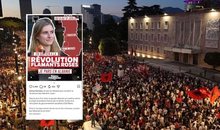
French MEP joins protests in Albania: Support for the "Pink Flamingo Revolution"
2026-07-09 19:28:07


Has the lek strengthened or overvalued?
2026-07-09 17:58:05


The trial on the merits for Ilir Meta and Monika Kryemadhi is postponed
2026-07-09 16:47:58

The match between England and Norway risks being postponed, this is the reason
2026-07-09 16:12:46
Murder in Shkodra/ Relatives: Peaceful family, no problems
2026-07-09 16:10:02
Kurti invites opposition leaders to a meeting to create new institutions
2026-07-09 15:43:05
This is the 62-year-old man who killed his wife in Shkodra
2026-07-09 15:01:43

Domestic crime/ Wife killed with shotgun, perpetrator and victim identified
2026-07-09 14:05:18
Gunfire in Shkodra, one victim suspected
2026-07-09 13:49:41
Weapons cache discovered in Fier, Prosecution sends 38-year-old to trial
2026-07-09 13:35:48

Bota e muzikës në zi, ndahet nga jeta në moshën 75-vjeçare ikona Bonnie Tyler
2026-07-09 12:56:29
Monika Kryemadhi in the Criminal Court: The cell phone was seized illegally
2026-07-09 12:45:54

VALEN MP reacts after border detention: Albania is no one's property
2026-07-09 12:15:44
Albanian gang in Belgium sentenced for trafficking 7 tons of cocaine
2026-07-09 12:01:14
Justin Bieber, Shakira and Madonna to perform at 2026 World Cup final
2026-07-09 11:52:54
Euro falls, inflation rises and domestic production loses ground
2026-07-09 11:39:36
Trial at the GJKKO, Meta's new lawyer appears in the session
2026-07-09 11:29:47
Nighttime accident in Gramsh, man and woman injured
2026-07-09 11:20:25
Meta seeks 134 witnesses, GJKKO delivers decision today
2026-07-09 10:56:54


At the peak of the production season, vegetable prices 'fly'
2026-07-09 10:21:14
The African heat returns, the thermometer reaches 40 degrees this weekend
2026-07-09 10:08:08
Opinions from 'anonymous' authors target Flamingo protests
2026-07-09 10:07:15
MEP Waitz: The law on protected areas endangers Albania's path to the EU
2026-07-09 09:52:55
"Le Courrier des Balkans": Edi Rama and the megalomania of power
2026-07-09 09:40:26
The economics of concerts, the prime minister's imaginary 100 million euros
2026-07-09 09:28:19
Erdogan's strange gift to NATO leaders
2026-07-09 09:11:15


Foreign exchange, the rate at which foreign currencies are sold and bought
2026-07-09 08:30:41
“Uniteti i jashtëzakonshëm” i NATO-s dhe mesazhet kryesore nga samiti në Turqi
2026-07-09 08:11:17

Horoskopi, njihuni me parashikim e yjeve
2026-07-09 07:46:15
Alternime kthjellimesh e vranësirash, parashikimi i motit
2026-07-09 07:25:59
Posta e mëngjesit/ Me 2 rreshta: Çfarë pati rëndësi dje në Shqipëri
2026-07-09 07:02:12