 Flash News
Here are the years of imprisonment requested for Monika's mother
"Blackened eyes and pulled out hair"/ Father of the raped 17-year-old: Police took no action
Property alienation in Durrës/ Court confirms security measures for suspects
Details/ Murder of Eglant Koç, the perpetrator hid for 10 days in the Elbasan region
Erkin Lika's lifeless body found after falling into Mat River sinkhole
Crime in the temple of law, the dark cases that have marked Albanian justice

Politiko
2025-10-07 08:33:03
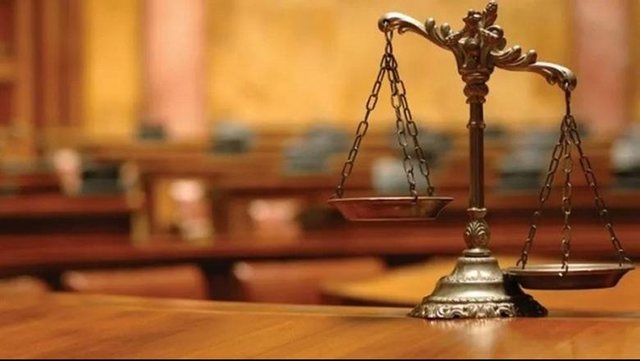
In the heart of the capital, inside a courtroom where the law should rule, a judge's life was taken. The execution of Astrit Kalaja, a member of the Court of Appeal in Tirana, is an act that shocked not only Albania, but also international opinion, forcefully bringing back the question of how secure justice is in our country.
The murder occurred where citizens seek justice, marking a dramatic moment that violates every boundary of institutional inviolability.
But this is not the first time that the Albanian justice system has faced violence and threats. Since the 1990s, a series of dark events have left an indelible mark on the country's memory:
February 19, 1999 – Kozeta Hyseni, the 21-year-old daughter of a prosecutor in Vlora, is brutally murdered, an event that was interpreted as revenge against her father. The perpetrators were never found.
February 21, 1999 – The President of the Chamber of Advocates, Kleanthi Koçi, is seriously injured in Tirana and dies a few days later.
September 30, 2003 – Genci Sina, the driver of Prosecutor General Theodhori Sollaku, is executed, in an assassination considered a mafia message.
September 9, 2011 – Judge Skerdilajd Konomi blows himself up with explosives in Vlora. No one arrested.
March 22, 2019 – Lawyer Ravik Gurra is executed in the middle of Elbasan, at the height of criminal tensions.
November 1, 2019 – Prosecutor Arjan Ndoja survives the assassination attempt in Shkozet, where his driver loses his life.
All of these events, separated by years but connected by the same logic of fear, show that violence against justice has become a permanent wound.
At a time when Albania is trying to build the image of a reformed and independent justice system, the reality on the ground shows a different picture: lack of security, precarious working conditions, and a climate of constant threats for magistrates who dare to do their job.
If the state does not react strongly, with real security measures and thorough investigations, then the danger is clear: we may soon have no one left to defend the law, because justice itself is being killed in court.
Latest news

IDC-CDI meets in Brussels, Berisha participates as Vice President
2026-07-13 16:05:10
"Washington Examiner": Anger against Rama's enrichment has reached its peak
2026-07-13 14:28:00
Here are the years of imprisonment requested for Monika's mother
2026-07-13 14:09:46
EU appoints German diplomat as new special envoy for Kosovo
2026-07-13 13:55:29

Property alienation in Durrës/ Court confirms security measures for suspects
2026-07-13 13:25:00
70 people with poisoning symptoms in Pristina, 22 hospitalized
2026-07-13 13:16:00


Erkin Lika's lifeless body found after falling into Mat River sinkhole
2026-07-13 12:32:00
Over 500 babies named after Haaland after World Cup matches
2026-07-13 12:28:00
18 arrested in Spain, who is the Albanian known as 'Daci'?
2026-07-13 12:22:00

4.2 million euros for Kanye West, DP reports Rama and Gonxha to SPAK
2026-07-13 11:27:03

Heatwave hits Germany, over 5,400 heat-related deaths
2026-07-10 10:45:33

Land in "foreign hands"
2026-07-10 10:26:15

Mbappe the hero of France, the "Roosters" knock out Morocco in the quarterfinals
2026-07-10 09:54:33
Durrës/ 40-year-old man stabs his wife
2026-07-10 09:48:03


How much could the amount of drug money in the Albanian economy be?!
2026-07-10 09:08:34
Government reduces funds for farmers, increases ADF by 75 million euros
2026-07-10 08:55:46
Horoscope, get to know the star forecast
2026-07-10 08:32:54

Morning Post/ In 2 lines: What mattered yesterday in Albania
2026-07-10 07:52:04
A person was shot dead in Kurbin, first details
2026-07-09 22:54:48


Will the Police also stop those who criticize Rama online?
2026-07-09 21:57:02


FIFA decision shocks England, Quansah ruled out for two matches
2026-07-09 20:51:00
Protest/Pedagogue: 4 million euros for Kanye West is "the next concession"
2026-07-09 19:45:53
French MEP joins protests in Albania: Support for the "Pink Flamingo Revolution"
2026-07-09 19:28:07


Has the lek strengthened or overvalued?
2026-07-09 17:58:05

The trial on the merits for Ilir Meta and Monika Kryemadhi is postponed
2026-07-09 16:47:58

The match between England and Norway risks being postponed, this is the reason
2026-07-09 16:12:46
Murder in Shkodra/ Relatives: Peaceful family, no problems
2026-07-09 16:10:02
Kurti invites opposition leaders to a meeting to create new institutions
2026-07-09 15:43:05
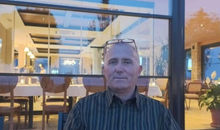
This is the 62-year-old man who killed his wife in Shkodra
2026-07-09 15:01:43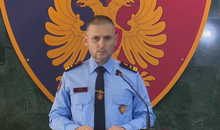

Domestic crime/ Wife killed with shotgun, perpetrator and victim identified
2026-07-09 14:05:18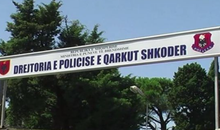
Gunfire in Shkodra, one victim suspected
2026-07-09 13:49:41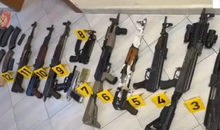
Weapons cache discovered in Fier, Prosecution sends 38-year-old to trial
2026-07-09 13:35:48

Bota e muzikës në zi, ndahet nga jeta në moshën 75-vjeçare ikona Bonnie Tyler
2026-07-09 12:56:29
Monika Kryemadhi in the Criminal Court: The cell phone was seized illegally
2026-07-09 12:45:54
VALEN MP reacts after border detention: Albania is no one's property
2026-07-09 12:15:44
Albanian gang in Belgium sentenced for trafficking 7 tons of cocaine
2026-07-09 12:01:14
Justin Bieber, Shakira and Madonna to perform at 2026 World Cup final
2026-07-09 11:52:54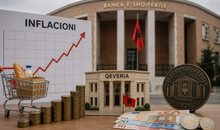
Euro falls, inflation rises and domestic production loses ground
2026-07-09 11:39:36
Trial at the GJKKO, Meta's new lawyer appears in the session
2026-07-09 11:29:47
Nighttime accident in Gramsh, man and woman injured
2026-07-09 11:20:25
Meta seeks 134 witnesses, GJKKO delivers decision today
2026-07-09 10:56:54

At the peak of the production season, vegetable prices 'fly'
2026-07-09 10:21:14
The African heat returns, the thermometer reaches 40 degrees this weekend
2026-07-09 10:08:08
Opinions from 'anonymous' authors target Flamingo protests
2026-07-09 10:07:15
MEP Waitz: The law on protected areas endangers Albania's path to the EU
2026-07-09 09:52:55
"Le Courrier des Balkans": Edi Rama and the megalomania of power
2026-07-09 09:40:26
The economics of concerts, the prime minister's imaginary 100 million euros
2026-07-09 09:28:19
Erdogan's strange gift to NATO leaders
2026-07-09 09:11:15
Foreign exchange, the rate at which foreign currencies are sold and bought
2026-07-09 08:30:41
“Uniteti i jashtëzakonshëm” i NATO-s dhe mesazhet kryesore nga samiti në Turqi
2026-07-09 08:11:17

Horoskopi, njihuni me parashikim e yjeve
2026-07-09 07:46:15
Alternime kthjellimesh e vranësirash, parashikimi i motit
2026-07-09 07:25:59
Posta e mëngjesit/ Me 2 rreshta: Çfarë pati rëndësi dje në Shqipëri
2026-07-09 07:02:12