 Flash News
Here are the years of imprisonment requested for Monika's mother
"Blackened eyes and pulled out hair"/ Father of the raped 17-year-old: Police took no action
Property alienation in Durrës/ Court confirms security measures for suspects
Details/ Murder of Eglant Koç, the perpetrator hid for 10 days in the Elbasan region
Erkin Lika's lifeless body found after falling into Mat River sinkhole
Explained/ "Weekly Notes", what Rama said today and lies he emited

Politiko
2026-03-22 11:02:31
Politiko.al
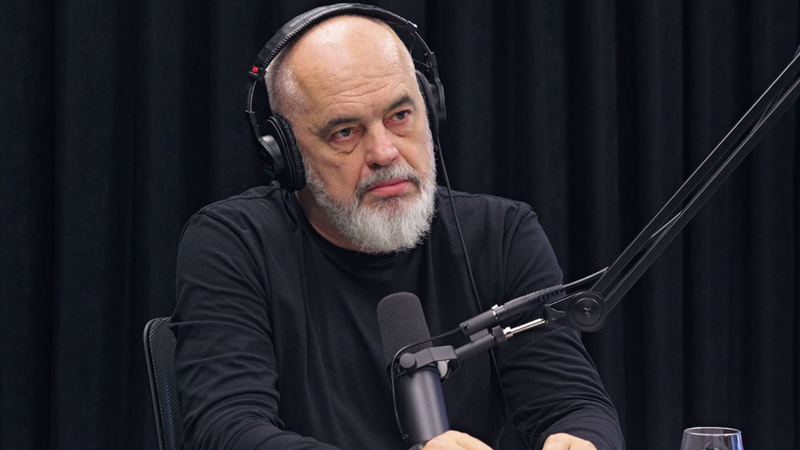
Edi Rama, in his 'Notes of the Week', like every Sunday, has packaged the political week in his own way, speaking as always only from positions that make him and his government look good. Not a word about the German and EPP stance on the European Parliament report, nor about the IBAR (Interim Benchmark Assessment Report) that assesses Albania's progress in the EU integration process.
He started with the economy, with the usual approach, there are scandals, but there is also work, packaging particles of truth with a nebula of lies and optimistic-maximalist projections.
There is a well-known technique in political communication: take a fact, add an optimistic interpretation, and finally announce a maximalist conclusion. The Prime Minister's recent statements on the economy and freedom in Albania follow precisely this logic.
Economy: the truth that lingers longer than necessary
What Rama says: Albania continues with a stable pace of economic growth, positioning itself among the countries with the highest performance for the coming years, according to the forecasts of international financial institutions. In Albania, an increase of about 32% of the Gross National Product is expected in 2030, which places us in the main group of economies with the most stable, but also the highest growth, according to those organizations, not simply according to the Albanian government.
Yes, Albania has a stable economic growth. International financial institutions project rates of around 3–4% per year. This is solid for a European country and sufficient to avoid stagnation.
But here begins the slide into untruth, using elements of truth. The figure of “32% by 2030” is not a special prediction, nor an extraordinary success, but simply the cumulative effect of modest growth over several years. In other words: An arithmetic calculation, packaged as a strategic achievement and perfumed with edramism.
Furthermore, the idea that Albania is positioning itself among the “highest performing” economies does not hold up in a global comparison. 3–4% growth is good for the region, but average in the world. Emerging economies, which are considered dynamic, grow significantly faster.
Freedom House: the report that is only read from one side
Here too, we have the same pattern. Referring to a recent report from Freedom House, Rama says: Albania received a positive assessment from the well-known Freedom House report, which is an international report on freedom in the world – Freedom in the World 2026, was this year's report.
And it is a development worth mentioning, although I take all reports, except for the one from the European Commission, which I take 100% for granted, with some reservations, as they are based on methodologies and survey methods that are not always stable.
However, this is one of those reports that deserves attention and is generally respected. So, according to this report, our country has not only marked an improvement compared to before, but has been ranked as the most highly rated country in the region for the degree of freedom. And this result puts us at the top, ahead of Montenegro, North Macedonia, Kosovo, and Serbia, also reflecting progress in relation to the region.
The Freedom House report deserves attention. Albania is not declining in freedoms, and in some indicators, there are improvements. But the report does not say what it claims.
Albania continues to be classified as “partly free.” This means a system that functions, but with structural problems: widespread corruption, pressure on institutions, and dependent media.
The claim that Albania is the “freest country in the region” is, at best, selective. In most comparative rankings, countries like Montenegro or North Macedonia are at the same level or higher.
The report is not a certificate of democratic leadership, but a diagnosis of a hybrid system that improves in some aspects and stagnates in others.
Conclusion: Propaganda sold as reality
In conclusion, it can be said that the economy is not as weak as critics say, but neither is democracy, where the government says it is. The problem is not in the facts, but in their political translation. Real economic growth turns into a global success story. While a critical report on freedom is translated into a regional triumph. It is the usual style of Edi Rama, who reduces a complex reality to a slogan to sell it to his own people, as well as to appease critics.
In any case, Rama's claims are not a classic lie, but something more sophisticated and at the same time more effective: an edited truth.
In politics, as in journalism, you often don't need to invent facts: You just need to distort them in the right way.
Latest news

IDC-CDI meets in Brussels, Berisha participates as Vice President
2026-07-13 16:05:10
"Washington Examiner": Anger against Rama's enrichment has reached its peak
2026-07-13 14:28:00
Here are the years of imprisonment requested for Monika's mother
2026-07-13 14:09:46
EU appoints German diplomat as new special envoy for Kosovo
2026-07-13 13:55:29

Property alienation in Durrës/ Court confirms security measures for suspects
2026-07-13 13:25:00
70 people with poisoning symptoms in Pristina, 22 hospitalized
2026-07-13 13:16:00
Erkin Lika's lifeless body found after falling into Mat River sinkhole
2026-07-13 12:32:00
Over 500 babies named after Haaland after World Cup matches
2026-07-13 12:28:00
18 arrested in Spain, who is the Albanian known as 'Daci'?
2026-07-13 12:22:00
4.2 million euros for Kanye West, DP reports Rama and Gonxha to SPAK
2026-07-13 11:27:03

Heatwave hits Germany, over 5,400 heat-related deaths
2026-07-10 10:45:33
Land in "foreign hands"
2026-07-10 10:26:15
Mbappe the hero of France, the "Roosters" knock out Morocco in the quarterfinals
2026-07-10 09:54:33
Durrës/ 40-year-old man stabs his wife
2026-07-10 09:48:03
How much could the amount of drug money in the Albanian economy be?!
2026-07-10 09:08:34
Government reduces funds for farmers, increases ADF by 75 million euros
2026-07-10 08:55:46
Horoscope, get to know the star forecast
2026-07-10 08:32:54

Morning Post/ In 2 lines: What mattered yesterday in Albania
2026-07-10 07:52:04
A person was shot dead in Kurbin, first details
2026-07-09 22:54:48
Will the Police also stop those who criticize Rama online?
2026-07-09 21:57:02


FIFA decision shocks England, Quansah ruled out for two matches
2026-07-09 20:51:00
Protest/Pedagogue: 4 million euros for Kanye West is "the next concession"
2026-07-09 19:45:53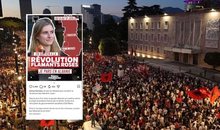
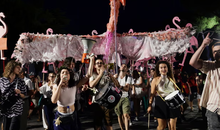
French MEP joins protests in Albania: Support for the "Pink Flamingo Revolution"
2026-07-09 19:28:07

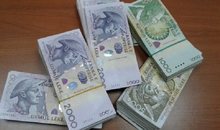
Has the lek strengthened or overvalued?
2026-07-09 17:58:05
The trial on the merits for Ilir Meta and Monika Kryemadhi is postponed
2026-07-09 16:47:58
The match between England and Norway risks being postponed, this is the reason
2026-07-09 16:12:46
Murder in Shkodra/ Relatives: Peaceful family, no problems
2026-07-09 16:10:02
Kurti invites opposition leaders to a meeting to create new institutions
2026-07-09 15:43:05
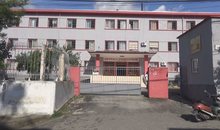
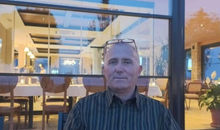
This is the 62-year-old man who killed his wife in Shkodra
2026-07-09 15:01:43

Domestic crime/ Wife killed with shotgun, perpetrator and victim identified
2026-07-09 14:05:18
Gunfire in Shkodra, one victim suspected
2026-07-09 13:49:41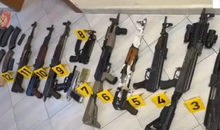
Weapons cache discovered in Fier, Prosecution sends 38-year-old to trial
2026-07-09 13:35:48
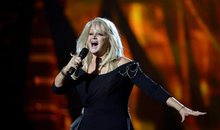
Bota e muzikës në zi, ndahet nga jeta në moshën 75-vjeçare ikona Bonnie Tyler
2026-07-09 12:56:29
Monika Kryemadhi in the Criminal Court: The cell phone was seized illegally
2026-07-09 12:45:54
VALEN MP reacts after border detention: Albania is no one's property
2026-07-09 12:15:44
Albanian gang in Belgium sentenced for trafficking 7 tons of cocaine
2026-07-09 12:01:14
Justin Bieber, Shakira and Madonna to perform at 2026 World Cup final
2026-07-09 11:52:54
Euro falls, inflation rises and domestic production loses ground
2026-07-09 11:39:36
Trial at the GJKKO, Meta's new lawyer appears in the session
2026-07-09 11:29:47
Nighttime accident in Gramsh, man and woman injured
2026-07-09 11:20:25
Meta seeks 134 witnesses, GJKKO delivers decision today
2026-07-09 10:56:54
At the peak of the production season, vegetable prices 'fly'
2026-07-09 10:21:14
The African heat returns, the thermometer reaches 40 degrees this weekend
2026-07-09 10:08:08
Opinions from 'anonymous' authors target Flamingo protests
2026-07-09 10:07:15
MEP Waitz: The law on protected areas endangers Albania's path to the EU
2026-07-09 09:52:55
"Le Courrier des Balkans": Edi Rama and the megalomania of power
2026-07-09 09:40:26
The economics of concerts, the prime minister's imaginary 100 million euros
2026-07-09 09:28:19
Erdogan's strange gift to NATO leaders
2026-07-09 09:11:15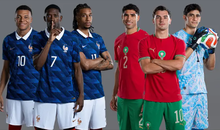
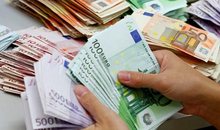
Foreign exchange, the rate at which foreign currencies are sold and bought
2026-07-09 08:30:41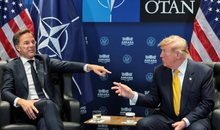
“Uniteti i jashtëzakonshëm” i NATO-s dhe mesazhet kryesore nga samiti në Turqi
2026-07-09 08:11:17
Horoskopi, njihuni me parashikim e yjeve
2026-07-09 07:46:15
Alternime kthjellimesh e vranësirash, parashikimi i motit
2026-07-09 07:25:59
Posta e mëngjesit/ Me 2 rreshta: Çfarë pati rëndësi dje në Shqipëri
2026-07-09 07:02:12