 Flash News
Here are the years of imprisonment requested for Monika's mother
"Blackened eyes and pulled out hair"/ Father of the raped 17-year-old: Police took no action
Property alienation in Durrës/ Court confirms security measures for suspects
Details/ Murder of Eglant Koç, the perpetrator hid for 10 days in the Elbasan region
Erkin Lika's lifeless body found after falling into Mat River sinkhole
Kneeling, hugging and 'hot' kisses: the cases when Rama has turned diplomacy into a spectacle

Politiko
2026-05-22 17:02:25
What happened?
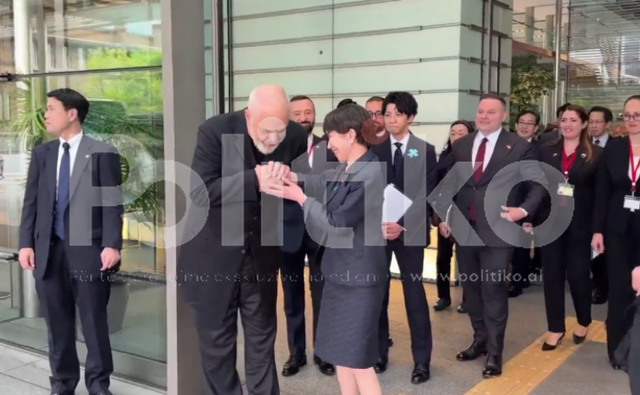
After the end of the official visit to Tokyo, Rama attempted to kiss the hands of Japanese Prime Minister Sanae Takaichi, a gesture he has previously made with his Italian counterpart Giorgia Meloni and EC President Ursula Von der Leyen. The Japanese counterpart distanced herself from Rama's action, maintaining the official reception she gave the Albanian prime minister.
context
'Shoqman', unconventional diplomacy, theatrical politics, attention-grabbing diplomacy... are just some of the epithets that international media have given to Prime Minister Edi Rama, for the gestures made during official visits or meetings at major summits.
"Rama likes to make a splash in the international press with his iconoclastic decisions ," wrote " Le Monde" in an article published in 2024.
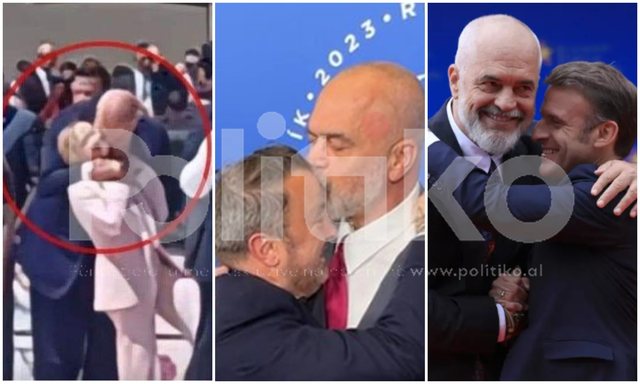
The most talked about has been his relationship with his Italian counterpart Giorgia Meloni. The pair have often been seen close to each other, 'undressed' from the politician's suit. Rama has been seen kissing and hugging other international leaders in the "bro hug" style, who, when embarrassed, have not always been able to avoid it.
Kneeling, hugging and 'hot' kissing with Meloni
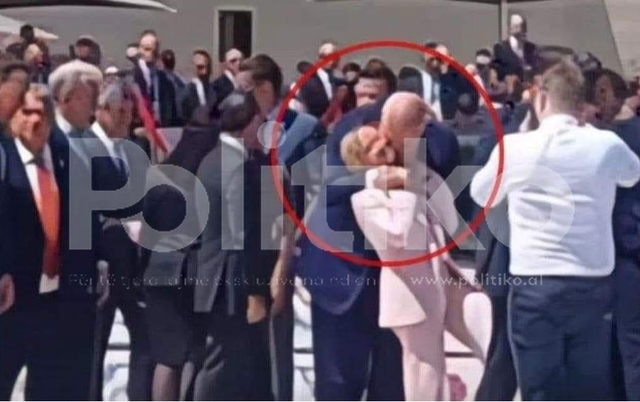
The closeness between Rama and the Italian prime minister was evident during the G7 leaders' meeting in Moldova in 2023. The kiss that the prime minister gave Meloni was labeled in international media headlines as a "hot kiss." Meloni herself was surprised by a kiss that came unexpectedly and at an inopportune moment.
At the European Political Summit in Tirana held in December 2024, Rama knelt down to greet Prime Minister Meloni. As Meloni arrived, Rama set aside his tent, knelt down, and greeted her with a 'namaste,' prompting laughter and a surprised "Edi, no!" from her.
He made the same gesture at an Abu Dhabi Summit when, on the occasion of Meloni's birthday, he knelt down and sang. The prime minister was even careful to give his Italian counterpart a scarf as a gift.
Kiss on the forehead of the Prime Minister of Luxembourg
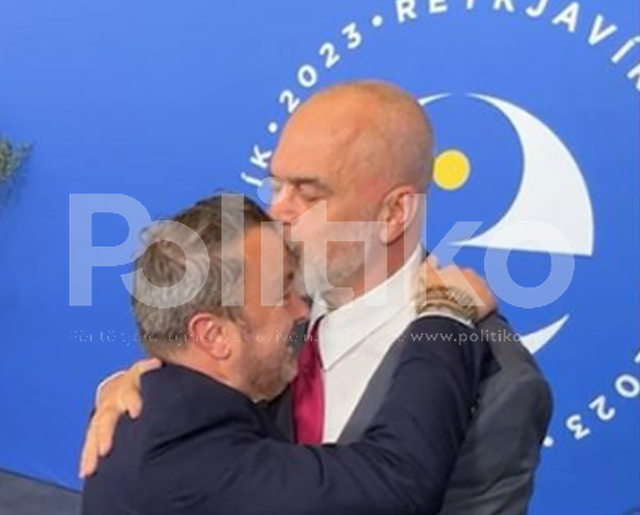
During a visit to Reykjavik, Iceland, where he attended the Council of Europe summit, Rama made sure to make headlines. In a meeting with Luxembourg Prime Minister Xavier Bettel, Rama did not hesitate to give Bettel a kiss on the forehead.
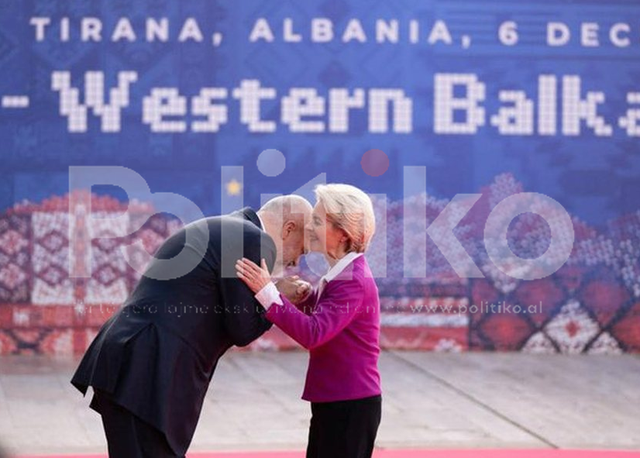
Rama kisses Von der Leyen's hand
In December 2024, a summit was held in Tirana, attended by 27 European leaders and several other senior union officials. One of the moments that stood out was when Rama welcomed the President of the European Commission, Ursula von der Leyen, and kissed her hand.
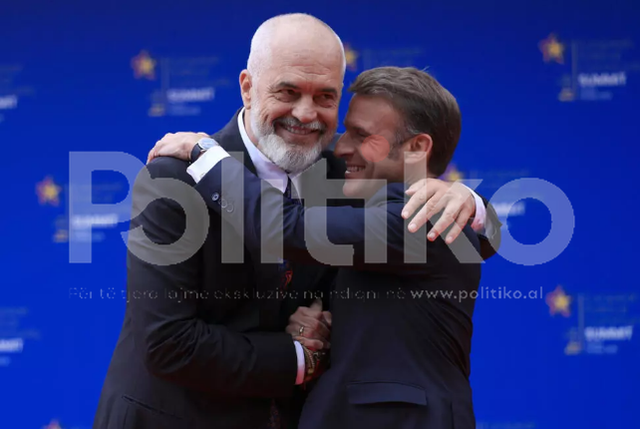
Brotherly hug with Macron
Greeting Macron at the Summit convened in Tirana, Rama praised the French leader. "Here is the Sun King," he said, addressing Emmanuel Macron, who looked somewhat embarrassed. And as if the epithet weren't enough, the prime minister gave him a brotherly hug, not at all unusual for the event.
Diplomacy or political theater?
At first glance, these gestures seem like deviations from classic diplomatic protocol, but in essence they are part of a political style that Edi Rama has cultivated for years.
In traditional diplomacy, leaders maintain distance, control body language, and avoid any gesture that could be interpreted as personal or emotional. Rama, on the contrary, deliberately breaks this code. He uses physical proximity, irony, theatricality, and surprise as tools of political communication. In this sense, the gesture is not just a gesture, but a message.
One reason is international image building . Albania is a small country at the global table, and Rama compensates for this “institutional size” with a strong personal presence. Second, it is a strategy of diplomatic rapprochement . By breaking with formality, he aims to create a sense of personal closeness with leaders, shifting the relationship from institutional to human.
But on the other hand, this approach is also controversial. It is often seen as exceeding the limits of protocol and as a spectacle that can obscure the political message. For some, it is charisma and communication intelligence, for others, it is unnecessary theatrics in diplomacy./ Politiko.al
Latest news

IDC-CDI meets in Brussels, Berisha participates as Vice President
2026-07-13 16:05:10
"Washington Examiner": Anger against Rama's enrichment has reached its peak
2026-07-13 14:28:00
Here are the years of imprisonment requested for Monika's mother
2026-07-13 14:09:46
EU appoints German diplomat as new special envoy for Kosovo
2026-07-13 13:55:29

Property alienation in Durrës/ Court confirms security measures for suspects
2026-07-13 13:25:00
70 people with poisoning symptoms in Pristina, 22 hospitalized
2026-07-13 13:16:00

Erkin Lika's lifeless body found after falling into Mat River sinkhole
2026-07-13 12:32:00
Over 500 babies named after Haaland after World Cup matches
2026-07-13 12:28:00
18 arrested in Spain, who is the Albanian known as 'Daci'?
2026-07-13 12:22:00
4.2 million euros for Kanye West, DP reports Rama and Gonxha to SPAK
2026-07-13 11:27:03


Heatwave hits Germany, over 5,400 heat-related deaths
2026-07-10 10:45:33
Land in "foreign hands"
2026-07-10 10:26:15
Mbappe the hero of France, the "Roosters" knock out Morocco in the quarterfinals
2026-07-10 09:54:33
Durrës/ 40-year-old man stabs his wife
2026-07-10 09:48:03

How much could the amount of drug money in the Albanian economy be?!
2026-07-10 09:08:34
Government reduces funds for farmers, increases ADF by 75 million euros
2026-07-10 08:55:46
Horoscope, get to know the star forecast
2026-07-10 08:32:54

Morning Post/ In 2 lines: What mattered yesterday in Albania
2026-07-10 07:52:04
A person was shot dead in Kurbin, first details
2026-07-09 22:54:48
Will the Police also stop those who criticize Rama online?
2026-07-09 21:57:02
FIFA decision shocks England, Quansah ruled out for two matches
2026-07-09 20:51:00
Protest/Pedagogue: 4 million euros for Kanye West is "the next concession"
2026-07-09 19:45:53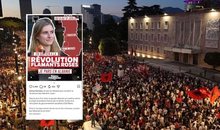
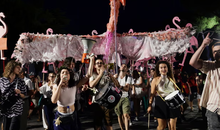
French MEP joins protests in Albania: Support for the "Pink Flamingo Revolution"
2026-07-09 19:28:07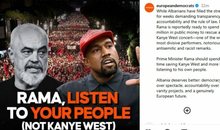

Has the lek strengthened or overvalued?
2026-07-09 17:58:05
The trial on the merits for Ilir Meta and Monika Kryemadhi is postponed
2026-07-09 16:47:58
The match between England and Norway risks being postponed, this is the reason
2026-07-09 16:12:46
Murder in Shkodra/ Relatives: Peaceful family, no problems
2026-07-09 16:10:02
Kurti invites opposition leaders to a meeting to create new institutions
2026-07-09 15:43:05
This is the 62-year-old man who killed his wife in Shkodra
2026-07-09 15:01:43
Domestic crime/ Wife killed with shotgun, perpetrator and victim identified
2026-07-09 14:05:18
Gunfire in Shkodra, one victim suspected
2026-07-09 13:49:41
Weapons cache discovered in Fier, Prosecution sends 38-year-old to trial
2026-07-09 13:35:48
Bota e muzikës në zi, ndahet nga jeta në moshën 75-vjeçare ikona Bonnie Tyler
2026-07-09 12:56:29
Monika Kryemadhi in the Criminal Court: The cell phone was seized illegally
2026-07-09 12:45:54
VALEN MP reacts after border detention: Albania is no one's property
2026-07-09 12:15:44
Albanian gang in Belgium sentenced for trafficking 7 tons of cocaine
2026-07-09 12:01:14
Justin Bieber, Shakira and Madonna to perform at 2026 World Cup final
2026-07-09 11:52:54
Euro falls, inflation rises and domestic production loses ground
2026-07-09 11:39:36
Trial at the GJKKO, Meta's new lawyer appears in the session
2026-07-09 11:29:47
Nighttime accident in Gramsh, man and woman injured
2026-07-09 11:20:25
Meta seeks 134 witnesses, GJKKO delivers decision today
2026-07-09 10:56:54

At the peak of the production season, vegetable prices 'fly'
2026-07-09 10:21:14
The African heat returns, the thermometer reaches 40 degrees this weekend
2026-07-09 10:08:08
Opinions from 'anonymous' authors target Flamingo protests
2026-07-09 10:07:15
MEP Waitz: The law on protected areas endangers Albania's path to the EU
2026-07-09 09:52:55
"Le Courrier des Balkans": Edi Rama and the megalomania of power
2026-07-09 09:40:26
The economics of concerts, the prime minister's imaginary 100 million euros
2026-07-09 09:28:19
Erdogan's strange gift to NATO leaders
2026-07-09 09:11:15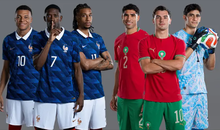
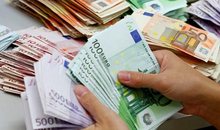
Foreign exchange, the rate at which foreign currencies are sold and bought
2026-07-09 08:30:41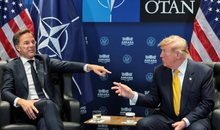
“Uniteti i jashtëzakonshëm” i NATO-s dhe mesazhet kryesore nga samiti në Turqi
2026-07-09 08:11:17
Horoskopi, njihuni me parashikim e yjeve
2026-07-09 07:46:15
Alternime kthjellimesh e vranësirash, parashikimi i motit
2026-07-09 07:25:59
Posta e mëngjesit/ Me 2 rreshta: Çfarë pati rëndësi dje në Shqipëri
2026-07-09 07:02:12