 Flash News
Here are the years of imprisonment requested for Monika's mother
"Blackened eyes and pulled out hair"/ Father of the raped 17-year-old: Police took no action
Property alienation in Durrës/ Court confirms security measures for suspects
Details/ Murder of Eglant Koç, the perpetrator hid for 10 days in the Elbasan region
Erkin Lika's lifeless body found after falling into Mat River sinkhole
From Tahiri to Balluku: Rama's double standard with justice

Politiko
2025-12-17 09:47:56
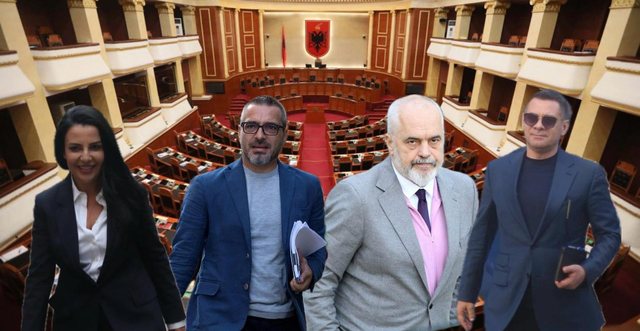
From the refusal to arrest former minister Saimir Tahiri, to the immediate lifting of immunity for Arben Ahmetaj and the current case of Belinda Balluku, the Assembly has followed different approaches to justice demands, turning the majority-SPAK relationship into a continuous political and institutional test.
The Assembly's decisions on whether or not to lift immunity have followed different approaches over time, reflecting the political weight of the figures involved.
The Special Prosecution's request to lift immunity, paving the way for the arrest of Belinda Balluku , returns Rama's confrontation with justice to the center of public and institutional debate.
Rama has allowed justice to act quickly when the political cost has been low, but has blocked or relativized the process when the circle of real power has been affected.
The first important precedent was set in 2018, when the socialist majority refused to open the way for the arrest of former minister Saimir Tahiri , despite the request of the Serious Crimes Prosecutor's Office. The Assembly chose an intermediate path, not authorizing the deprivation of liberty, but only lighter security measures, while Tahiri then, at a separate stage, resigned from the mandate of the deputy. This case was considered a political use of parliamentary immunity.
After the creation of SPAK, the majority's approach changed in several cases. The Assembly approved without resistance the lifting of immunity for former Deputy Prime Minister Arben Ahmetaj , paving the way for criminal measures and an in-depth investigation. The same line was followed for socialist MPs such as Alqi Bllako and Jurgis Çyrbja , while former Minister Lefter Koka was arrested without the need for parliamentary procedure, as he no longer held a mandate as an MP.
However, these cases had one element in common: the figures involved were either already politically distanced from the prime minister, or no longer represented a pillar of executive power.
The situation is different when investigations affect key figures in the incumbent government. The case of Tirana Mayor Erion Veliaj was accompanied by strong political protection before justice intervened. Unlike ministers and MPs, mayors do not enjoy parliamentary immunity, so Veliaj's case is mentioned only as an example of political protection, and not as a procedural precedent in the Assembly.
In this context, the case of Belinda Balluku presents new evidence. She is the highest-ranking government official in office against whom SPAK is seeking stronger measures, while the Assembly has the authority to lift immunity. The parliamentary regulation gives the majority not only the power to vote, but also the possibility of delaying the process for up to three months, after which the prosecution's request is considered dismissed if there is no decision.
The use of this procedural space, although formally legal, may constitute a real obstacle to justice and violate the spirit of the Constitution and the principle of equality before the law. Moreover, any decision-making or non-decision-making by the Assembly at this stage is read as a political signal about the majority's relationship with the Justice Reform.
From Tahiri to Balluku, the Assembly has followed different approaches to justice demands, creating a practice that is not always uniform. While in some cases the majority has allowed swift action by the justice bodies, in other cases it has chosen resistance, procrastination or political protection.
The decision to be taken regarding Belinda Balluku will not be just a procedural act, but a political and institutional test for the majority. More than the individual fate of an official, what is at stake is the credibility of the principle that immunity does not serve as a political shield, but as a procedural guarantee that should not hinder criminal prosecution.
Latest news

IDC-CDI meets in Brussels, Berisha participates as Vice President
2026-07-13 16:05:10
"Washington Examiner": Anger against Rama's enrichment has reached its peak
2026-07-13 14:28:00
Here are the years of imprisonment requested for Monika's mother
2026-07-13 14:09:46
EU appoints German diplomat as new special envoy for Kosovo
2026-07-13 13:55:29

Property alienation in Durrës/ Court confirms security measures for suspects
2026-07-13 13:25:00
70 people with poisoning symptoms in Pristina, 22 hospitalized
2026-07-13 13:16:00


Erkin Lika's lifeless body found after falling into Mat River sinkhole
2026-07-13 12:32:00
Over 500 babies named after Haaland after World Cup matches
2026-07-13 12:28:00
18 arrested in Spain, who is the Albanian known as 'Daci'?
2026-07-13 12:22:00

4.2 million euros for Kanye West, DP reports Rama and Gonxha to SPAK
2026-07-13 11:27:03



Heatwave hits Germany, over 5,400 heat-related deaths
2026-07-10 10:45:33

Land in "foreign hands"
2026-07-10 10:26:15

Mbappe the hero of France, the "Roosters" knock out Morocco in the quarterfinals
2026-07-10 09:54:33
Durrës/ 40-year-old man stabs his wife
2026-07-10 09:48:03


How much could the amount of drug money in the Albanian economy be?!
2026-07-10 09:08:34
Government reduces funds for farmers, increases ADF by 75 million euros
2026-07-10 08:55:46
Horoscope, get to know the star forecast
2026-07-10 08:32:54

Morning Post/ In 2 lines: What mattered yesterday in Albania
2026-07-10 07:52:04
A person was shot dead in Kurbin, first details
2026-07-09 22:54:48


Will the Police also stop those who criticize Rama online?
2026-07-09 21:57:02


FIFA decision shocks England, Quansah ruled out for two matches
2026-07-09 20:51:00

Protest/Pedagogue: 4 million euros for Kanye West is "the next concession"
2026-07-09 19:45:53
French MEP joins protests in Albania: Support for the "Pink Flamingo Revolution"
2026-07-09 19:28:07



Has the lek strengthened or overvalued?
2026-07-09 17:58:05
The trial on the merits for Ilir Meta and Monika Kryemadhi is postponed
2026-07-09 16:47:58

The match between England and Norway risks being postponed, this is the reason
2026-07-09 16:12:46
Murder in Shkodra/ Relatives: Peaceful family, no problems
2026-07-09 16:10:02
Kurti invites opposition leaders to a meeting to create new institutions
2026-07-09 15:43:05

This is the 62-year-old man who killed his wife in Shkodra
2026-07-09 15:01:43

Domestic crime/ Wife killed with shotgun, perpetrator and victim identified
2026-07-09 14:05:18
Gunfire in Shkodra, one victim suspected
2026-07-09 13:49:41
Weapons cache discovered in Fier, Prosecution sends 38-year-old to trial
2026-07-09 13:35:48

Bota e muzikës në zi, ndahet nga jeta në moshën 75-vjeçare ikona Bonnie Tyler
2026-07-09 12:56:29
Monika Kryemadhi in the Criminal Court: The cell phone was seized illegally
2026-07-09 12:45:54
VALEN MP reacts after border detention: Albania is no one's property
2026-07-09 12:15:44
Albanian gang in Belgium sentenced for trafficking 7 tons of cocaine
2026-07-09 12:01:14
Justin Bieber, Shakira and Madonna to perform at 2026 World Cup final
2026-07-09 11:52:54
Euro falls, inflation rises and domestic production loses ground
2026-07-09 11:39:36
Trial at the GJKKO, Meta's new lawyer appears in the session
2026-07-09 11:29:47
Nighttime accident in Gramsh, man and woman injured
2026-07-09 11:20:25
Meta seeks 134 witnesses, GJKKO delivers decision today
2026-07-09 10:56:54

At the peak of the production season, vegetable prices 'fly'
2026-07-09 10:21:14
The African heat returns, the thermometer reaches 40 degrees this weekend
2026-07-09 10:08:08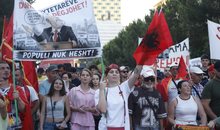
Opinions from 'anonymous' authors target Flamingo protests
2026-07-09 10:07:15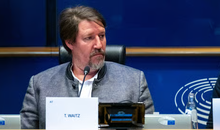
MEP Waitz: The law on protected areas endangers Albania's path to the EU
2026-07-09 09:52:55
"Le Courrier des Balkans": Edi Rama and the megalomania of power
2026-07-09 09:40:26
The economics of concerts, the prime minister's imaginary 100 million euros
2026-07-09 09:28:19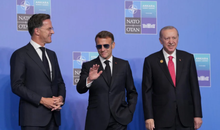
Erdogan's strange gift to NATO leaders
2026-07-09 09:11:15

Foreign exchange, the rate at which foreign currencies are sold and bought
2026-07-09 08:30:41
“Uniteti i jashtëzakonshëm” i NATO-s dhe mesazhet kryesore nga samiti në Turqi
2026-07-09 08:11:17

Horoskopi, njihuni me parashikim e yjeve
2026-07-09 07:46:15
Alternime kthjellimesh e vranësirash, parashikimi i motit
2026-07-09 07:25:59
Posta e mëngjesit/ Me 2 rreshta: Çfarë pati rëndësi dje në Shqipëri
2026-07-09 07:02:12