 Flash News
Here are the years of imprisonment requested for Monika's mother
"Blackened eyes and pulled out hair"/ Father of the raped 17-year-old: Police took no action
Property alienation in Durrës/ Court confirms security measures for suspects
Details/ Murder of Eglant Koç, the perpetrator hid for 10 days in the Elbasan region
Erkin Lika's lifeless body found after falling into Mat River sinkhole
Rama also centralizes water, government initiatives that are undoing local government

Politiko
2025-09-03 17:59:20

S. Gjidede
From the beginning of next year, drinking water will be managed by a national operator, as a mechanism that is claimed to optimize supply for citizens.
This initiative was presented today by Prime Minister Edi Rama, according to which the 15 regional water companies in the country will be integrated under the leadership of a single institution, the National Water Operator.
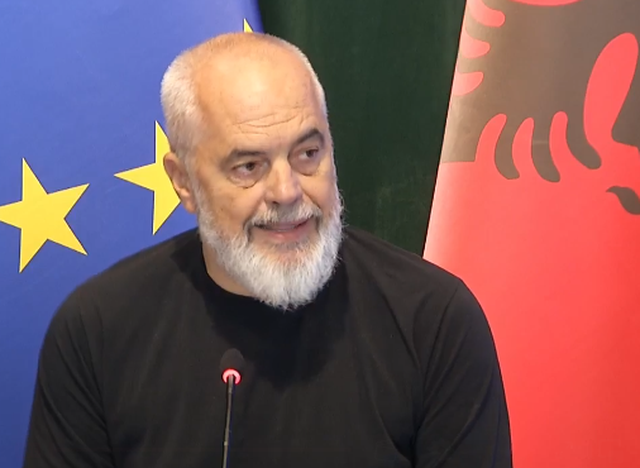
Through this platform, in the National Water Operator, the country's 61 municipalities will be shareholders with 2 to 5%, from the 49% they currently have in the 15 regional companies.
This move by Rama, presented as a reform, actually looks like another step towards centralizing executive power to the detriment of local autonomy.
The reduction of shares from 49% to 2-5% is a concrete signal that proves that decision-making for a vital service like water is being taken out of the hands of communities and is being concentrated in a government-controlled institution.
So far, Rama has described local government as an incompetent structure and is finding mechanisms to replace it with the government.
But what else did Rama take from the local government?
Dismissal of municipal directors
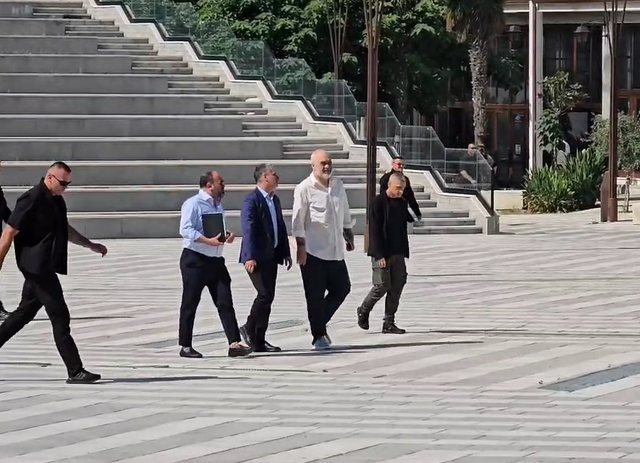
Rama in Vlora
A few weeks ago, Rama publicly demanded the dismissal of the municipal leaders in Vlora and then 'expanded' the map to other areas after accusing them of negligence during the summer season.
But instead of an institutional process, a political intervention was observed where appointments and dismissals were made by delegated groups of the SP.
Political experts have seen this behavior as a propaganda spectacle to cover up the failures of local government and as an attempt to personalize power in every aspect of public life.
Analyst Fatos Lubonja considered these actions as anti-democratic messages in a media statement.
"The question that arises is: how can all the players of a team that has achieved an 'excellent' electoral result be punished? It is clear that it is not work that has brought this result, on the contrary, the country is experiencing a severe political, economic and cultural degradation," said Lubonja.
Political Science lecturer Ermal Hasimja also considered the appropriation of local government by the prime minister and the lack of legal justification for the dismissals to be concerning.
"Rama is trying to shift the responsibility for failures to others and present himself as the only moral and political authority in the country," said Hasimja, adding that this is also happening in function of the increasingly pronounced personalization of election campaigns.
Clearing public spaces
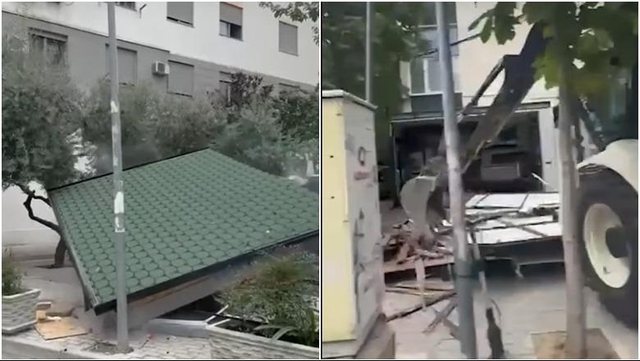
Rama has also recently ordered the clearance of public spaces from unauthorized construction, a competence that traditionally belongs to municipalities.
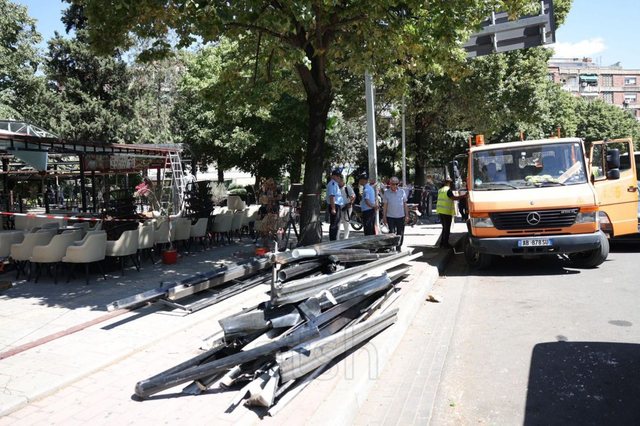
The Association for Local Autonomy has reacted several times to this approach of the Prime Minister, demanding transparency on the criteria for intervention and a clear regulation that does not overlook the role of local government. They have even warned that this model could create a precedent for other interventions without consultation.
In this context, municipalities are not being viewed as partners, but as extensions of a government-controlled administration. Therefore, the initiative for the National Water Operator also comes in the same line, to serve as a political instrument and a model of governance where decision-making is centralized in the hands of Rama. Politiko.al/
Latest news

IDC-CDI meets in Brussels, Berisha participates as Vice President
2026-07-13 16:05:10
"Washington Examiner": Anger against Rama's enrichment has reached its peak
2026-07-13 14:28:00
Here are the years of imprisonment requested for Monika's mother
2026-07-13 14:09:46
EU appoints German diplomat as new special envoy for Kosovo
2026-07-13 13:55:29

Property alienation in Durrës/ Court confirms security measures for suspects
2026-07-13 13:25:00
70 people with poisoning symptoms in Pristina, 22 hospitalized
2026-07-13 13:16:00


Erkin Lika's lifeless body found after falling into Mat River sinkhole
2026-07-13 12:32:00
Over 500 babies named after Haaland after World Cup matches
2026-07-13 12:28:00
18 arrested in Spain, who is the Albanian known as 'Daci'?
2026-07-13 12:22:00

4.2 million euros for Kanye West, DP reports Rama and Gonxha to SPAK
2026-07-13 11:27:03

Heatwave hits Germany, over 5,400 heat-related deaths
2026-07-10 10:45:33

Land in "foreign hands"
2026-07-10 10:26:15
Mbappe the hero of France, the "Roosters" knock out Morocco in the quarterfinals
2026-07-10 09:54:33
Durrës/ 40-year-old man stabs his wife
2026-07-10 09:48:03


How much could the amount of drug money in the Albanian economy be?!
2026-07-10 09:08:34
Government reduces funds for farmers, increases ADF by 75 million euros
2026-07-10 08:55:46
Horoscope, get to know the star forecast
2026-07-10 08:32:54

Morning Post/ In 2 lines: What mattered yesterday in Albania
2026-07-10 07:52:04
A person was shot dead in Kurbin, first details
2026-07-09 22:54:48

Will the Police also stop those who criticize Rama online?
2026-07-09 21:57:02

FIFA decision shocks England, Quansah ruled out for two matches
2026-07-09 20:51:00
Protest/Pedagogue: 4 million euros for Kanye West is "the next concession"
2026-07-09 19:45:53
French MEP joins protests in Albania: Support for the "Pink Flamingo Revolution"
2026-07-09 19:28:07


Has the lek strengthened or overvalued?
2026-07-09 17:58:05

The trial on the merits for Ilir Meta and Monika Kryemadhi is postponed
2026-07-09 16:47:58

The match between England and Norway risks being postponed, this is the reason
2026-07-09 16:12:46
Murder in Shkodra/ Relatives: Peaceful family, no problems
2026-07-09 16:10:02
Kurti invites opposition leaders to a meeting to create new institutions
2026-07-09 15:43:05

This is the 62-year-old man who killed his wife in Shkodra
2026-07-09 15:01:43

Domestic crime/ Wife killed with shotgun, perpetrator and victim identified
2026-07-09 14:05:18
Gunfire in Shkodra, one victim suspected
2026-07-09 13:49:41
Weapons cache discovered in Fier, Prosecution sends 38-year-old to trial
2026-07-09 13:35:48

Bota e muzikës në zi, ndahet nga jeta në moshën 75-vjeçare ikona Bonnie Tyler
2026-07-09 12:56:29
Monika Kryemadhi in the Criminal Court: The cell phone was seized illegally
2026-07-09 12:45:54
VALEN MP reacts after border detention: Albania is no one's property
2026-07-09 12:15:44
Albanian gang in Belgium sentenced for trafficking 7 tons of cocaine
2026-07-09 12:01:14
Justin Bieber, Shakira and Madonna to perform at 2026 World Cup final
2026-07-09 11:52:54
Euro falls, inflation rises and domestic production loses ground
2026-07-09 11:39:36
Trial at the GJKKO, Meta's new lawyer appears in the session
2026-07-09 11:29:47
Nighttime accident in Gramsh, man and woman injured
2026-07-09 11:20:25
Meta seeks 134 witnesses, GJKKO delivers decision today
2026-07-09 10:56:54

At the peak of the production season, vegetable prices 'fly'
2026-07-09 10:21:14
The African heat returns, the thermometer reaches 40 degrees this weekend
2026-07-09 10:08:08
Opinions from 'anonymous' authors target Flamingo protests
2026-07-09 10:07:15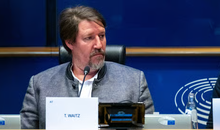
MEP Waitz: The law on protected areas endangers Albania's path to the EU
2026-07-09 09:52:55
"Le Courrier des Balkans": Edi Rama and the megalomania of power
2026-07-09 09:40:26
The economics of concerts, the prime minister's imaginary 100 million euros
2026-07-09 09:28:19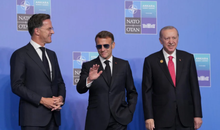
Erdogan's strange gift to NATO leaders
2026-07-09 09:11:15

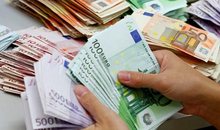
Foreign exchange, the rate at which foreign currencies are sold and bought
2026-07-09 08:30:41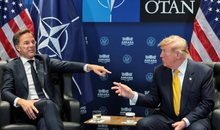
“Uniteti i jashtëzakonshëm” i NATO-s dhe mesazhet kryesore nga samiti në Turqi
2026-07-09 08:11:17

Horoskopi, njihuni me parashikim e yjeve
2026-07-09 07:46:15
Alternime kthjellimesh e vranësirash, parashikimi i motit
2026-07-09 07:25:59
Posta e mëngjesit/ Me 2 rreshta: Çfarë pati rëndësi dje në Shqipëri
2026-07-09 07:02:12