 Flash News
Here are the years of imprisonment requested for Monika's mother
"Blackened eyes and pulled out hair"/ Father of the raped 17-year-old: Police took no action
Property alienation in Durrës/ Court confirms security measures for suspects
Details/ Murder of Eglant Koç, the perpetrator hid for 10 days in the Elbasan region
Erkin Lika's lifeless body found after falling into Mat River sinkhole
Rama plans changes, how EU countries act towards ministers under investigation; concrete cases

Politiko
2026-02-16 19:43:30
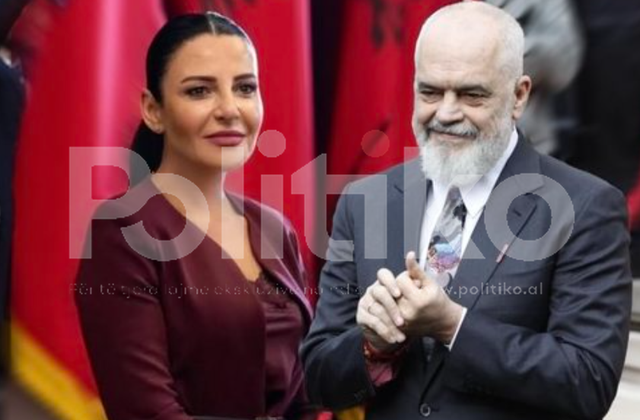
The Socialist Party recently proposed changes to the Criminal Procedure Code that protect ministers and some other senior officials from suspension from office through an initiative that aims to weaken the special anti-corruption structure.
At a meeting of the Socialist Party parliamentary group, led by Prime Minister Edi Rama, the Socialists announced that they would amend Article 242 of the Criminal Procedure Code, removing the right of the courts to issue suspension decisions against the Prime Minister, ministers, the President, the Ombudsman and the head of the Supreme Audit Office.
But while the Albanian government is proposing legal changes to limit the ability of courts to suspend ministers during criminal investigations, European Union countries have different practices for senior officials when facing judicial charges.
France
In France, there is the Cour de Justice de la République (CJR), a special court created to try criminal cases involving ministers or former ministers for offenses committed in the exercise of their duties.
This court is a special mechanism for dealing with issues related to the criminal responsibility of French government officials.
For example, France's Minister of Culture, Rachida Dati , has been the subject of an investigation by French authorities on suspicion of corruption and misuse of funds.
ITALY
In Italy, there is no absolute immunity for ministers facing criminal prosecution.
While in the past, Italian legislation introduced the idea of " Lodo Alfano ", a law that provided criminal protection to the president, prime minister and other high-ranking figures, this was declared incompatible with the Italian Constitution in 2009.
The law was considered an attempt to ban trials of political figures, but was struck down by the Constitutional Court.
This shows that the Italian system is much closer to the principle that justice is open to rulers, without an insurmountable legal "immunity".
Germany
In Germany, legislators and government officials who are members of Parliament have procedural immunity that can be lifted by the Bundestag if they are to be prosecuted. This is regulated in Article 46 of the German Constitution (Grundgesetz).
This clearly shows that even in a powerful country like Germany there is no absolute protection for senior government officials, and in no case does it block criminal liability.
Greece
Makis Voridis , former Minister of Agriculture and later Minister of Migration, resigned in June 2025 following allegations of his involvement in a scheme to defraud European Union agricultural funds. The investigation was coordinated by the European Public Prosecutor's Office (EPPO) and included a file submitted to the Greek Parliament for the suspension of the ministers' legal immunity.
EU institutions
Even in the institutions of the European Union, high-ranking officials have faced investigations by the European Public Prosecutor's Office (EPPO), showing that the justice-politics relationship in the EU is treated with an approach geared towards accountability, not absolute protection:
Federica Mogherini, former EU High Representative and Foreign Minister in Italy, resigned as rector of a European institution following investigations into suspicions over the tendering procedures of the EU diplomatic academy.
From the above examples, it is clear that European Union countries do not shelter ministers from legal investigations.
In most cases, they either resign, or their powers are removed and they face legal proceedings, a standard that is part of the requirements of the European integration process for candidate countries./ S.Gj
Latest news

IDC-CDI meets in Brussels, Berisha participates as Vice President
2026-07-13 16:05:10
"Washington Examiner": Anger against Rama's enrichment has reached its peak
2026-07-13 14:28:00
Here are the years of imprisonment requested for Monika's mother
2026-07-13 14:09:46
EU appoints German diplomat as new special envoy for Kosovo
2026-07-13 13:55:29

Property alienation in Durrës/ Court confirms security measures for suspects
2026-07-13 13:25:00
70 people with poisoning symptoms in Pristina, 22 hospitalized
2026-07-13 13:16:00


Erkin Lika's lifeless body found after falling into Mat River sinkhole
2026-07-13 12:32:00
Over 500 babies named after Haaland after World Cup matches
2026-07-13 12:28:00
18 arrested in Spain, who is the Albanian known as 'Daci'?
2026-07-13 12:22:00

4.2 million euros for Kanye West, DP reports Rama and Gonxha to SPAK
2026-07-13 11:27:03


Heatwave hits Germany, over 5,400 heat-related deaths
2026-07-10 10:45:33

Land in "foreign hands"
2026-07-10 10:26:15
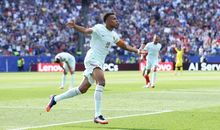
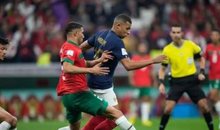
Mbappe the hero of France, the "Roosters" knock out Morocco in the quarterfinals
2026-07-10 09:54:33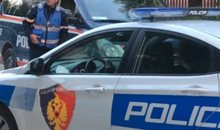
Durrës/ 40-year-old man stabs his wife
2026-07-10 09:48:03


How much could the amount of drug money in the Albanian economy be?!
2026-07-10 09:08:34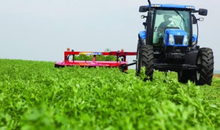
Government reduces funds for farmers, increases ADF by 75 million euros
2026-07-10 08:55:46
Horoscope, get to know the star forecast
2026-07-10 08:32:54

Morning Post/ In 2 lines: What mattered yesterday in Albania
2026-07-10 07:52:04
A person was shot dead in Kurbin, first details
2026-07-09 22:54:48
Will the Police also stop those who criticize Rama online?
2026-07-09 21:57:02


FIFA decision shocks England, Quansah ruled out for two matches
2026-07-09 20:51:00
Protest/Pedagogue: 4 million euros for Kanye West is "the next concession"
2026-07-09 19:45:53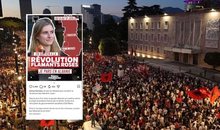
French MEP joins protests in Albania: Support for the "Pink Flamingo Revolution"
2026-07-09 19:28:07

Has the lek strengthened or overvalued?
2026-07-09 17:58:05
The trial on the merits for Ilir Meta and Monika Kryemadhi is postponed
2026-07-09 16:47:58

The match between England and Norway risks being postponed, this is the reason
2026-07-09 16:12:46
Murder in Shkodra/ Relatives: Peaceful family, no problems
2026-07-09 16:10:02
Kurti invites opposition leaders to a meeting to create new institutions
2026-07-09 15:43:05

This is the 62-year-old man who killed his wife in Shkodra
2026-07-09 15:01:43
Domestic crime/ Wife killed with shotgun, perpetrator and victim identified
2026-07-09 14:05:18
Gunfire in Shkodra, one victim suspected
2026-07-09 13:49:41
Weapons cache discovered in Fier, Prosecution sends 38-year-old to trial
2026-07-09 13:35:48
Bota e muzikës në zi, ndahet nga jeta në moshën 75-vjeçare ikona Bonnie Tyler
2026-07-09 12:56:29
Monika Kryemadhi in the Criminal Court: The cell phone was seized illegally
2026-07-09 12:45:54
VALEN MP reacts after border detention: Albania is no one's property
2026-07-09 12:15:44
Albanian gang in Belgium sentenced for trafficking 7 tons of cocaine
2026-07-09 12:01:14
Justin Bieber, Shakira and Madonna to perform at 2026 World Cup final
2026-07-09 11:52:54
Euro falls, inflation rises and domestic production loses ground
2026-07-09 11:39:36
Trial at the GJKKO, Meta's new lawyer appears in the session
2026-07-09 11:29:47
Nighttime accident in Gramsh, man and woman injured
2026-07-09 11:20:25
Meta seeks 134 witnesses, GJKKO delivers decision today
2026-07-09 10:56:54

At the peak of the production season, vegetable prices 'fly'
2026-07-09 10:21:14
The African heat returns, the thermometer reaches 40 degrees this weekend
2026-07-09 10:08:08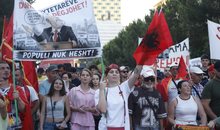
Opinions from 'anonymous' authors target Flamingo protests
2026-07-09 10:07:15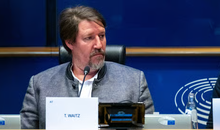
MEP Waitz: The law on protected areas endangers Albania's path to the EU
2026-07-09 09:52:55
"Le Courrier des Balkans": Edi Rama and the megalomania of power
2026-07-09 09:40:26
The economics of concerts, the prime minister's imaginary 100 million euros
2026-07-09 09:28:19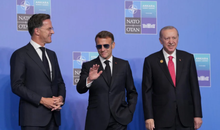
Erdogan's strange gift to NATO leaders
2026-07-09 09:11:15

Foreign exchange, the rate at which foreign currencies are sold and bought
2026-07-09 08:30:41
“Uniteti i jashtëzakonshëm” i NATO-s dhe mesazhet kryesore nga samiti në Turqi
2026-07-09 08:11:17

Horoskopi, njihuni me parashikim e yjeve
2026-07-09 07:46:15
Alternime kthjellimesh e vranësirash, parashikimi i motit
2026-07-09 07:25:59
Posta e mëngjesit/ Me 2 rreshta: Çfarë pati rëndësi dje në Shqipëri
2026-07-09 07:02:12