 Flash News
Here are the years of imprisonment requested for Monika's mother
"Blackened eyes and pulled out hair"/ Father of the raped 17-year-old: Police took no action
Property alienation in Durrës/ Court confirms security measures for suspects
Details/ Murder of Eglant Koç, the perpetrator hid for 10 days in the Elbasan region
Erkin Lika's lifeless body found after falling into Mat River sinkhole
Albania in two versions: Propaganda of successes and reports with reservations

Politiko
2026-03-28 14:58:29
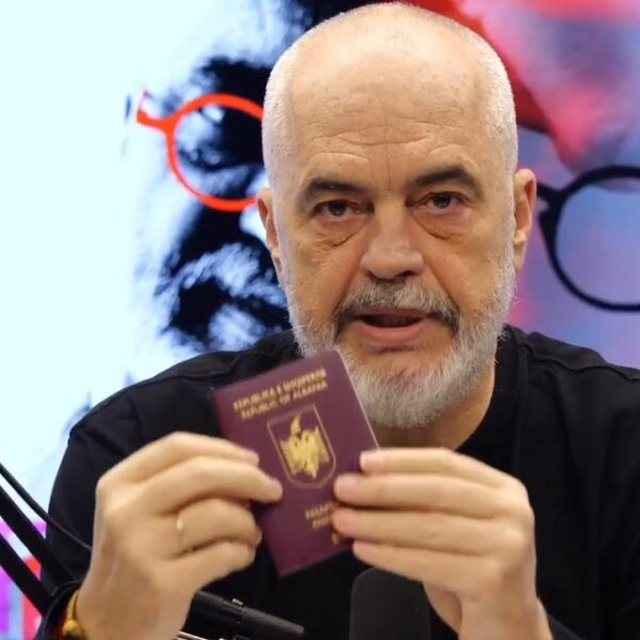
Prime Minister Edi Rama has enthusiastically published the Bertelsmann Stiftung (BTI) report, according to which Albania ranks first in Southeast Europe for political transformation.
A success that, if the headlines are to be believed, places the country in an almost model category. The only problem is that some other international reports seem to have lagged behind in the "transformation" and have not yet reflected this new reality.
Freedom House: Albania a partly free country
According to the Freedom House report , Albania continues to be classified as “Partly Free” with 69/100 points. In less diplomatic language, the country remains in the category of democracies with footnotes.
The report notes ongoing problems with: institutions, corruption, and the functioning of the rule of law. But perhaps even Freedom House simply hasn't gotten the updated version of the "new Albania" yet.
DASH: Albania among dangerous countries for Americans
Meanwhile, the US State Department ranks Albania at level two, where Americans are advised to exercise increased caution.
So, on the one hand, "leader of political transformation in the region," on the other, "be careful when traveling." A combination that in Rama's diplomacy is probably called balance, while in real life it is called contrast.
Progress with conditions from Brussels, integration at risk
In Brussels, enthusiasm is more measured. Reports from European institutions and the largest political grouping in the European Parliament, the EPP, speak of high-level corruption, challenges to justice, problems with elections, and political polarization.
The EP report submitted after the representative delegation's visit to Tirana emphasizes that "enlargement remains merit-based and depends on sustained reforms, particularly in the areas of the rule of law, judicial independence, the fight against corruption and organized crime, and media freedom."
“Attention was paid to the ongoing political polarization, as well as high-level corruption investigations and the risk of political interference in judicial proceedings.”
“Members underlined the need to continue work on the “foundations”, particularly in the fight against corruption and organized crime, strengthening the rule of law.”
The failure of the Albanian Parliament to lift the immunity of former Deputy Prime Minister Belinda Balluku is being seen as a serious test of the country's commitment to the rule of law.
Diplomats from EU member states have stated that: “Member states expect politics not to impede the rule of law.”
This development could directly affect the position of member states towards the adoption of the IBAR report, a key instrument that paves the way for Albania towards the phase of closing the negotiation chapters.
26 critical amendments from the EPP
The European People's Party (EPP) has submitted 26 amendments to the European Parliament's 2025 report on Albania, strongly highlighting systemic shortcomings in elections, justice and governance.
The report, led by Albania Reporter Andreas Schieder, highlights the Albanian government's serious failures in key areas such as elections, justice, administration and governance. MEPs also stressed that without deep and irreversible reforms, Albania risks losing credibility in the European Union.
conclusion
On one hand, we have the official narrative promoted by Edi Rama, which relies on the Bertelsmann Stiftung report and presents Albania as a success story in the region. On the other hand, reports by Freedom House, DASH and EU institutions offer a more cautious assessment, emphasizing that progress remains fragile and conditional.
In the end, the question that remains is not whether this 'progress' will be enough to convince European partners that Albania is ready to move from promises to concrete results.
Latest news

Here are the years of imprisonment requested for Monika's mother
2026-07-13 14:09:46
EU appoints German diplomat as new special envoy for Kosovo
2026-07-13 13:55:29

Property alienation in Durrës/ Court confirms security measures for suspects
2026-07-13 13:25:00
70 people with poisoning symptoms in Pristina, 22 hospitalized
2026-07-13 13:16:00

Erkin Lika's lifeless body found after falling into Mat River sinkhole
2026-07-13 12:32:00
Over 500 babies named after Haaland after World Cup matches
2026-07-13 12:28:00
18 arrested in Spain, who is the Albanian known as 'Daci'?
2026-07-13 12:22:00
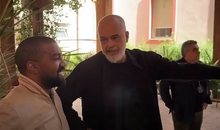
4.2 million euros for Kanye West, DP reports Rama and Gonxha to SPAK
2026-07-13 11:27:03

Heatwave hits Germany, over 5,400 heat-related deaths
2026-07-10 10:45:33

Land in "foreign hands"
2026-07-10 10:26:15
Mbappe the hero of France, the "Roosters" knock out Morocco in the quarterfinals
2026-07-10 09:54:33
Durrës/ 40-year-old man stabs his wife
2026-07-10 09:48:03


How much could the amount of drug money in the Albanian economy be?!
2026-07-10 09:08:34
Government reduces funds for farmers, increases ADF by 75 million euros
2026-07-10 08:55:46
Horoscope, get to know the star forecast
2026-07-10 08:32:54

Morning Post/ In 2 lines: What mattered yesterday in Albania
2026-07-10 07:52:04
A person was shot dead in Kurbin, first details
2026-07-09 22:54:48
Will the Police also stop those who criticize Rama online?
2026-07-09 21:57:02

FIFA decision shocks England, Quansah ruled out for two matches
2026-07-09 20:51:00
Protest/Pedagogue: 4 million euros for Kanye West is "the next concession"
2026-07-09 19:45:53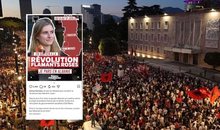
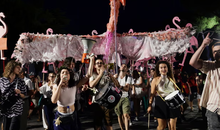
French MEP joins protests in Albania: Support for the "Pink Flamingo Revolution"
2026-07-09 19:28:07

Has the lek strengthened or overvalued?
2026-07-09 17:58:05
The trial on the merits for Ilir Meta and Monika Kryemadhi is postponed
2026-07-09 16:47:58

The match between England and Norway risks being postponed, this is the reason
2026-07-09 16:12:46
Murder in Shkodra/ Relatives: Peaceful family, no problems
2026-07-09 16:10:02
Kurti invites opposition leaders to a meeting to create new institutions
2026-07-09 15:43:05
This is the 62-year-old man who killed his wife in Shkodra
2026-07-09 15:01:43
Domestic crime/ Wife killed with shotgun, perpetrator and victim identified
2026-07-09 14:05:18
Gunfire in Shkodra, one victim suspected
2026-07-09 13:49:41
Weapons cache discovered in Fier, Prosecution sends 38-year-old to trial
2026-07-09 13:35:48
Bota e muzikës në zi, ndahet nga jeta në moshën 75-vjeçare ikona Bonnie Tyler
2026-07-09 12:56:29
Monika Kryemadhi in the Criminal Court: The cell phone was seized illegally
2026-07-09 12:45:54
VALEN MP reacts after border detention: Albania is no one's property
2026-07-09 12:15:44
Albanian gang in Belgium sentenced for trafficking 7 tons of cocaine
2026-07-09 12:01:14
Justin Bieber, Shakira and Madonna to perform at 2026 World Cup final
2026-07-09 11:52:54
Euro falls, inflation rises and domestic production loses ground
2026-07-09 11:39:36
Trial at the GJKKO, Meta's new lawyer appears in the session
2026-07-09 11:29:47
Nighttime accident in Gramsh, man and woman injured
2026-07-09 11:20:25
Meta seeks 134 witnesses, GJKKO delivers decision today
2026-07-09 10:56:54

At the peak of the production season, vegetable prices 'fly'
2026-07-09 10:21:14
The African heat returns, the thermometer reaches 40 degrees this weekend
2026-07-09 10:08:08
Opinions from 'anonymous' authors target Flamingo protests
2026-07-09 10:07:15
MEP Waitz: The law on protected areas endangers Albania's path to the EU
2026-07-09 09:52:55
"Le Courrier des Balkans": Edi Rama and the megalomania of power
2026-07-09 09:40:26
The economics of concerts, the prime minister's imaginary 100 million euros
2026-07-09 09:28:19
Erdogan's strange gift to NATO leaders
2026-07-09 09:11:15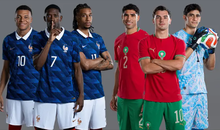
Foreign exchange, the rate at which foreign currencies are sold and bought
2026-07-09 08:30:41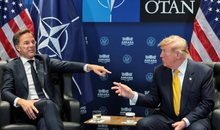
“Uniteti i jashtëzakonshëm” i NATO-s dhe mesazhet kryesore nga samiti në Turqi
2026-07-09 08:11:17

Horoskopi, njihuni me parashikim e yjeve
2026-07-09 07:46:15
Alternime kthjellimesh e vranësirash, parashikimi i motit
2026-07-09 07:25:59
Posta e mëngjesit/ Me 2 rreshta: Çfarë pati rëndësi dje në Shqipëri
2026-07-09 07:02:12