 Flash News
Foreign exchange, the rate at which foreign currencies are sold and bought
Clear skies throughout Albania, here's what the weather is expected to be like today
Conflict between young people in Fushë-Krujë, 22-year-old injured with knife
Kanye West's state-funded concert, OCCRP: Government accused of using the concert to stifle protests
Here are the years of imprisonment requested for Monika's mother
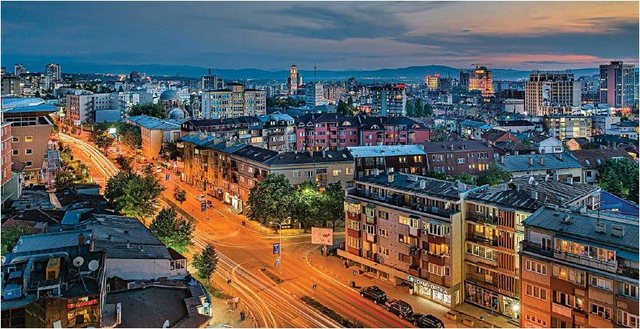
Among ten European countries, Kosovo was ranked as the second poorest country, by the World Atlas platform, according to data from the International Monetary Fund.
Kosovo has not achieved the pace of development needed to improve the living standards of its citizens, which is why it continues to be considered "a small and poor economy," says Blendi Hasaj, executive director of the GAP Institute.
"We are somewhere around 30% of the European Union average, in terms of Gross Domestic Product per capita. This shows that we have not managed to have more accelerated economic development," Hasaj said on Radio Free Europe's 5 Questions podcast.
According to him, macroeconomic measurements do not always fully reflect the social reality in the country, as within the averages there are large economic inequalities.
"These data are macro and show an average, but within them there is a lot of inequality. It is enough for some people to have very high salaries, and the resulting average salary creates the impression that the situation is better than it really is," says Hasaj.
Speaking about the incumbent government's decision to allocate 100 euros to different categories, Hasaj criticizes the way this program is implemented, especially during election periods.
"These are ad hoc solutions. Structured and well-targeted programs are not being implemented. Moreover, it is problematic for public money to be distributed during elections," he says.
Hasaj says that inflation and the increase in prices of basic products have made life difficult for citizens, especially low-income families and private sector workers.
"Kosovo's economy continues to be characterized by low wages. Especially in the private sector, the prevailing wage is close to the minimum wage level," he says.
Hasaj also speaks about the public perception that, although statistics list Kosovo among the poorest countries in Europe, shops and cafes continue to be full.
He says part of this perception is related to the diaspora's large impact on the economy.
"Our economic model is very dependent on the diaspora. Remittances alone are over 1.35 billion euros, and most of them go to consumption," says Hasaj.
According to him, one of the biggest structural problems remains unemployment and the inactivation of women in the labor market.
"Kosovo has the highest rate of inactive women in Europe. This is a serious problem for the economy as well," he says, adding that investing in nurseries, home care for the elderly, and greater inclusion of women in the labor market would also directly impact poverty reduction.
Hasaj estimates that without structural reforms and sustainable investments in the economy, Kosovo will find it difficult to approach the living standards of EU countries.
Latest news

Speaking multiple languages can keep your brain up to 13 years younger
2026-07-14 09:35:11
Strait of Hormuz becomes key battleground again, oil prices rise
2026-07-14 09:20:09

73.4% of Albanians' out-of-pocket health expenses go to medicines
2026-07-14 09:02:28
Over 10,000 dead from extreme heat wave in Europe, elderly most affected
2026-07-14 08:59:36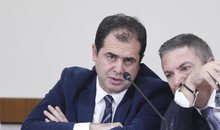
Foreign exchange, the rate at which foreign currencies are sold and bought
2026-07-14 08:24:50
The ten challenges Spain must win to eliminate France and Mbappé
2026-07-14 08:04:02

Morning Post/ In 2 lines: What mattered yesterday in Albania
2026-07-14 07:00:35
Ukraine strengthens air defense, Macron announces deal for 16 Rafale jets
2026-07-13 22:26:00
Shkullaku: Qeveria përdori koncertin e Kanye West për të eklipsuar protestën
2026-07-13 22:11:36
Conflict between young people in Fushë-Krujë, 22-year-old injured with knife
2026-07-13 21:47:26


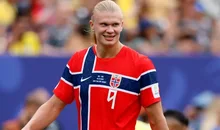
Haaland, the phenomenon of the 2026 World Cup
2026-07-13 20:19:12
Citizens take to the streets again, protest enters 44th day
2026-07-13 20:01:25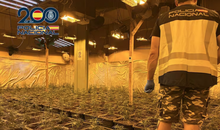
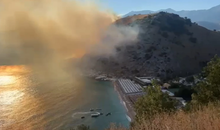
Large fire in Himara, flames engulf the hills of the Llaman area
2026-07-13 19:28:11

Dutch referee dies, weeks after being banned from 2026 World Cup
2026-07-13 18:22:39

What professions make people the happiest?
2026-07-13 17:51:54

Brazil still in crisis, fans attack Federation after motivational video
2026-07-13 16:42:07
The Special Court returns the file against former mayor Elvis Roshi to SPAK
2026-07-13 16:22:11
IDC-CDI meets in Brussels, Berisha participates as Vice President
2026-07-13 16:05:10
"Washington Examiner": Anger against Rama's enrichment has reached its peak
2026-07-13 14:28:00
Here are the years of imprisonment requested for Monika's mother
2026-07-13 14:09:46
EU appoints German diplomat as new special envoy for Kosovo
2026-07-13 13:55:29

Property alienation in Durrës/ Court confirms security measures for suspects
2026-07-13 13:25:00
70 people with poisoning symptoms in Pristina, 22 hospitalized
2026-07-13 13:16:00

Erkin Lika's lifeless body found after falling into Mat River sinkhole
2026-07-13 12:32:00
Over 500 babies named after Haaland after World Cup matches
2026-07-13 12:28:00
18 arrested in Spain, who is the Albanian known as 'Daci'?
2026-07-13 12:22:00
4.2 million euros for Kanye West, DP reports Rama and Gonxha to SPAK
2026-07-13 11:27:03

Heatwave hits Germany, over 5,400 heat-related deaths
2026-07-10 10:45:33

Land in "foreign hands"
2026-07-10 10:26:15
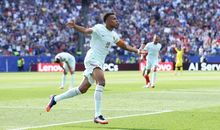
Mbappe the hero of France, the "Roosters" knock out Morocco in the quarterfinals
2026-07-10 09:54:33
Durrës/ 40-year-old man stabs his wife
2026-07-10 09:48:03

How much could the amount of drug money in the Albanian economy be?!
2026-07-10 09:08:34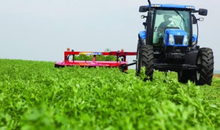
Government reduces funds for farmers, increases ADF by 75 million euros
2026-07-10 08:55:46
Horoscope, get to know the star forecast
2026-07-10 08:32:54


Morning Post/ In 2 lines: What mattered yesterday in Albania
2026-07-10 07:52:04
A person was shot dead in Kurbin, first details
2026-07-09 22:54:48

Will the Police also stop those who criticize Rama online?
2026-07-09 21:57:02


FIFA decision shocks England, Quansah ruled out for two matches
2026-07-09 20:51:00
Protest/Pedagogue: 4 million euros for Kanye West is "the next concession"
2026-07-09 19:45:53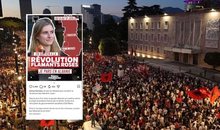
French MEP joins protests in Albania: Support for the "Pink Flamingo Revolution"
2026-07-09 19:28:07


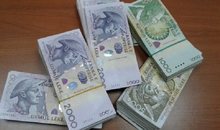
Has the lek strengthened or overvalued?
2026-07-09 17:58:05
The trial on the merits for Ilir Meta and Monika Kryemadhi is postponed
2026-07-09 16:47:58
The match between England and Norway risks being postponed, this is the reason
2026-07-09 16:12:46
Murder in Shkodra/ Relatives: Peaceful family, no problems
2026-07-09 16:10:02
Kurti invites opposition leaders to a meeting to create new institutions
2026-07-09 15:43:05
This is the 62-year-old man who killed his wife in Shkodra
2026-07-09 15:01:43