 Flash News
Here are the years of imprisonment requested for Monika's mother
"Blackened eyes and pulled out hair"/ Father of the raped 17-year-old: Police took no action
Property alienation in Durrës/ Court confirms security measures for suspects
Details/ Murder of Eglant Koç, the perpetrator hid for 10 days in the Elbasan region
Erkin Lika's lifeless body found after falling into Mat River sinkhole
Integration/ Is Tirana proposing the Rama-Vučić plan to Brussels?

Politiko
2026-05-12 11:08:46
What happened?
Foreign Minister Ferit Hoxha has questioned the European Union's plan for the "gradual integration" of candidate countries, stating that there is still no clear explanation of how it will work in practice.
In an interview with Euractiv , he said that the concept of membership first and reforms later is not clear and that the current process that Albania recognizes remains one based on merit and the official negotiation methodology.
"A lot of people talk about gradual integration. I don't know what it means, because no one has explained how it works," Hoxha said.
Context
The statement comes at a time when the EU enlargement process in the Western Balkans has slowed down and the debate about "gradual integration" has become increasingly present in Brussels. Member states have not yet found agreement to give the "green light" to the IBAR, the key report that paves the way for the conclusion of negotiations.
What does Hoxha want?
Hoxha wants “gradual integration” not to remain a vague political concept, but to be accompanied by concrete mechanisms. He suggests that candidate countries that advance in negotiations should gain a more active role in EU structures, for example observer status in areas where negotiation chapters are opened.
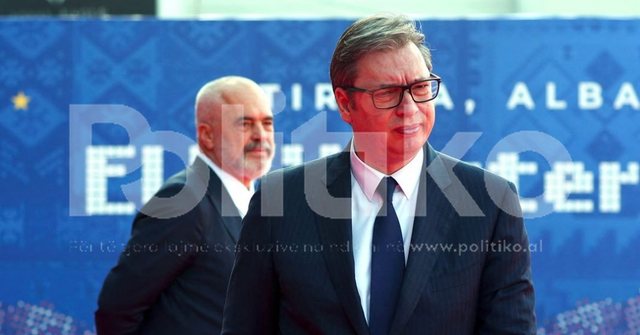
This approach is also linked to the joint editorial by Prime Minister Edi Rama and Serbian President Aleksandar Vučić in the Frankfurter Allgemeine Zeitung, who proposed an accelerated integration into the EU internal market and the Schengen area, but without full membership and without veto rights.
Tirana seeks the Rama-Vučić formula
Hoxha's statements practically bring back to the debate the model previously proposed by Rama and Vučić.
In a joint editorial published in the German newspaper Frankfurter Allgemeine Zeitung, the Rama-Vučić duo called for accelerated integration into the EU market and Schengen, but without full decision-making rights.
"This is why we are calling for an accelerated integration of the prepared candidate countries into the internal market and the Schengen area. This could bring tangible benefits for citizens, while strengthening the EU's economic and geopolitical position without burdening the EU's decision-making architecture and without changing its institutional balance. This would mean neither veto rights, nor additional commissioners, members of the European Parliament, nor changes to voting structures."
In this sense, if Rama and Vučić presented the model as a political vision to bring the Balkans closer to the EU, Hoxha is seeking concrete clarification from Brussels on how this "gradual integration" will work in reality and what real benefits it brings to the candidate countries.
So, if Rama-Vučić proposed the political formula, Hoxha is looking for the mechanism for its implementation.
EU position on the editorial
Brussels clearly separated the Rama-Vučić editorial from the reality that integration through reforms requires. The European Commission stated that enlargement is a key priority and described the editorial as “comments and speculations.”
“As you know, we never comment on comments and we do not comment on speculation. Let us remember that enlargement is a key priority for this Commission. It is one of the EU's most powerful tools for stability, security and shared prosperity. We are fully committed to making enlargement a reality. To this end, we support the enlargement countries with all the necessary political, economic and technical assistance. Gradual integration is already bringing concrete benefits even before membership,” the European Commission said.
European Union Enlargement Commissioner Marta Kos told POLITICO that she rejected the Rama-Vučić idea, noting that the leaders “maybe don’t know how much they have to do if they want to be part of Schengen or the common market.”
The Commissioner added that the reform process is difficult, both for economic integration and for EU membership, recalling that no country has become a member since Croatia in 2013.
IBAR report remains pending
9 member states have blocked the adoption of the IBAR, the key report that paves the way for the closure of the integration negotiation chapters. The impasse was created after the majority and Rama decided not to open the way for the arrest of Belinda Balluku by SPAK.
At the time, some diplomats in Brussels expressed that member states expect politics not to hinder the rule of law and that, for this reason, they will not be willing to approve the "IBAR" report. So, member states are looking to see evidence that politics in Albania does not hinder the rule of law and that the country will continue reforms and fulfill the criteria for EU membership.
However, Rama tried to justify the fact that Albania has stalled in approving the IBAR. He stated that it is enough for one EU country to say “no” and it is not done, blaming his government’s failure on the countries that have opposed the opening of negotiations.
"Those on the second floor are now the 27 member states and it works differently there. It doesn't work there just with what you've done. It works there as long as all 27 are ready to say "yes" and it's enough for one to say "no", it doesn't work. For everything, even for the decisions that the European Union makes for itself, if one comes out against it, it doesn't work", declared Rama./ Politiko.al
Latest news

IDC-CDI meets in Brussels, Berisha participates as Vice President
2026-07-13 16:05:10
"Washington Examiner": Anger against Rama's enrichment has reached its peak
2026-07-13 14:28:00
Here are the years of imprisonment requested for Monika's mother
2026-07-13 14:09:46
EU appoints German diplomat as new special envoy for Kosovo
2026-07-13 13:55:29

Property alienation in Durrës/ Court confirms security measures for suspects
2026-07-13 13:25:00
70 people with poisoning symptoms in Pristina, 22 hospitalized
2026-07-13 13:16:00


Erkin Lika's lifeless body found after falling into Mat River sinkhole
2026-07-13 12:32:00
Over 500 babies named after Haaland after World Cup matches
2026-07-13 12:28:00
18 arrested in Spain, who is the Albanian known as 'Daci'?
2026-07-13 12:22:00
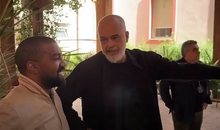
4.2 million euros for Kanye West, DP reports Rama and Gonxha to SPAK
2026-07-13 11:27:03

Heatwave hits Germany, over 5,400 heat-related deaths
2026-07-10 10:45:33
Land in "foreign hands"
2026-07-10 10:26:15
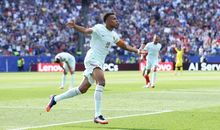
Mbappe the hero of France, the "Roosters" knock out Morocco in the quarterfinals
2026-07-10 09:54:33
Durrës/ 40-year-old man stabs his wife
2026-07-10 09:48:03

How much could the amount of drug money in the Albanian economy be?!
2026-07-10 09:08:34
Government reduces funds for farmers, increases ADF by 75 million euros
2026-07-10 08:55:46
Horoscope, get to know the star forecast
2026-07-10 08:32:54

Morning Post/ In 2 lines: What mattered yesterday in Albania
2026-07-10 07:52:04
A person was shot dead in Kurbin, first details
2026-07-09 22:54:48
Will the Police also stop those who criticize Rama online?
2026-07-09 21:57:02

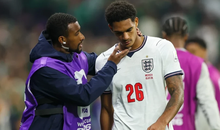
FIFA decision shocks England, Quansah ruled out for two matches
2026-07-09 20:51:00
Protest/Pedagogue: 4 million euros for Kanye West is "the next concession"
2026-07-09 19:45:53
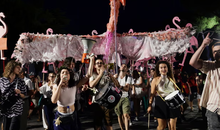
French MEP joins protests in Albania: Support for the "Pink Flamingo Revolution"
2026-07-09 19:28:07

Has the lek strengthened or overvalued?
2026-07-09 17:58:05
The trial on the merits for Ilir Meta and Monika Kryemadhi is postponed
2026-07-09 16:47:58
The match between England and Norway risks being postponed, this is the reason
2026-07-09 16:12:46
Murder in Shkodra/ Relatives: Peaceful family, no problems
2026-07-09 16:10:02
Kurti invites opposition leaders to a meeting to create new institutions
2026-07-09 15:43:05
This is the 62-year-old man who killed his wife in Shkodra
2026-07-09 15:01:43

Domestic crime/ Wife killed with shotgun, perpetrator and victim identified
2026-07-09 14:05:18
Gunfire in Shkodra, one victim suspected
2026-07-09 13:49:41
Weapons cache discovered in Fier, Prosecution sends 38-year-old to trial
2026-07-09 13:35:48
Bota e muzikës në zi, ndahet nga jeta në moshën 75-vjeçare ikona Bonnie Tyler
2026-07-09 12:56:29
Monika Kryemadhi in the Criminal Court: The cell phone was seized illegally
2026-07-09 12:45:54
VALEN MP reacts after border detention: Albania is no one's property
2026-07-09 12:15:44
Albanian gang in Belgium sentenced for trafficking 7 tons of cocaine
2026-07-09 12:01:14
Justin Bieber, Shakira and Madonna to perform at 2026 World Cup final
2026-07-09 11:52:54
Euro falls, inflation rises and domestic production loses ground
2026-07-09 11:39:36
Trial at the GJKKO, Meta's new lawyer appears in the session
2026-07-09 11:29:47
Nighttime accident in Gramsh, man and woman injured
2026-07-09 11:20:25
Meta seeks 134 witnesses, GJKKO delivers decision today
2026-07-09 10:56:54

At the peak of the production season, vegetable prices 'fly'
2026-07-09 10:21:14
The African heat returns, the thermometer reaches 40 degrees this weekend
2026-07-09 10:08:08
Opinions from 'anonymous' authors target Flamingo protests
2026-07-09 10:07:15
MEP Waitz: The law on protected areas endangers Albania's path to the EU
2026-07-09 09:52:55
"Le Courrier des Balkans": Edi Rama and the megalomania of power
2026-07-09 09:40:26
The economics of concerts, the prime minister's imaginary 100 million euros
2026-07-09 09:28:19
Erdogan's strange gift to NATO leaders
2026-07-09 09:11:15
Foreign exchange, the rate at which foreign currencies are sold and bought
2026-07-09 08:30:41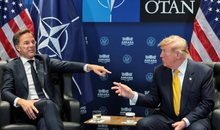
“Uniteti i jashtëzakonshëm” i NATO-s dhe mesazhet kryesore nga samiti në Turqi
2026-07-09 08:11:17
Horoskopi, njihuni me parashikim e yjeve
2026-07-09 07:46:15
Alternime kthjellimesh e vranësirash, parashikimi i motit
2026-07-09 07:25:59
Posta e mëngjesit/ Me 2 rreshta: Çfarë pati rëndësi dje në Shqipëri
2026-07-09 07:02:12