 Flash News
The situation escalates, police throw pepper spray and tear gas at protesters
Protests begin, citizens gather around the Parliament: Down with the government, down with Edi Rama!
Protest in front of the Parliament, the US embassy calls on American citizens: Avoid demonstrations!
Parliament under "siege" ahead of protest: Barriers, water cannons and increased police forces
Outside revolt, inside session: Parliament closes session amid citizen protest
Justice reform has not solved the problem, Albania has a significant shortage of judges

Politiko
2026-07-23 09:47:20
Despite the profound reform in the judiciary and the multi-year process of re-evaluating magistrates, Albania continues to have one of the lowest numbers of judges in relation to the population in Europe.
In 2024, the country had only 9.66 professional judges for every 100 thousand inhabitants, according to Eurostat data, processed by Monitor (for Albania, Eurostat only reports data on the number of judges, the ratio per 100 thousand inhabitants is calculated by the editorial staff).
This level was about 39% lower than the European Union average of 15.7 judges per 100,000 inhabitants.
Among the 32 European and regional countries for which data is available, Albania ranked ninth from the bottom. Only Sweden, Malta, Poland, Italy, the Czech Republic, Spain, Austria and Ireland had a lower ratio. Compared to other Western Balkan countries, Albania has a large gap. Montenegro had 42.49 judges per 100,000 inhabitants, Serbia 40.18 and North Macedonia 20.15.
In relation to population, Montenegro had over four times more judges than Albania, while Serbia had about four times more. Data for Bosnia and Herzegovina and Kosovo are not included in the respective table.
The low level reflects the shrinkage of the judicial body during the revaluation process, when departures, resignations and dismissals were not replaced at the same pace by new appointments. As a result, some courts have operated with vacancies, while the backlog of cases and the length of proceedings have become one of the main problems of the system.
Other Eurostat data showed that Albania has 55% of female judges, one of the lowest in Europe.
Croatia and Montenegro lead Europe
Croatia had the highest ratio in Europe, with 43.32 professional judges per 100,000 inhabitants. It was followed by Montenegro with 42.49, Serbia with 40.18 and Slovenia with 40.16. High levels were also recorded in Luxembourg, with 36.01 judges per 100,000 inhabitants, Bulgaria with 35.37 and Romania with 35.31.
In Germany the ratio reached 26.3, in Greece 26.06, while in Finland and Estonia 19.38 and 18.11 judges per 100 thousand inhabitants, respectively.
Eurostat reported that across the European Union, the number of judges per population has also decreased at the European level over the past decade. The EU had an average of 15.7 professional judges per 100,000 inhabitants in 2024, down from 17.7 in 2014.
Ireland had the lowest number of judges per population, with just 3.64 per 100,000 inhabitants. It was followed by Austria with 4.32, Spain with 6.18, the Czech Republic with 6.72 and Italy with 7.86.
Poland registered 8.01 judges per 100 thousand inhabitants, Malta 8.52 and Sweden 9.04, all below Albania's level.
However, direct comparison between countries must also be interpreted in light of the different organisation of judicial systems, the competences of courts and the role of other legal personnel. Eurostat also clarifies that the data for Austria and the Czech Republic only include judges authorised to hear criminal cases.
How is a professional judge defined?
The indicator includes full-time and part-time professional judges authorized to hear civil, criminal, and other cases, including those in appellate courts.
They must be recruited and paid for the exercise of the profession of judge. The data does not include non-professional judges, lay members of the judiciary and magistrates who do not exercise this function as a profession./Monitor
Latest news


Photo/ Police drag an elderly man
2026-07-23 09:54:00
The situation escalates, police throw pepper spray and tear gas at protesters
2026-07-23 09:40:00
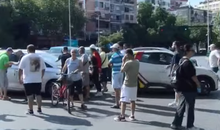
Protesters block Elbasan road, clash with drivers
2026-07-23 09:24:00
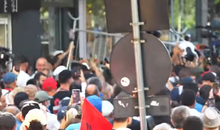
Protesters break through metal fence, clash with officers
2026-07-23 09:07:00


Horoskopi, njihuni me parashikimin e yjeve
2026-07-23 08:16:58
Outside revolt, inside session: Parliament closes session amid citizen protest
2026-07-23 08:03:00
Clear skies and clouds, the weather forecast for this Thursday
2026-07-23 07:54:00
The price of diesel increases by 8 lek, reaching 206 lek per liter
2026-07-22 22:58:00
Chaos in Buenos Aires after Argentina's loss, fans clash with police
2026-07-22 22:45:25
"Without youth, there is no Albania", protesters close the 53rd day of revolt
2026-07-22 22:01:03
Edi Rama's hypocrisy with tourism
2026-07-22 21:38:40

Citizen in protest: Albanians have been stabbed in the gut, we demand change
2026-07-22 20:48:47

Protest enters eighth week, citizens demand Rama's resignation
2026-07-22 19:41:00
Tragedy near TEG, second person in concrete batching plant dies
2026-07-22 19:14:00

Did the reinvestment of profits influence the "Glorious Uprising" of the lek?
2026-07-22 18:40:58

Storm destroys roof of 12-story building in Saranda, four families homeless
2026-07-22 17:30:00
Concrete mixer falls from height onto TEG roundabout, one victim and one injured
2026-07-22 17:01:00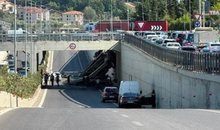





Real Madrid launches attack for Rodri
2026-07-22 15:35:40
Facebook, Instagram and Messenger out of service for many users!
2026-07-22 15:25:54


Guardiola in talks to coach Italy
2026-07-22 14:34:55

Academician Emin Riza, prominent researcher of cultural heritage, passes away
2026-07-22 13:41:12
Summer depression: Why do some people feel worse in the hot months?
2026-07-22 13:31:44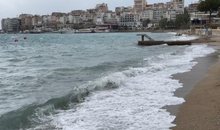
All vessels in Saranda are prohibited from going to sea.
2026-07-22 13:20:54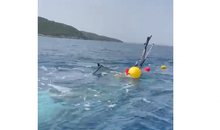
Bad weather in Saranda, a fisherman is found dead at sea
2026-07-22 13:13:00
This is the policeman from Kosovo who allegedly committed suicide in Kukës
2026-07-22 13:02:54


Hegseth: War with Iran has cost the US $37.5 billion
2026-07-22 12:10:00
Kontroll në burgun e Drenovës, Laert Haxhiut i gjendet telefon në qeli
2026-07-22 11:40:28
Could the US-Iran battle for Hormuz be a victory for Russia and China?
2026-07-22 11:26:48

Albania: a development model based on money laundering?
2026-07-22 10:56:56
After the "Cuban Package", Rama in Theth with the "Mountain Package"
2026-07-22 10:56:00

Euromoney crowns Credins bank as “Best Bank for Corporate Responsibility 2026”
2026-07-22 10:32:23
Kukës/ A police officer from Prizren is found without signs of life
2026-07-22 10:24:06

Albanian 'hawk' who terrorized England sentenced to 10 years in prison
2026-07-22 10:00:39
Strong storms sweep the country this weekend, here are the most at risk areas
2026-07-22 09:50:52
How do air conditioners affect health?
2026-07-22 09:38:00
France becomes first EU country to ban social media for children under 15
2026-07-22 09:27:11
Van collides with tractor on Rrogozhina-Lushnjë road, one injured / NAME
2026-07-22 09:19:00
The war for the algorithm: Hundreds of fake profiles target protest supporters
2026-07-22 09:05:36
Fire at waste landfill, toxic smoke invades Fushë-Krujë
2026-07-22 08:39:23

Unstable air masses and rain, this is the weather forecast for this Wednesday
2026-07-22 08:02:03

The storm also hits Albania, strong winds empty the Lungomare in Vlora
2026-07-21 22:34:30

770 kg of cocaine seized in Italy, most of the packages with Serbian flag
2026-07-21 21:46:44

Bad weather in Kosovo, one person dies, two others injured
2026-07-21 21:05:34

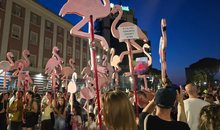
Protests against Rama's "algorithm", engaged voices from the square speak
2026-07-21 19:39:00
"Rama is gone", protesters gather again in Tirana after 52 days of resistance
2026-07-21 19:12:27


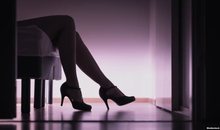
From Latin America to Kosovo/ How are women trafficked for sexual services?
2026-07-21 18:23:03
Nico Williams dedicates World Cup trophy to Neymar
2026-07-21 18:05:03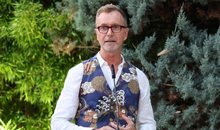
After three years in Tirana, Silvio Gonzato closes his mission in Albania
2026-07-21 17:41:00
Fire near apartments in Elbasan, explosions during firefighters' intervention
2026-07-21 17:22:00
Blendi Gonxhja insults protesters: A bunch of fools throwing stones
2026-07-21 16:55:46