
 Flash News
Serious accident near TEG, a concrete mixer falls from the overpass onto the highway
Facebook, Instagram and Messenger out of service for many users!
Bad weather in Saranda, a fisherman is found dead at sea
Violation of Muçi Shaljani's employment procedures, 6 months in prison for two former AMP officials
She lost contact with her family, the Brazilian embassy asked for help/ The story of the woman involved in prostitution in Albania is revealed
Why was Legality created ?!
Me rastin e 77 vjetorit të krijimit të OKLL, 21 nëntor 1943-2020

Politiko
2020-11-21 12:08:09
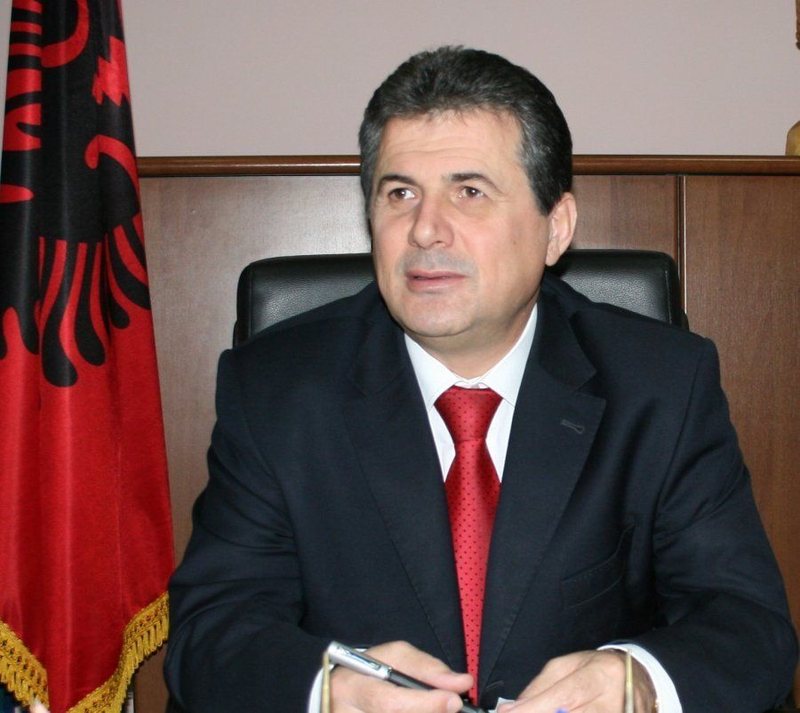
* by Ekrem Spahiu
From the historical point of view, the "Legality Movement" Party has its origins since the "Triumph of Legality", on December 24, 1924, when the legitimacy of the December 1923 elections won by Ahmet Zogu was restored.
In the context of World War II, the Zogists, in addition to directly contributing to the war, tried by all means to unite all the political-military factors in a common war against the invaders. The representative of the Zogists, Abaz Kupi, at the Peza Conference on September 16, 1942, had declared before the delegates that: “I have joined you, working for the good of Albania and fighting every occupier, but in case parties are formed, I am the protector of Legality before April 7, 39, I am with King Zog ”.
Also, Abaz Kupi has a primary role in the convening, organization, and conduct of the Mukje Conference held on 1-2 August 1943, where the union for the salvation of Albania was established and announced. The communist leadership accepted the Mukje Agreement until the delegates of the Yugoslav Communist Party, Miladin Popovic, and Dusan Mugosha, became acquainted with its contents and ordered Enver Hoxha to terminate it. To this end, a month later, on September 4, 1943, the Labinot Conference convened, in which not only was the Mukje Agreement formally annulled, but armed war was declared against any other current or political tendency, in other words, it began. preparing the conditions for a clash between the parties, until the civil war.
While the kings continued to fight against fascism without fuss or advertisement, being successful, the communists not only exploited the success and good name created by Zogist warfare but secretly exercised systematic propaganda against them. Concerned about this behavior of the communists, the Zogists, through Abaz Kupi, issued on November 19, 1943, a special tract addressed to the National Liberation Council, in which they insisted on maintaining a clear position on the further course of the war against the occupier. from which they received no reply.
In these circumstances, it seemed clear that the communist leadership had set another priority, comprehensive preparation for tomorrow's government. Under these conditions, the royal forces, seeing that the efforts to unite all the political-military factors in the war against the occupier failed, to confirm their political legitimacy and to prevent the Communist Party from realizing its goal of eliminating the nationalist forces called on November 20, 1943, in Herraj of Tirana, a National Assembly for the creation of a political movement.
The meeting was attended by delegates from all over Albania, as well as from ethnic Albanian territories across political borders, including delegates from Zogist gangs. Among the most mentioned were: Abaz Kupi, the commander of the resistance in Durrës on April 7, 1939, and the main protagonist of the Peza and Mukje conferences; patriot Ndoc Çoba, a participant in the Lushnja Congress and the Peza Conference; father Lekë Luli, diplomat Rauf Fico, teachers Gaqo Goga and Osman Myderrizi, lawyer Selim Damani, Xhemal Naipi, Mulë Delia, Hysen Meça, Xhemal Herri, etc.
The platform adopted at the Constituent Assembly was very clear: strengthening the military organization and uncompromising war against the occupier; the return to power of King Zog, as only he enjoyed this legitimate right; the creation of a free, ethnic and democratic Albania; establishing the rule of law; the provision by the law of fundamental human rights and freedoms; social reforms to improve the lives of the people; etc.
The next day, on November 21, 1943, the Zogists announced the formation of their party, the National Organization "Legality Movement" (OKLL). Ndoc Çoba was elected chairman of OKLL, while Major Abaz Kupi was elected Commander-in-Chief of the Legality Forces.
The Zogist combat forces at that time were about 10,000 fighters, while at their disposal were registered about 25,000 men. Moreover, these forces established themselves in successful battles against the occupier, where the defensive resistance of the battalion commanded by A. Kupi in Durrës on April 7, 1939, the battles of Mat, Lake Germani, and Zall Germani, Qafë Shtama, stands out. Gurrës, Suçit, Krujë, Vorze - Shkalla Tujanit, Preza, etc.
OKLL was located in Tirana, Shkodra, Dibra, Mat, Durres, Kavaja, Shijak, Kosovo, Vlora, Berat, Saranda, Korca, etc. By the end of the war, its propaganda service had published 21 issues of the newspaper "Atdheu" with a circulation of 210,000 copies. 250,000 tracts were printed and distributed, etc.
The leaders of OKLL, in support of the founding platform, maintained constant communication with King Zog, informing him in detail about the situation in Albania. Meanwhile, they internationalized their military activity through letters to US President Franklin Delano Roosevelt and British Prime Minister Winston Churchill through which they gave a realistic view of military and political developments in Albania.
It is a historical and very significant fact that, near the forces of Abaz Kup, was attached to the British mission led by high-ranking diplomats and military men like Bill Maclean, David Smiley, and Julian Amery. It must be said that Great Britain and the USA cooperated with all resistance formations regardless of political beliefs.
Meanwhile, as nationally inspired organizations always sought a national agreement to fight the occupier, the communist leadership feared this very agreement. The clearly national Legal program and the prominent personalities who led it panicked the Communist Party-led National Liberation Movement, which saw the future as a power rather than a national agreement. Therefore she started a war both underground and open for the annihilation of Legality. To this end, the communist leadership convened the Përmet Congress on May 24, 1944, where its main decision was, "… to forbid King Zog from returning to Albania and not to recognize any government that could be formed inside or outside the country."
This decision was absurd, partisan, one-sided, and consequently invalid both from the legal point of view and from the political and historical point of view. From the point of view of public and constitutional law, it is an undeniable fact that King Zog had ruled the country legally. This legitimacy was gained not only because of his outstanding contributions, accepted and supported at the national level, but above all through legal means, in accordance with constitutional law, in a democratic, sovereign and free. Moreover, King Zog never abdicated from the royal throne, but because of developments that did not depend on his will, he had declared in Parliament that; "... I have not left a tool unused for the security of Albania" and, by the decision of the Constitutional Assembly,
The monarchs, in addition to resisting in the days of April 1939, trying to unite all factors in the war against the occupier and engaging them directly on the war front, at the same time raising the awareness of national and international opinion on the return of the previous legal regime.
Under these conditions, based on the above arguments, Legality continued to rely on two basic pillars, resistance against the occupier and the demand for national agreements. If this agreement had been reached as required by this political force, surely Albania would have had a different course, oriented towards the West, to which it belonged. Seeing that these two pillars were not being reflected by other political forces, the top leaders of Legality predicted the country slipping into civil strife and, therefore, reshaped other ways of resisting, inside or outside the country.
* former deputy & chairman of PLL
Latest news
Chaos in Buenos Aires after Argentina's loss, fans clash with police
2026-07-22 22:45:25
"Without youth, there is no Albania", protesters close the 53rd day of revolt
2026-07-22 22:01:03
Edi Rama's hypocrisy with tourism
2026-07-22 21:38:40

Citizen in protest: Albanians have been stabbed in the gut, we demand change
2026-07-22 20:48:47

Protest enters eighth week, citizens demand Rama's resignation
2026-07-22 19:41:00
Tragedy near TEG, second person in concrete batching plant dies
2026-07-22 19:14:00

Did the reinvestment of profits influence the "Glorious Uprising" of the lek?
2026-07-22 18:40:58


Storm destroys roof of 12-story building in Saranda, four families homeless
2026-07-22 17:30:00
Concrete mixer falls from height onto TEG roundabout, one victim and one injured
2026-07-22 17:01:00





Real Madrid launches attack for Rodri
2026-07-22 15:35:40
Facebook, Instagram and Messenger out of service for many users!
2026-07-22 15:25:54


Guardiola in talks to coach Italy
2026-07-22 14:34:55

Academician Emin Riza, prominent researcher of cultural heritage, passes away
2026-07-22 13:41:12
Summer depression: Why do some people feel worse in the hot months?
2026-07-22 13:31:44
All vessels in Saranda are prohibited from going to sea.
2026-07-22 13:20:54
Bad weather in Saranda, a fisherman is found dead at sea
2026-07-22 13:13:00
This is the policeman from Kosovo who allegedly committed suicide in Kukës
2026-07-22 13:02:54



Hegseth: War with Iran has cost the US $37.5 billion
2026-07-22 12:10:00
Kontroll në burgun e Drenovës, Laert Haxhiut i gjendet telefon në qeli
2026-07-22 11:40:28
Could the US-Iran battle for Hormuz be a victory for Russia and China?
2026-07-22 11:26:48


Albania: a development model based on money laundering?
2026-07-22 10:56:56
After the "Cuban Package", Rama in Theth with the "Mountain Package"
2026-07-22 10:56:00

Euromoney crowns Credins bank as “Best Bank for Corporate Responsibility 2026”
2026-07-22 10:32:23
Kukës/ A police officer from Prizren is found without signs of life
2026-07-22 10:24:06

Albanian 'hawk' who terrorized England sentenced to 10 years in prison
2026-07-22 10:00:39
Strong storms sweep the country this weekend, here are the most at risk areas
2026-07-22 09:50:52
How do air conditioners affect health?
2026-07-22 09:38:00
France becomes first EU country to ban social media for children under 15
2026-07-22 09:27:11
Van collides with tractor on Rrogozhina-Lushnjë road, one injured / NAME
2026-07-22 09:19:00
The war for the algorithm: Hundreds of fake profiles target protest supporters
2026-07-22 09:05:36
Fire at waste landfill, toxic smoke invades Fushë-Krujë
2026-07-22 08:39:23

Unstable air masses and rain, this is the weather forecast for this Wednesday
2026-07-22 08:02:03

The storm also hits Albania, strong winds empty the Lungomare in Vlora
2026-07-21 22:34:30
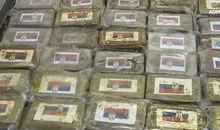
770 kg of cocaine seized in Italy, most of the packages with Serbian flag
2026-07-21 21:46:44

Bad weather in Kosovo, one person dies, two others injured
2026-07-21 21:05:34

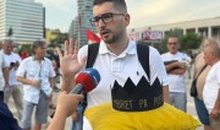
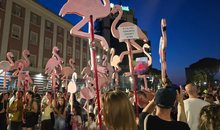
Protests against Rama's "algorithm", engaged voices from the square speak
2026-07-21 19:39:00
"Rama is gone", protesters gather again in Tirana after 52 days of resistance
2026-07-21 19:12:27



From Latin America to Kosovo/ How are women trafficked for sexual services?
2026-07-21 18:23:03
Nico Williams dedicates World Cup trophy to Neymar
2026-07-21 18:05:03
After three years in Tirana, Silvio Gonzato closes his mission in Albania
2026-07-21 17:41:00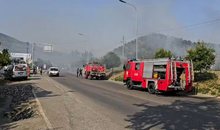
Fire near apartments in Elbasan, explosions during firefighters' intervention
2026-07-21 17:22:00
Blendi Gonxhja insults protesters: A bunch of fools throwing stones
2026-07-21 16:55:46


The criminal returns to the scene of the crime!
2026-07-21 15:54:42
Emergency on London-Tirana flight, Ryanair plane makes forced landing
2026-07-21 15:42:41


Why does everyone want an Aquarius in their life?
2026-07-21 14:47:07

Albanians in the square for troubles, Gonxha in trouble for JLo
2026-07-21 14:29:00

The Supreme Court rejects Veliaj's appeal regarding pre-trial detention terms
2026-07-21 13:54:11



Assassination in Elbasan, suspected target was "Ot Kilë's" nephew
2026-07-21 13:10:57
Vokshi: MEP's statements sink Rama, SPAK to launch investigations
2026-07-21 12:59:36

Was Einstein ever wrong?
2026-07-21 12:32:36